

13/4/2016- Predicting the end of the Islamic State!
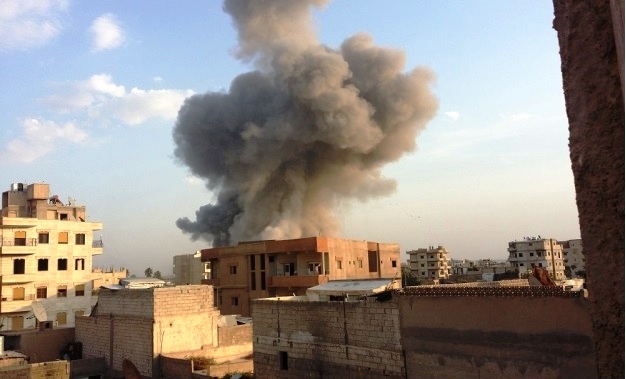
(Photo: Raqqa, Syria – November 25, 2014. Smoke rises from a building after Syrian President Bashar al-Assad's forces bombed ISIS targets, attacks that killed 130 people. Raqqa is not the source of Islamic State's power, and the fall of Raqqa would by no means mean the end of it. From the Far East to Latin America, ISIS maintains strongholds and cells.)
Photo by Anadolu Agency / Contributor / Getty Images / Ideal Image
The so-called Islamic State (IS) remains strong, despite the blows it has suffered in the last year and despite its territorial losses in Mesopotamia. It owes this to its strategy, its structure and, above all, to the broad "legitimization" that it unfortunately continues to enjoy from the spiritual leaders of Sunni Islam.
The holy war it waged against apostates and infidels continues to attract followers, wealth, political favor, and religious support among Sunni Muslims, making it even easier to expand against the modern Crusaders of the West.
However, looking back in history and always keeping the proportions in mind, we notice that ISIS presents several similarities with the Crusaders and specifically with the Order of the Knights Templar. The study of the end of the Templars helps us to possibly predict the end of ISIS.
The Order of the Knights Templar
The conquest of the Holy Land in 1070 by the Seljuk Turks was a powerful shock for Christian Europe. Twenty-five years later, the First Crusade was decided. With its completion in 1, the Holy Land passed into the control of the Crusaders, but the situation prevailing in the Levant region was anything but safe for Christian pilgrims coming from Europe to worship the Holy Sepulchre. In 1099, a small core of French knights founded, with headquarters in Jerusalem, the Order of the Knights Templar, with the aim of protecting the lives and property of Christian pilgrims.
They quickly gained great power. The Pope of Rome blessed the Order, giving it the necessary and necessary “legitimization”. This provided the Templars with strong political connections, wealth and attracted the cream of young Christians to the service of the Order. In reality, they began as an Order of soldier monks and evolved into regulators of the political and economic life of Europe.
The strategy of the Templars was not centered on Jerusalem. Instead, they created a very dense network of “branches” in Europe and fortresses in the Levant, with decentralized administrative functions and operational flexibility. Thus, when Jerusalem was finally recaptured by the Turks in 1244, the Templars easily moved their headquarters to their next fortress in Acre. And when they lost Acre as well, they moved their headquarters to Limassol, Cyprus.
The Siege of Arwad and the Beginning of the End of the Templars
The fortress of Arwad, located on the islet of the same name just opposite Tarsus in Syria, was the last stronghold of the Templars in the Levant. This base justified their existence and maintained the hope of recovering Jerusalem.
THE LOCATION OF ARWAD FORTRESS ON THE MAP
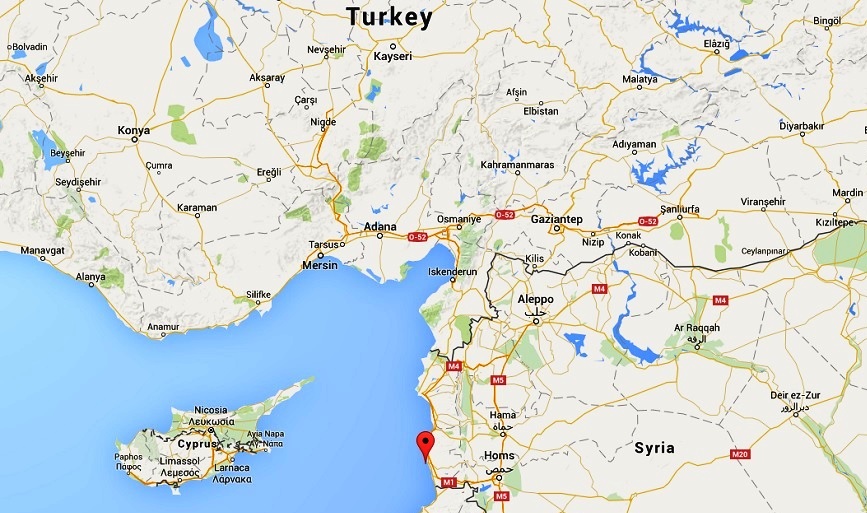
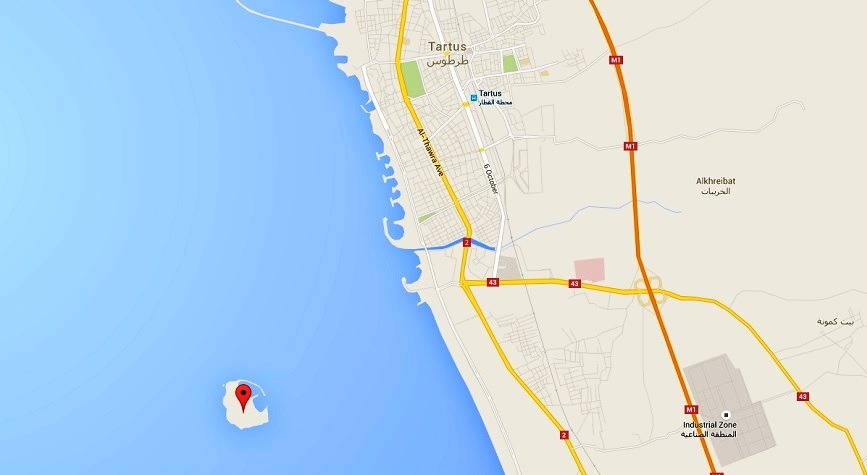
In 1303, the Egyptian Mamluks besieged and captured the fortress of Arwad. With the fall of Arwad, the Templars lost all territorial support in the Middle East and were confined to the Mediterranean and Europe. This also marked the beginning of their end, because their confinement to Europe, combined with their military and economic power, was a threat to the great monarchies of the Old Continent.
Four years after the fall of Arwad, the King of France, Philip IV, orders the arrest and execution of the leaders of the Templars, forces the Pope to excommunicate them, and distributes their property to the Order of the Knights Hospitallers controlled by him. Without "legitimization", leaders, property, and after continuous persecution, the Order of the Templars disintegrates.
The fall of the small fort of Arwad, and not Jerusalem, Acre or their last headquarters in Limassol, was ultimately the "key" to the beginning of their end!
Historical déjà vu?
By analogy, many of the elements that led to the formation and spread of the Templars are also found in the case of the jihadists of the Islamic State.
A first common element lies in the causes of their emergence. Just as the occupation of the Holy Land by the hordes of Islam forced the Christians of Europe to intervene to liberate them and subsequently create the Order of the Knights Templar to protect the caravans of pilgrims, similarly, for many, the emergence of ISIS is the result of the reaction of Sunni Islam against Western interventions in the region, against the influence of Western modernism within conservative Muslim societies, and against the increase in Shiite power in the Middle East.
A second common element relates to the "legitimization" of the existence and action, then of the Templars and now of ISIS. In the eyes of Christians, the Templars were heroes. Correspondingly today, for many Sunnis around the world and especially for the Sunnis who lost their people in Ramadi and Fallujah, ISIS represents the historical analogue of the Crusaders.
A third element of convergence is found in the marriage of religious with political, economic and military power, hidden behind a grand “idea”: the dominance of Sunni Islam over its enemies with a parallel restoration of the Islamic Caliphate. This grand “idea” legitimizes IS and unfortunately none of the great religious leaders of Islam has institutionally renounced it. Therefore, in the ideological field they continue to enjoy the necessary and necessary “legitimization” that provides them with fighters, means and resources to continue the “struggle”.
Also, the strategy and structure of ISIS resembles in many ways the decentralized structure and strategy of the Templars. Raqqa is not the source of their power, and in no way would the fall of Raqqa mean the end of them. From the Far East to Latin America, ISIS maintains strongholds and cores. While it is losing ground in Mesopotamia, it is strengthening its forces in Libya and making spectacular strikes in the center of Europe. The recruitment of fanatical followers seems unabated, as does its ability to generate wealth to sustain its war effort.
One final element on which the Templars and ISIS converge is that they created “states” within states. At the height of their power, the Templars defined the political and economic realities of much of Europe. Similarly, ISIS dominates between Syria and Iraq, while influencing almost every continent.
Planning the end of the Islamic State
Could the end of the Templars serve as a guide to conclusions that would allow us to predict, by fate or design, the end of ISIS? Possibly, yes!
The Knights Templar became vulnerable when they lost their military supremacy in the Levant, but they remained powerful enough to influence political developments in Europe, from which they drew “legitimacy”, resources and manpower. This made them an easy target, and it is characteristic that the final blow against them came not from other rival Orders – such as the Hospitallers or the Teutonic Knights – but from the French monarch and the Pope himself.
If the West really wants to end ISIS, it has no choice but to design a strategy based on the lessons learned from the end of the Templars.
An important and decisive element in this strategy will be the identification of the IS equivalent of Arwad. Possibly a Western operation against Raqqa will have the opposite of the intended results, forcing the Islamists to move their headquarters closer to Europe, for example to Derna in Libya. And even if Derna falls, there are dozens of other strongholds to be captured. By then, their cores in Europe, Russia, Australia and the US will have spread terror and death, destabilizing the heart of the West and dismantling the Western edifice from within.
In fact, a strategy that would leave the ISIS jihadists confined but undisturbed in Raqqa would then make them a greater threat to their regional patrons than to the West itself.
Also, an effective strategy against ISIS should be based on elements of isolation and delegitimization. On the one hand, the religious leaders of Sunni Islam should be forced to renounce it in practice, while on the other hand, the finishing blow should be delivered against them by the same Islamic monarchies that nurtured them, so that the cycle of “religious terrorism” is closed as an internal affair of Islam, without leaving any pending issues for settlement in the future. At the same time, the West should prepare the successor figure that will inherit the “property” of ISIS, as historically happened with the case of the Templars.
As Thucydides teaches, History does not repeat itself, but as long as human nature does not change, events will follow a similar course!