

Andreas Matzakos: The hot month of June for Turkey
 In the recent municipal elections in Turkey, the mayoral candidates of President Erdogan's ruling party failed to win the election in Turkey's largest cities, including Istanbul (Istanbul).
In addition, President Erdogan's acrobatics between Russia and America have been ongoing for months with the two major purchases of military equipment, the S-400 and the F-35. This acrobatics seems to be coming to an end in June, while in Syria, Turkey must also meet the obligations it has undertaken towards Russia in the province of Idlib. (See Map – Idlib De-escalation Zone).

His handling of the S-400 issue so far, with the US demand not to make the purchase, has indeed given him political time and space to maneuver until the municipal elections on March 31. However, the repeat elections in Istanbul, the imminent receipt of the Russian S-400s and the daily developments in the series of non-receipt of the American F-35 fighters, will be judged in June. The article characterizes the month of June as ''hot'' for Turkey, but also for Erdogan personally, because within the month, the Turkish president must make decisions.
In the first paragraph of the article, the issue of the repeat elections in Istanbul will be analyzed, in the next paragraph, the stakes of the elections, followed by an analysis of Turkey's dire position between Russia and the USA, and the article will close with an epilogue.

Repeat elections
On June 23, the repeat elections for the Istanbul municipality will be held, following a decision by the Supreme Election Board (SEB). AKP candidate Binali Yıldırıl had received 48,6% of the votes compared to 46,8% for CHP's Ekrem İmamoğlu. Unable to reconcile himself with the defeat in Istanbul, Erdogan appealed to the SEB with the argument that in some polling stations in Istanbul, the members of the election committees were not all civil servants as required by law. But why can't Erdogan accept defeat in Istanbul? The AKP was defeated in both Ankara and Izmir. There are many reasons, for the economy of the area, the three main ones will be mentioned:
– Constantinople is the showcase of modern Turkey. A city with a long history, with monuments, with the largest income for Turkish tourism. Since 1994, the mayor has always belonged to an Islamic party. At that time, Erdogan had won the mayoralty with the Welfare Party (WP), which created the necessary momentum for the victory of the Islamist Erbakan in the parliamentary elections that followed the following year.
– The greater Istanbul area is home to the majority of Turkey’s economic activity. Istanbul contributes 31% of the country’s GDP, 29% of industrial production, and employs 20% of the industrial workforce in its various industries and businesses. Employment and a healthy economy have been the keys to the AKP’s continued electoral victories. Erdogan cannot allow the idea of defeat to haunt all those people who have supported the AKP for years.
– 15% of Turkey’s 57 million voters live and work in Istanbul. If the Istanbul municipality is permanently lost, cracks will likely appear in the AKP’s alliance with Bahceli’s Nationalist Party (MHP). In such a case, Bahceli may reconsider either the support he provides to the AKP or the terms on which he supports it.
Moving on to the next paragraph, we will see the stakes of the repeat elections.
What is at stake in the repeat elections?
The stakes are very high for Erdogan. First of all, by resorting to the AEE, on this specific grounds, in the event of a defeat in Constantinople, his image as an absolute leader is at stake, on the same level as Mustafa Kemal. One only needs to consider that, during the municipal elections, Turkish citizens voted for mayors of metropolitan municipalities, mayors of smaller districts, municipal councilors and district administrators. The same committees were responsible for conducting all four votes, but only the election of the mayor in the metropolitan municipality of Constantinople was challenged by the AEE. That is, for all other votes the members of the committees were legal, but not for the election of the mayor of Constantinople.
Secondly, in the event of Imamoglu's victory, the influence of the presidency on a supposedly independent authority such as the ANC, which succumbed to the will of the president to challenge the result, will come to the surface. In fact, 7 out of 11 members of the ANC voted in favor of repeat elections. Where the situation has led with Erdogan's choices, the situation will worsen for him both at home and abroad in the event of the AKP candidate's defeat. Let's look next at Turkey's dire position vis-à-vis Russia and the USA.
Turkey between the US and Russia
Abroad, Turkey is under pressure from both Russia and America. We will briefly examine the issues that pressure Turkey in its relations with these two countries.
– Russia
– As is known, the purchase of the S-400 anti-aircraft system (A/A) is underway. According to the schedule, the first deliveries are expected in July. However, the US is reacting to this purchase, which in no way wants a NATO country to acquire such an advanced A/A system, the radar of which can record the movements of Western aircraft within a radius of 400 km from its base and help reveal a way to deal with the F-35.
– For Syria, Turkey had agreed with Russia last September in Sochi to create a demilitarized zone 15-20 km wide around the province of Idlib, disarming the jihadists and removing their heavy weapons. (See Map – Idlib De-escalation Zone) The jihadists also include the Hayat Tahrir al-Sham (HTS) group, which originated from al-Qaida, after successive changes of its name. The disarmament and removal of the jihadists should have been completed by October 15, 2018. In return for this obligation of Turkey, Russia had pledged not to allow government troops to attack to occupy the province. If Russia gives the green light to Assad to attack the province of Idlib, the occupation of the Kurdish canton of Afrin will also be jeopardized.
-USA
– Turkey is participating in the production of the F-35, has made a $1 billion down payment and should have already received the first aircraft. With its choice to purchase the S-400, not only did it not receive the aircraft, but the entire purchase agreement was put under review.
– On May 21, the CNBC network wrote that according to its information, ''Turkey must cancel the purchase of the S-400s by the end of the first week of June and that this offer is the last on the matter.''
– On Friday, May 31, Acting Secretary of Defense Patrick Sanahan told reporters in Singapore that "it is not possible for Turkey to purchase a system designed to shoot down the F-35."
– The worst thing is that the US is determined to impose economic sanctions on Turkey, through the law that has been passed specifically for states that demonstrate hostile behavior towards the US [Countering America's Adversaries Through Sanctions Act (CAATSA)]. In such a case, the already poor economic situation in Turkey, eight companies of which are involved in the construction of the F-35, and had budgeted profits of over 10 billion dollars, will worsen.
Even if President Trump, despite the contrary opinion of the American bureaucracy, accepts Erdogan's proposal to establish a joint working group to examine American concerns on the spot before receiving the S-400s, as recently reported, this does not mean that this group will ultimately be established, or that the group's conclusions will agree with Turkish positions.
Epilogue
Erdogan knows very well that the greater internal legitimacy a leader enjoys, the stronger he is abroad. And the conquest of the municipality of Turkey's largest city undoubtedly contributes to this legitimacy. And he absolutely needs this legitimacy, since abroad, as has been analyzed, Turkey is attacked by both Russia and the USA.
Turkey's choice to purchase the S-400 was clearly made on purely political grounds and was not dictated by military operational needs. After all, it could have purchased anti-aircraft systems with the characteristics of the S-400 from the military industries of Western countries. The point, however, is that Erdogan wanted to convey the message that the time had come for Turkey to move forward in the international system as an independent pole. That Turkey could make choices in foreign policy without taking into account the preferences of the leading power in the Western alliance. But the time had probably not yet come for Turkey to not constitute a bulwark for the Western alliance against Russia's possible expansion to the south. And this time had not changed since the signing of the Treaty of Küçük Kaynarci in 1774, which ended the First Russo-Turkish War. Both the Hellespont Straits and the Aegean Sea, the route leading from the Black Sea to the Mediterranean, need to be controlled by NATO.
Finally, in the Turkish political scene everyone knows a saying that says, "Whoever wins Constantinople, wins Turkey." It seems that the only time has come to find out what happens if someone loses Constantinople. Does he really lose Turkey?
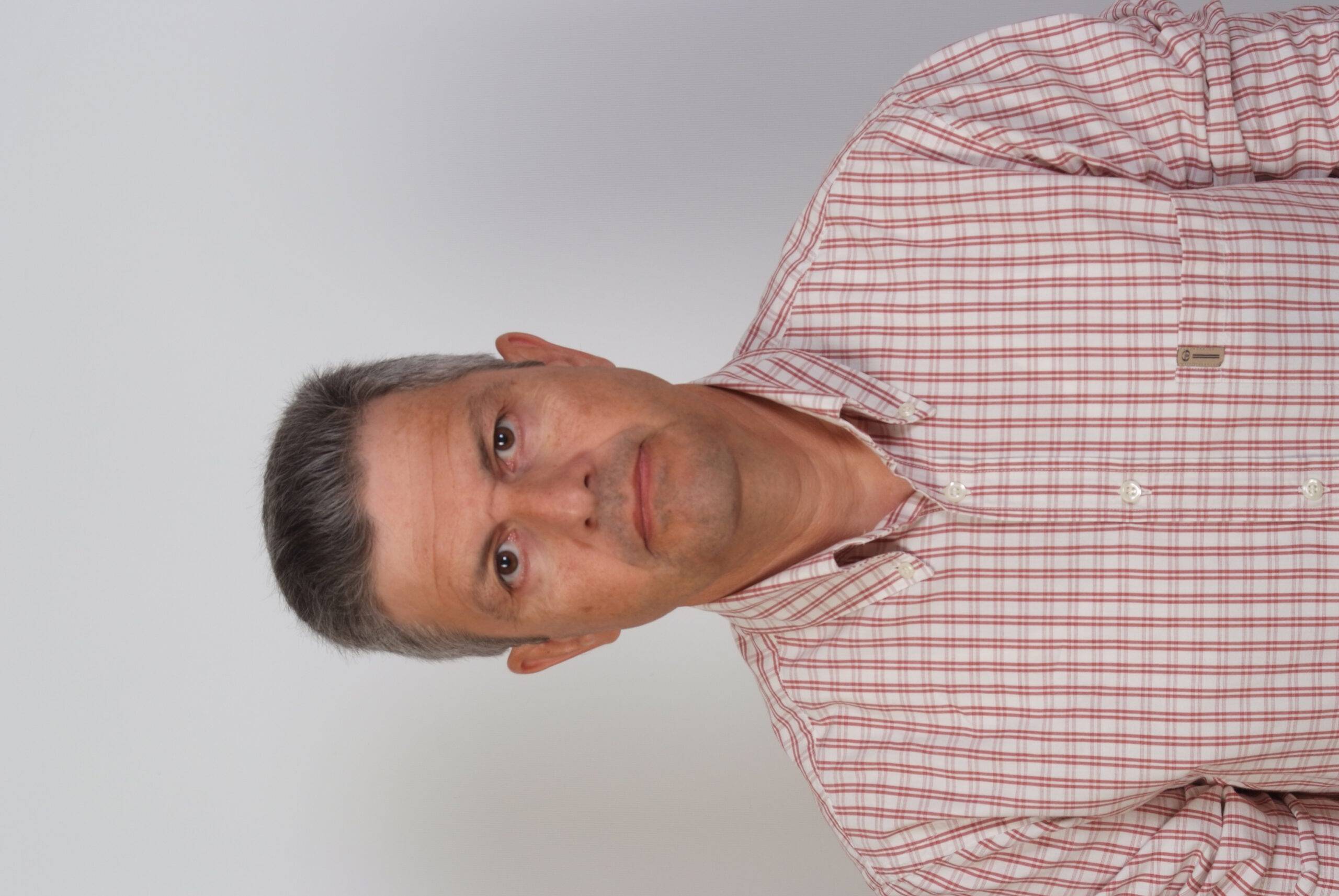 * Mr. Andreas Matzakos is a retired Greek Army officer and holds an MSc in International Relations and Strategic Studies.
He is a probationary researcher in the Defense Affairs Department of the Institute of International Relations of Panteion University and a member of the Hellenic Institute for Strategic Studies.