

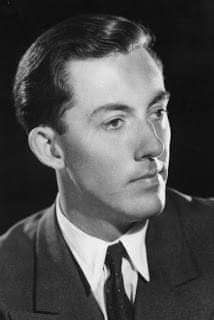
Michael Ventris… gave GREECE 7 centuries of history. The anti-Greek state ignored him…
Michael Ventris... he gave At GREECE 7 centuries history. The anti-Greek state the ignored...
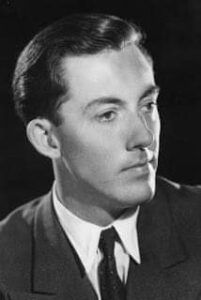
He only lived 34 years, but in his short life, the brilliant young Michael Ventris gave our country 7 centuries more history!... From a young age, he had a penchant for learning languages; at the age of 9, he knew ancient Greek, Latin, French, German, and Polish.
In 1936, at the age of 14, he happened to be guided by the Knossos excavator Sir Arthur Evans to an exhibition of Minoan art and was impressed. He heard for the first time about the unknown Minoan script. Evans called it Linear B, because it used linear characters, not pictographic ones, like hieroglyphs, and it differed from the even older script, Linear A.
The entire scientific community, influenced by Evans's prestige, accepts his opinion that it is not Greek, but a separate language. Ventris becomes obsessed with reading it.
In World War II, he enlisted in the Royal British Air Force and excelled at breaking secret German codes through the Enigma program... Solving the great enigma, the so-called "Everest" of Archaeology that had puzzled experts for over 30 years was now a matter of time.
The fact that he was not an archaeologist but an architect and not even an academic helped him keep his mind clear and take risks by making bold assumptions that Linear B was indeed a Greek language, without the fear of rejection from a space, the Academic, where he did not belong anyway.
Because he was not a philologist, he could not continue without the help of a classical philologist, and he found one in the person of John Chadwick, a lecturer at the University of Cambridge. And he succeeded!
In 1939, in addition to Crete, around 300 Linear B tablets were found in mainland Greece. By comparing them, Ventris noticed that certain “words” were only found on the Cretan tablets. He therefore made the inspired assumption that these words were city names and place names, which turned out to be correct.
Ultimately, he confidently interpreted 65 of its 88 then-known symbols, formulated its basic spelling rules and brought to light the first Greek language, 7 centuries older than the Greek of Homer...
To his intelligence we owe the fact
that our written history does not begin, as we knew, in the 8th century BC, but in the mid-15th century, approximately 1450 BC, since that is when the oldest text written on a clay tablet discovered in 2010 in Iklaina, Messinia, is dated.
In total, about 5.000 texts in Linear B have been found (mainly tablets but also vases), 3.000 from Knossos, around 1.400 from Pylos and the rest from Thebes, Mycenae, Tiryns, Eleusis, Orchomenos and elsewhere, approximately 87% of these texts have been read.
On July 1, 1952, the passionate amateur who was neither a philologist, archaeologist, nor linguist officially announced his discovery in a speech on the BBC.
It was characterized as the literary event of the 20th century, after the oldest written texts of European Civilization were read!
If you find a bust of him somewhere or a street in Greece that bears his name, write to me!
CONTRARY TO THE ANTI-HELLENIC STATE AND THE SCIENTIFIC ESTABLISHMENT, IT IS OUR DUTY TO REMEMBER THESE PEOPLE AND MEMORISE THEM!