

Politics as a Virtue
POLITICS AS A VIRTUE
Dimitris K. Bakas
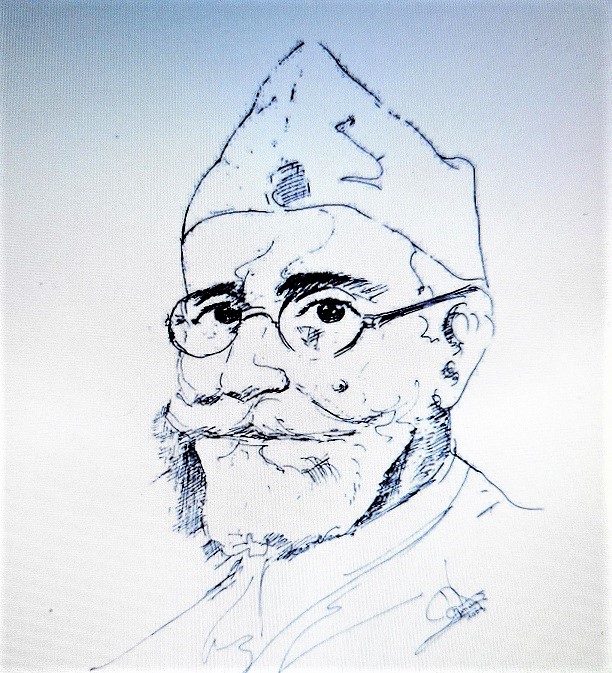
Our Ancient Ancestors had already questioned with great care the concepts of Politics (Art) and the Politician (man) and tried to investigate them. Is there a reason for their existence? That is, do they have any permanent value? What is their purpose, the "end "? What is their essential meaning ? What should an authentic politician express through his words and actions? The final answer they came up with was: " As a spiritual function, politics constitutes education" ! It belongs to the sphere of ethics . The politician who is thirsty for power of imposition or fights in every way for economic interests only constitutes a "mask" of a politician!
The true Person of the politician coincides with the capacity of educator, legislator and leader of citizens . To ensure appropriate conditions where citizens can realize their moral personality.
The evolution of human political history, however, followed not the paths of morality , but the avenues of greed and scandals ! However, of course, there are always brilliant authentic examples . Alas! Politics is a function of high responsibility and duty , since it affects all human aspects of life and personality . That is why legislators-politicians remained as "divine" and sacred figures: Lycurgus, a figure on the border between legend and history, as well as Solon and Pericles...
The Politician, as legislator and ruler, educates people and becomes, by his example, primarily a teacher of morality. This is the deepest and highest meaning of Politics.
The power with which the politician is surrounded is the means and not the end. Its main concern is to balance in the best way the opposing interests and passions that cause a rupture between the members of society. It thus saves human forces from the friction that brings arrhythmias to social relations and prevents deterioration from arbitrariness and greed. Then individual consciences are promoted . Then the individual and collective will is freed from the pressure of common needs and a more humane form of life emerges!
The concept of Politics and the Politician is of Greek inspiration. It is prefigured by the Greek thinkers of Ionia and Magna Graecia, clearly conceived by Socrates and formulated in an unparalleled manner by Plato: "To prepare, as the souls of the citizens are best". This is the work of the political orator. And Aristotle: "The true politician wants to make the citizens good and the laws subjects.."
The value of politics becomes very evident in the mockery and shame that we usually feel for politics today. And the question to every citizen comes directly from the ever-annoying, age-old Socrates: "So as you govern, you truly become educators of the people, teachers of virtue? With your example, will the citizens of this land become better or worse? What do you teach with what you do? Not with what you say? Do you teach reverence for the moral principles and laws of the State? Do you teach consistency with what you proclaim?" Let each of us ask ourselves: which citizen of this country has become better than he was before our example? Does politics now have nothing to do with morality?
What is the spiritual leadership of our country doing today ? Is excessive specialization doing great harm? Is there a lack of personal responsibility for the common good developing alongside specialization? Many people of course wonder: "What are people of the "spirit" doing today?" But should people of the spirit be involved in politics? Should they only exclusively serve their science, their arts, or even their possible good purposes alone?
On the other hand, we ask ourselves: is it possible for a believer in science and art to live in complete isolation from his fellow human beings , to whom his work is addressed, and not to participate in the adventures of collective life? Is this inhumane? When the social boat is in danger of sinking due to recklessness, clumsiness, impatience, and laziness, are we not all in danger ? When the storm rages around us, should the specialist remain absorbed in the enjoyment of his research? Is this an ethical attitude?
The slogans "art for art's sake" and respectively "science for science's sake" had a deeper meaning, being intransigent demands , when science and art are in danger of being enslaved to otherworldly purposes. But who do we mean by intellectual people today? In our time, " intellectual" people have spread to all social strata and anyone who uses a computer and writes, verses, essays, short stories, theses and articles belongs to the circle of "intellectual people "! The concept of spirit has been diluted. We can, however, speak of the high " spirituality " and superior "ethics " of a scholar or artist, when he exceeds common standards and moves to more open qualitative horizons and high levels. Then we would humbly call them people of letters, arts and sciences, without any other spiritual designation.
We believe that the ultimate goal and justification of art and science, as well as of any individual and collective occupation, is only MAN ! Man as a person and his ennoblement . Every scientist and artist works hard for man, just like every worker of moral acts . The cultivation of pure truth, beauty and goodness , with which the humanization of man is realized, is the goal of all human efforts and labors of his holistic education.
In this sense, we must accept that the "morally healthy" complete man cannot fail to be a political being . That is, indifferent and unmoved in the adventures of the politically organized social-national group, within which he lives, and is considered a member of it. By nature, a "political being" (Aristotle) is not simply anchored but organically bound to the state that he embraces, as if a mother, who wants its members to participate in its destiny.
The completion of individual life is understood only within collective life . There is no mentally complete person as a person, when he has been cut off from the social body, gathered in himself. His scientific or artistic work may flourish, but he himself certainly loses his vitality, authenticity, integrity and becomes a weak fraction of a person, who slowly loses the meaning of life and is reduced to nothing as a person.
In short, the scientist or the artist has no right to crush the man within himself. There is no man without the common good in his action. Knowledge must always be harmoniously combined with beauty and practical good . Then the man is complete and feels the fulfillment that ensures the wholeness of life.
No human being is allowed to mutilate the man within him by deadening the drive towards social and public life. He has an obligation and a need to take part in the public life of the state and to support his fellow citizens with his knowledge, his advice, but above all with the example of his life . He is not allowed nor is anyone asked to manifest himself with fanaticism, violence and non-secular behaviors. His role is to stand tall in his positions and not be carried away by passions. Nor to remain inaccessible and neutral at the critical time when ordinary citizens, embarrassed and troubled, have their eyes fixed on political and spiritual leaders and are waiting for their help.
The diverse creative and artistic work does not suffer or become adulterated by this kind of support. On the contrary, it is "warmed" by the living human presence and becomes more substantial, genuine and creative.
No one tells the scientist and the artist to betray his mission by renting his pencil or his paintbrush to those who need his genius for their political campaigns. We only ask him to support the ideas he believes in, reflecting on the diamond truths : He has heavy responsibilities towards his fellow men. Moreover, man is responsible not only for what he does, but also for what he fails to do when he can . That is why we maintain that politics constitutes a virtue of the utmost importance for man. A lifelong acquired spiritual and mental strength for dealing with our multiple weaknesses and defects that emerge from our all-powerful individual interest , which usually blinds us!
Despite all the objections that may arise, the noble expectation of something better must exist for man. It is a necessity of life . If we do not aim far and somewhere higher, we will not find any goal. If we do not set our sights on goals of perfection, it is not possible to heal and overcome our imperfections.
.
Dimitris K. Bakas
June 24, 2021