

How effective is the Israeli Iron Dome?
 TSILIOPOULOS EFTHYMIOS
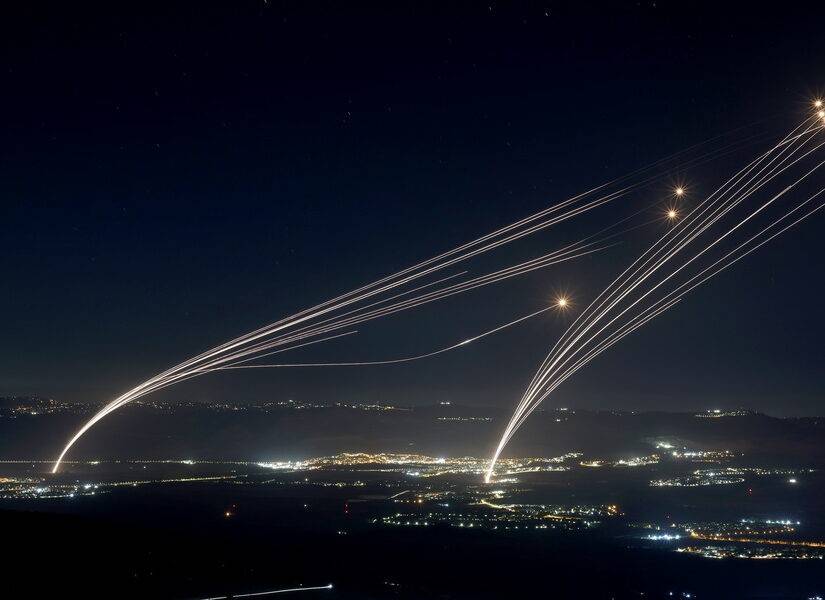
 The Middle East is on a razor's edge, with Lebanon's Hezbollah firing about 50 rockets into northern Israel, which were successfully intercepted by the Iron Dome air defense system, the "strong card" of Israeli deterrence.
In fact, it was precisely the war with Lebanon's Hezbollah in 2006 that contributed to the development of the Iron Dome, due to the massive rocket launch by the Shiite organization: Almost 4.000 rockets, mostly short-range Katyusha (Grad 122mm), were launched against it of northern Israel, killing 44 civilians and leading to the temporary displacement of approximately 250.000 citizens.
Between 2000 and 2008, more than 4.000 mortar shells and 4.000 rockets (mostly Qassam) were fired from Gaza into southern Israel. As the Qassam's range has been extended due to the introduction of 122mm Grad launchers, nearly 1.000.000 Israelis have come within range. To counter the rockets, the Ministry of Defense decided in February 2007 to develop a mobile air defense system, which was successfully tested in March 2009.
In July 2009, during a test, the system successfully intercepted several rockets simultaneously. Multiple rocket barrages simulating Qassam and Katyusha rounds were successfully intercepted in a new test in January 2010. The final test took place in July 2010. The system successfully identified and intercepted only rockets that would cause casualties or damage, while others that were headed for open fields were not intercepted.
A single arm of air defense
In Israel the Iron Dome is a single arm of air defense designed to protect against incoming threats that are difficult to detect and intercept. It was designed and built by Rafael Advanced Defense Systems and Israel Aerospace Industries with some support from the US. It became operational in 2011 and is considered one of the most advanced defense systems. It uses radar to detect and destroy incoming projectiles of even very small cross section before they hit the target. It is all-weather and specifically designed to help destroy shorter-range missiles, such as rockets fired by Hamas from Gaza, or Hezbollah from Lebanon.
The makers say Iron Dome is cost-effective because of the technology it uses to differentiate missiles likely to hit populated areas or targets from those that will land in an open field. Stationary and mobile units fire interceptor missiles only to shoot down missiles they consider an immediate threat to human life or civilian and military infrastructure.
Israel now has 10 artillery emplacements scattered across the country, each with 3-4 launchers capable of firing 20 interceptor missiles. According to the Israeli armed forces, the number of Israelis killed and injured over the years by rockets would have been much higher if not for the Iron Dome. It was the military's response to concerns about the ability to intercept multiple targets at the same time, which intensified with the bloody attack by Hamas in October 2023: The Islamic group had fired thousands of rockets from different positions and at different heights, managing to saturate the Israeli air defense system.
Earlier in the 2021 war, Islamic Jihad and Hamas had fired 4.350 rockets at Israel from Gaza. The attacks subsided when Israel stepped up its airstrikes. However, the number of rockets launched at the time was unprecedented, with the apparent intention of causing saturation. The Iron Dome, however, has the ability to launch approximately 800 interceptor missiles at any given time. According to Israel, more than 1.400 incoming rockets had been intercepted in the 2021 clashes, a rate of 90%.
Features of Iron Dome
Iron Dome consists of three main components, a detection and tracking radar, a combat management and weapons control system, and a missile launch unit. The radar has been developed by the Israeli company Elta. The control system is built by software company mPrest Systems, which Rafael has taken over. The missiles fired from the Iron Dome are Tamir interceptor missiles.
The radar ELM 2084 MMR detects incoming targets and provides mid-course guidance for the Tamir missile. It consists of a three-dimensional active electronically scanned array (AESA) operating at the S frequency. According to the radar manufacturer, the ELM 2084 can track up to 1100 targets and lock on targets at a distance of up to 70 km.
The Tamir missile
Other features of the Iron Dome include a vertical launch launcher, which carries up to 20 Tamir missiles. The Tamir missile is 3 meters long, 0,16 m in diameter and weighs 90 kg. It uses a command data link and carries an active radar scanner for guidance and uses a high-explosive fragmentation warhead. The cost of each Tamir ranges from 40.000-50.000 dollars. As of 2012-13, a full artillery piece costs about $100.000.000.
Tamir has steering fins for high maneuverability and is equipped with electro-optical sensors. The system works day and night and regardless of the weather, it has a fast reaction time and the ability to intercept a barrage. It can also handle multiple threats simultaneously. After detecting and identifying the missile, the radar tracks its trajectory and based on the information, Iron Dome calculates the expected point of impact. If the intruder heads into a residential area or infrastructure a threat intercept missile is fired. The Iron Dome has been upgraded to simultaneously shoot down multiple complex threats such as rockets, drones and missiles.
Use in Cyprus
India, Romania, Azerbaijan and USA have bought the system, while the interested customers are more. In the summer of 2022, Germany agreed to procure it as well. Among the interested parties were Greece and Cyprus, whose interest in weapons systems of Israeli origin has intensified in recent years, after the rewarming of bilateral relations. However, the discussions of Athens and Nicosia are not limited to Iron Dome, but also to similar systems.
For example, as far as Cyprus is concerned, the Minister of Defence, Michalis Giorgallas, said at the beginning of the year that within 2024 decisions will be announced regarding the acquisition of an air defense system – even more powerful than Iron Dome, for the which was being discussed.
The Iron Dome was designed primarily to protect civilians in Israel from rocket and artillery attacks. However, it can also shoot down aircraft, and has also demonstrated excellent drone shooting skills. In the event of a Turkish attack on Cyprus, it will be preceded by a massive bombardment with artillery and missiles. But whether we're talking about Iron Dome, or even another more sophisticated air defense system, it's unlikely to intercept all of these missiles, any more than Iron Dome was able to intercept all of Hamas' rockets in 2023.
After all, regular artillery doesn't fire everywhere, like Hamas rockets. He hits where he aims. Iron Dome can significantly protect critical infrastructure and military units, but that's about it. Infrastructure and units must be protected to act as a shield after the first wave of attacks, when the enemy forces must face the defending forces and support their own units on the field. When the ground forces of the National Guard get involved and begin their own operations, the Iron Dome, or any alternative to it, will be a valuable element of the anti-aircraft defense of the Megalonisos.
With the corresponding dispersion, it will be able to cover the entire island, shooting down enemy aircraft, but mainly drones, whether they take off from the airport of Lefkonikos in the occupied territories, or come from Turkey. In fact, those that take off from Lefkoniko can be shot down before they even reach a height suitable for operations.
Until the moment when its use becomes relatively safe, that is, after the regular involvement of the National Guard with the Turkish forces, they must be protected in hidden locations, or moved to safe points from the artillery, so as not to become victims of the first Turkish bombardments . The placement of the artillery of any advanced air defense system that Cyprus acquires is imperative, so that it is out of range of the artillery. It will, of course, be within missile range, but the system is precisely designed to destroy incoming missiles and drones.
Iron Dome and any other means of defense are no substitute for attack. This, however, is a wider problem on the Cypriot front, which goes beyond the scope of this article.
Also valuable in the Aegean
On the Greek-Turkish front, due to the different geophysical reality and layout of the Greek armed forces, the Iron Dome would be a valuable element of area defense against long-range missile attacks, such as from airborne missiles and artillery missiles, such as the ATACMS and the Turkish-made Bora. The Iron Dome can protect airports, missile arrays, critical infrastructures, etc., at a much lower cost and much better success rates than the much more expensive systems currently available to the Greek armed forces.
In this context, the Minister of National Defense has referred to a Greek version of the Iron Dome: A Greek "iron dome" that will cover the Aegean and protect the country from attacks by drones or other missile systems. Its cost is estimated at two to three billion euros. "It's already launched, it's not launched. The country had to acquire an anti-aircraft canopy. That is, a total coverage system and also an anti-drone canopy. Imagine it as a church, with two superimposed domes", said Nikos Dendias.