

What does the new flare-up in the Palestinian issue mean?
What does the new flare-up in the Palestinian issue mean?
Netanyahu's alliance with the far-right sparks new flare-up in the Palestinian issue
Jerusalem is the holy city of the three great monotheistic religions and this charges every inch of the old city. Just think that in Jerusalem, Quds in Arabic, the third holiest site in Islam, the Al-Aqsa Mosque, is located on the Temple Mount, the holiest site for Judaism. This year the charges are even more intense as Ramadan and Passover coincided in time.
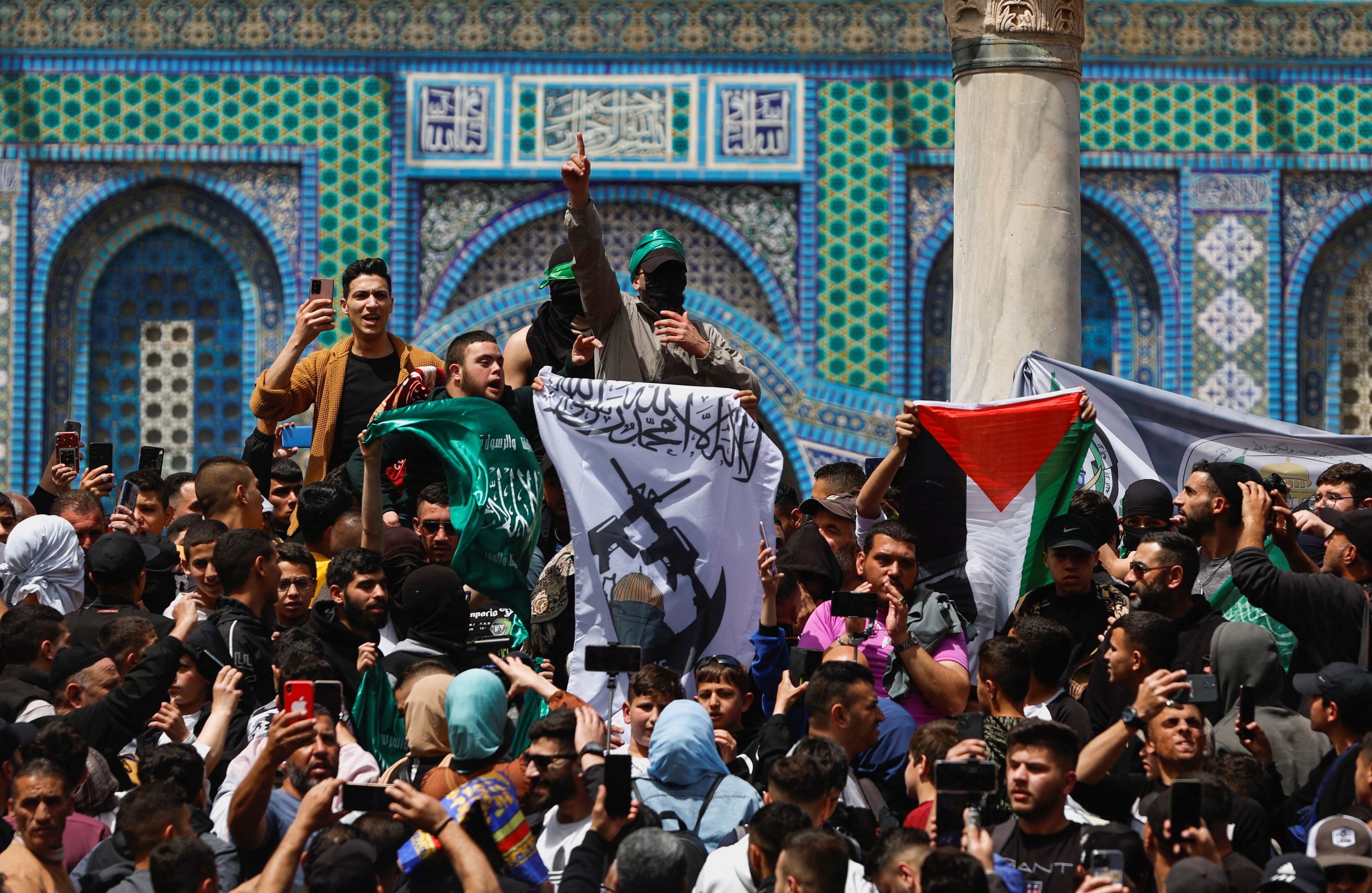
And things were made even worse by the decision of a group of far-right Jews to climb the Temple Mount / al-Haram al-Sharif (as it is called in Arabic) last Wednesday.
Traditionally, the position of most rabbis was that Jews should not ascend the Temple Mount complex, as purification rituals could not be performed while the Temple was in ruins. They also held that the biblical sacrifices of lambs and goats should not be revived.
However, far-right religious activists who insist on demanding an increased presence have a different opinion. In fact, fifteen far-right rabbis requested permission from the Israeli government on March 30 to ascend the Temple Mount / al-Haram al-Sharif at the start of the Jewish Passover. Essentially, there is an entire far-right movement with the slogan “Back to the Mount” and which is asking Israel to take control of the Temple Mount / al-Haram al-Sharif complex. In fact, they went so far as to offer rewards to anyone caught trying to smuggle a lamb into the complex and even bigger ones to anyone who manages to sacrifice a lamb.
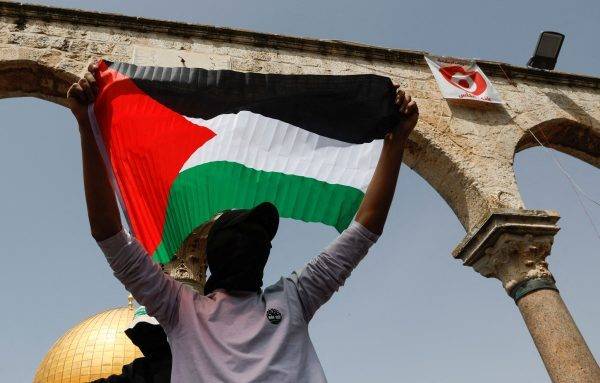
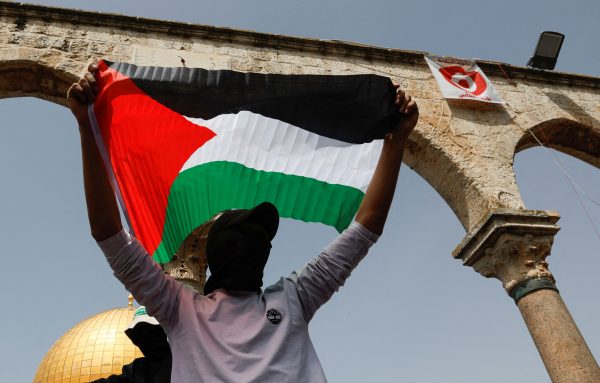
The result was, of course, great indignation among the Palestinians and major clashes with the Israeli security forces at the Al-Aqsa Mosque. In turn, the images of Israeli police officers trying to invade the Mosque caused even greater indignation among the Palestinians and in the Arab world as a whole.
The escalating conflict
In any case, in recent months, the confrontations between Palestinians and Israeli authorities have intensified. This was preceded by major protests and confrontations over the Israeli authorities' efforts to evict Palestinian families from their homes in East Jerusalem – an area that is particularly charged as a summary of the occupation –, large and bloody police operations by Israeli security authorities in the Occupied West Bank, and a new wave of armed attacks by young Palestinians, who are suffocating under the conditions of the occupation.
A role in all of this is also played by the way in which the new Netanyahu government relies primarily on representatives of the far right who also represent the settlers, the part that is primarily pushing for an even more aggressive line towards the Palestinians. After all, Netanyahu himself had previously almost announced the formal annexation of most of the West Bank. And of course, options such as the appointment of the far right Itamar Ben-Gvir as Minister of Security, who provocatively visited the Al-Aqsa Mosque in January and who, following a relevant decision by the Council of Ministers, will also acquire an armed force under the control of his ministry, in the form of the new National Guard corps , which many believe will escalate violence against the Palestinians.
All of this creates greater concern and resentment among Palestinians, especially the younger generation, who cannot reconcile themselves to the thought that they will forever be in this status of citizens without rights, symbolically (and practically...) condensing into how the West Bank is constantly intersected by settlements, fences and roads of settlers, while they themselves have to deal with the daily hassle of checkpoints to work in Israel and the authoritarian behavior of Israeli police and soldiers. 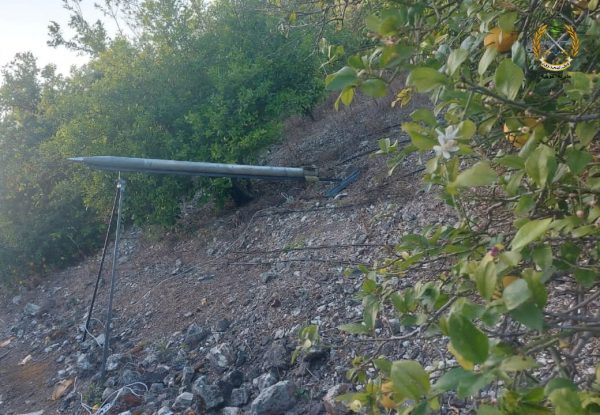
The rockets from Lebanon
At the same time, it seems that the conflict is taking on new dimensions. On the afternoon of Thursday, April 6, 34 rockets were fired from South Lebanon towards Israel. The Israeli air defense system – the “Steel Dome” system – managed to intercept 25, but five rockets managed to reach Israeli territory, causing material damage.
This was the largest rocket attack on Israel from Lebanon since the 2006 war. The previous major attack was in 2021 when Hezbollah fired 19 rockets into northern Israel. Rockets were also fired from Gaza.
Hezbollah itself denied that it was responsible for the rockets, indirectly stating that Palestinian organizations were responsible. And it was no coincidence that Hamas leader Ismail Hamiyeh visited on Thursday, April 6, and was hosted by Hezbollah.
Besides, as many point out, it would be very difficult for Palestinian organizations to carry out such a major attack on Israel without the permission of Hezbollah, which controls South Lebanon.
It is clear that even in this case Hezbollah is sending the message that anything concerning the Al-Aqsa Mosque constitutes a red line that Israel cannot and must not violate, because then it will face even harsher attacks.
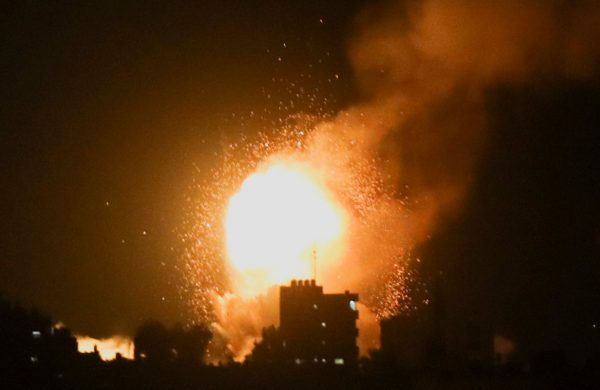
For its part, Israel responded at dawn on Friday, April 7, with airstrikes on Gaza and South Lebanon.
Israel's double crisis
These developments come to underline the double crisis that Israel is currently facing. On the one hand, there is the political crisis concerning the large protests over the reform of the judicial system, which has almost taken on the characteristics of an institutional crisis. Within this crisis, Netanyahu's basic strategic investment that Israel's demographic dynamics strengthen the voices represented by the far right, translates into a deterioration of the situation in relation to the West Bank.
This in turn exacerbates the second crisis, which concerns precisely the reluctance to address the Palestinian issue in terms of a solution and not simply alternations of escalation and limited calm. This is because the line that supports settlement and repression not only leads to the de facto cancellation of any prospective "two-state" solution, but also brings to the fore the very fact that from the Jordan and into the sea an area is being formed that Israel controls, without at the same time offering any guarantee that all the people who inhabit this area will enjoy the same human and democratic rights.
The new wave of protests, clashes and attacks shows that this occupation condition, which de facto transforms the Palestinian population into a population with reduced rights, subject to oppression and overexploitation, is anything but acceptable, despite the inability of the Palestinian leadership to chart an effective line of resistance and claim. And this means that what appears to be strength will increasingly become a condition of crisis.