


22/3/2017. Heading towards April 16th
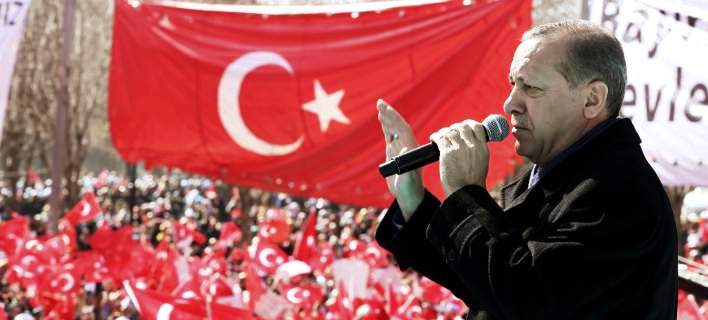
Tayyip Erdogan, with his eight consecutive electoral victories, as a candidate for mayor, prime minister and president and his two previous successes in the referendums of 2007 and 2010 and mainly his biological and political survival, after the coup attempt last July, seeks with the referendum of April 16 to impose his political dominance in the neighboring country institutionally. In the two previous referendums, the proposed reforms of the current Turkish President were voted for, in 2007, by 69% (19,4 million) and in 2010 by 57,8% (21,8 million) of Turkish voters.
In the context of the current election campaign, Tayyip Erdogan is making continuous and escalating verbal attacks on Western capitals, especially those that have banned the holding of election rallies on their territory. The anti-Western rhetoric, which contradicts the established diplomatic practices of the entire Turkish government, cannot be considered only in vote-hunting terms. But even from this perspective, it means that a significant part of the Turkish people approves of this particular phraseology and praxeology! Perhaps the most critical parameter of the upcoming referendum is how European citizens of Turkish origin will vote. It will certainly create intense concern if citizens of European countries vote for constitutional reforms that allow the concentration of powers in one person and deviate from the entrenched values and practices of European societies.
Tayyip Erdogan's recent statement is characteristic: "The families of the martyrs, the families of our heroes should not worry. I believe, God willing, that Parliament will do what is necessary regarding your demands for the death penalty after April 16." By linking the referendum result to a questionable popular demand, the President of the neighboring country seeks to manipulate Parliament and share the cost, at the international level, of a possible decision, or to credit the domestic political benefit if the proposed bill is voted down.
In our opinion, the Turkish Foreign Minister, Mevlut Cavusoglu, announced that after the referendum, a meeting of the Turkish government with the other parties will be held, in order to seek a unified stance from Ankara's side on issues related to Greece and the Aegean. This specific statement, no matter how much some attribute it to the pre-election period, should not only create complacency on the Greek side. Whether the government faction prevails or is defeated in the upcoming referendum, Ankara's escalating revisionist policy in the Aegean and its claims of co-ownership over the Republic of Cyprus will continue, through the pending "solution".
Greece is facing the ongoing situation with Turkey as the management, or rather the avoidance, of a crisis, while in fact it is a historical turning point for Hellenism. In order to prevent the galloping Turkish revisionism, we must take the lead in taming it and not expect our partners or other regional actors to do it in our absence. If we expect to be vindicated without cooperating, then we will simply find ourselves in the unpleasant position of being urged by partners and allies to accept part of the Turkish accusations. Athens has the opportunity to exploit the desire of the West to weaken the immoderate and now clearly anti-Western Erdogan.
Republished from New Politics