

Defense. A comprehensive reform is necessary
Defense. A comprehensive reform is necessary

In recent years, for decades perhaps, the word reforms has been frequently heard. The fields in which reforms are usually referred to are education, health, justice and public administration. And indeed, despite the discussions, studies, declarations and the recent economic crisis, it is a common observation that reforms have not progressed in our country and the discussion continues. However, we believe that an area in which reforms are equally, if not more, needed is the area of defense.
Defense is not just about equipment
Among the defense issues, those that mainly occupy the public discourse are the procurement of weapons systems. And justifiably so to a certain extent, since there is no defense without weapons systems, especially when the armaments stopped before the economic crisis began. The recent armament programs in the air force and the navy are very positive in filling serious gaps from the period of armament drought.
However, armaments, as important as they are, are not the most important factor in defense. History is full of examples where armies inferior in armament and numbers defeated their superior opponents. And to avoid going too far, it is good to keep in mind that in modern wars, when Greece was defeated, the defeat was not the result of technological backwardness (1974), while when it won, the victory was not due to armament superiority (1940).
We believe that the one-sided focus on equipment and technology is due to two reasons. First, the fact that it is easy to measure, compare and evaluate them: so many aircraft of this generation, so many submarines, so many guns, and so on. Second, because by adding weapons systems, there is the impression that deterrence automatically arises simply from the existence of weapons systems, and then deterrence is something like incense with which we exorcise evil.
There have been various changes in defense but never a comprehensive reform, resulting in some modern elements coexisting with old ones, in a structure that has remained stagnant for many decades. Of course, armies around the world are conservative mechanisms that resist change because they have great inertia.
Nevertheless, this is a reason for a more intense effort for change and not a reason to postpone it. When the international environment, society and technology change around us, it is not logical for the defense sector to remain static. Failure to adapt, to paraphrase Darwin, leads every organism to its fossilization and extinction.
Let us also add three other elements, in addition to armaments, for the necessity of changes. One can claim that the army in all opinion polls has a very high level of trust from citizens, as proof that it is functioning properly. However, this does not imply that because the army enjoys trust it does not need changes. The other element is also the trust shown by public opinion that the army operates more effectively than other public services.
Whether the army is more effective, however, cannot be judged in relation to the Fire Department or the EOPYY but in relation to the opposing army. Finally, there are reforms in defense that can have a great return value with minimal or no cost.
What should the reform include?
And what should a defense reform include? Of course, we cannot analyze such a serious and complex issue here, but we can briefly give the essence of the issue, using the British model of Defense Lines of Development. These lines provide a framework for coordinating the parallel development of various aspects of defense and include organization, training, personnel, doctrine, leadership and education, material, logistics and infrastructure. The telegraphic development of these lines concerns primarily the ground army, unless otherwise stated.
Organization: In the field of organization, we will address three issues, at the highest political-military level, at the level of the Ministry of Defense and at the level of the force structure. First of all, at the highest level, the main question, which is rarely asked, if one considers its seriousness, is the following: who develops strategy in the country and by what process? The short answer is that we lack an instrument and a process for developing a strategy. The orchestration and coordination of the power factors, the development of a strategy, the decision-making process, that is, issues that would be addressed by the establishment of a National Security Council, do not exist.
Despite the advocacy for the creation of such an institution from across the political spectrum, we have not managed to implement it to date. Furthermore, strategy is not a text, even a perfect one, but a daily process. It is striking that we provided in the Constitution for the National Foreign Policy Council (NFPC), an institution for general discussions, while we are unable to establish an institution for the formulation and coordination of strategy, the creation of which has not been disputed by anyone so far.
And of course the issue is even more infuriating, if one considers that perhaps the most important lesson from the Imia crisis in 1996 was the lack of coordination and the absence of crisis management procedures at the highest level. The image of the Chief of the Hellenic National Defense General Staff in the Prime Minister's office with a nautical chart or the commander of the EYP waiting for hours in the anteroom with an important piece of information, has not led to the adoption of corrective measures to avoid similar phenomena, even today, after a quarter of a century.
Then, there are organizational issues, which do not appear in the public debate. The Ministry of National Defense is perhaps the only one in all of NATO that does not have unified functions, except for the staffs plus some directorates, which were created about twenty years ago. It is indicative that the General Staff and the branch staffs do not have the common numbering of their directorates from 1 to 9 that is valid in NATO and almost all over the world.
The result is that there is no correspondence either internally between the staffs or with the outside world. Going even further down, we maintain an unacceptable command and control scheme in the Aegean, with multiple commanders, because we do not consider it a single area of operations. Instead of addressing this serious problem, we made it worse with the latest reorganization and the creation of the Special Operations Command.
The organization is more complex for the ground forces. The army has made a huge effort to reorganize itself since 1974 to confront the threat from the east. Until now, it has made many gradual changes, usually by shrinking, but never a comprehensive reform. In the last twenty years, there has been a confusion, the same ideas are recycled, and although many “new structures” have appeared, none have been implemented. Each commander usually prepared a structure, which died with his retirement, and the next commander made his own from scratch, in an eternal Babel. It would be particularly instructive to make an assessment of these reorganizations.
Doctrine: Doctrine is a set of fundamental principles by which military forces guide their actions. That is, how the army will act in a future war, so as not to fight the previous one, as the stereotype wants, is not self-evident or easy. War, Clausewitz told us, poses problems worthy of a Newton or an Euler.
We will highlight three points, the first of which is that the military needs to acquire research centers, not for geopolitical analysis but for the study of future warfare. Existing research offices are largely concerned with everyday life and rely on outdated models.
Secondly, how the army will fight requires some investment of resources. It is not logical to spend billions on the purchase of weapons but not give a damn about how they will be used.
The third point is that, although the military as an organization sends the largest number of personnel abroad for various trainings than any other organization in the country, it has not yet found a way to exploit the knowledge and experience of those who return. For example, operational ideas of the last thirty years such as the operational level of warfare, maneuver warfare or operations in depth, have never seriously concerned our military.
Staff: No one disputes that people, at least in theory, are the most important factor in an organization, as of course in the army. A first observation here concerns conscripts. Conscription has been gradually reduced in recent years and its each reduction was independent of the army's manning needs. Although the army has now become semi-professional, it still relies on reserves and conscription.
To date, it has not been possible to find a satisfactory solution to the truly difficult issue of correlating the manning of units in peacetime and the threats they must face, with the result that almost all units need to be supplemented by conscription. In recent years, the issue is not only that the reserve is not trained, but also that the training of hoplites during their service is problematic.
The military, relying on professionals, essentially babysits the reservists and uses them mainly for chores. Service has become devalued and needs to be given meaning. Most young people who join are indeed willing to do something meaningful, but this usually does not happen.
A second observation concerns morale, because an army without morale has no combat value. With morale, one issue is that in recent years the political and military leadership, perhaps operating under a state of some guilt, acted based on the logic of "what we cannot give you in money, we will give you in time."
This logic has also led to the institution of all kinds of exemptions and leave that undermine the readiness and operation of the army. Or it goes so far as to say, “since there is no money for off-base operations, the units will not be trained in the field.” This is dangerous and leads to the undermining of the fighting spirit and the publicization of the army.
The other issue is that the land army, while being a single organization, is composed of various departments, Arms and Corps. The fighting spirit is produced by those who are at the forefront, that is, in the maneuver Arms. The maneuver Arms should enjoy increased prestige and have the most privileges, not of course monetary.
In recent years, however, the opposite has tended to happen: the further away one is from the point of the spear, the more privileges one enjoys and the fewer responsibilities one is asked to shoulder. Such a phenomenon, however, undermines not only the fighting spirit and morale of the army, but also its very DNA. As one can reasonably understand, a mutated army cannot be very usefulflat.
Education: An army becomes a reality if it is trained, and training is a vast field, from which we will highlight only two elements. The first is the importance of basic training, which cannot be successfully carried out in units after the abolition of training centers.
The second element is the lack of training and shooting ranges. The military has made great strides in recent years in using simulation in training, which is important.
However, exposure to cold, heat and mud is not simulated and field training is not substituted for simulation. Practice and shooting ranges have shrunk even compared to twenty years ago and finding new ones is a matter of top priority.
Leadership and education: The army relies entirely on the strength of its leadership at all levels, to function and accomplish its mission. Let us highlight only two points here. First, the creation of a Leadership Center that will study and promote the corresponding issues.
Secondly, the lack of a truly demanding school for squad leaders and platoon assistants, not only for the infantry, in the respective schools, is considered of paramount importance and not a trivial issue. The flood of non-commissioned officers in recent years has essentially abolished ranks. Squad leaders and platoon assistants are very important positions as they constitute the foundations of leadership, in order to address their training in units and formations.
Education contributes to the military, alongside training, in the development of its fighting power as a whole. Education provides the intellectual capacity and confidence for leaders, especially at the highest levels, to improvise, innovate, and find solutions to problems that are impossible to predict.
It is a fact that officers are now acquiring education in various fields and in a few years, without exaggeration, all captains will have a doctorate. This is certainly not a disadvantage, however, where there is a lag is in military education, at the operational and military strategy levels.
The issue needs to be addressed by the army itself, and not abdicate its responsibility by assigning it to others, cloaking itself under a cloak of scientificity. Otherwise, we will end up in a situation similar to that before the Balkan Wars: officers were well-versed in trigonometry and bridge-building, but had not received military training to command formations.
We believe that the education and training of officers, from production schools to the highest level, needs reform. The reform needs to be examined as a whole and not for each branch to do its own and the Hellenic National Defense General Staff another.
Material: The vertical organization (with Weapons and Corps) is outdated and operational requirements must be organized horizontally based on combat functions (command and control, information, maneuver, fire, logistics and protection). Because in the current way, the tanks are responsible for the armored vehicles and the artillery for the guns. However, maneuver is not only tanks and concerns many, and no one is institutionally responsible for protection.
The same happens at an inter-branch level, where the air force is responsible for airplanes and the navy for ships, respectively, but for command and control, for example, there is no institutional responsibility. The only specific material that we would like to mention here is ballistic missiles. We believe that for the real strengthening of our deterrent capability, the procurement of ballistic missiles is necessary.
Logistics: We deliberately avoid the word "administrative care", which is the most ungracious word in military terminology, with which we replaced logistics after the war for an inexplicable reason.
The first issue we would like to address in this area is that logistics needs extensive modernization, with the introduction of practices and procedures from the business world.
The second is that interdisciplinarity must be expanded to the logistics sector and include many of its functions, which are common to all three sectors.
Finally, in the land army, supporting a high pace of operations requires a different approach to logistical support, "front-loaded", continuous and advanced with the logic of the "support package".
Epilogue
We close with two final observations. First, no organization changes from within. Until now, we have had the approval of the new force structure every time from the KYSEA. It was a formal process and no one outside the army was involved in depth, unless it was a matter of closing camps.
A comprehensive defense reform, however, is primarily a political issue of utmost importance, which politics must deal with. The excuse that these are military issues that we do not know about and leave to the military who do, is unfounded and only happens in Greece.
In a committee dealing with defense reform, a person of prestige, of common acceptance, from the political or business world should be appointed as the head. For specific issues, the expertise of companies (for example, Deloitte or McKinsey) is also necessary, as is done all over the world.
When the Germans reorganized years ago, they put a former president of the republic at the head. The British in 2011 put a lord at the head of the reorganization of the Ministry of Defense. The Levene Commission, named after the lord, submitted 63 recommendations for changes. The changes were implemented over a period of almost a decade with annual progress checks.
Secondly, in order to carry out reforms that exceed the term of office of a leader, minister or government, the consensus of the parties in power is necessary. But is such a thing possible in Greek political reality? If not, we will continue as before.
But by doing the same or more of the same, we cannot expect different results. The longer we postpone changes, the more pressing they become. If we do not implement them in advance, however, they may be imposed on us in a painful way.
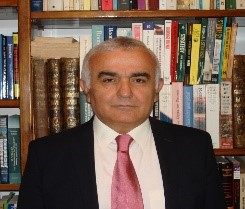
* Panagiotis Garzonikas is a Lieutenant General (ret.), Director of the Electronic Journal "STRATEGY" and a PhD Candidate at Panteion University
www.elisme.gr