

The robotic revolution in warfare – The lessons of Ukraine.
 GRIVAS KOSTAS
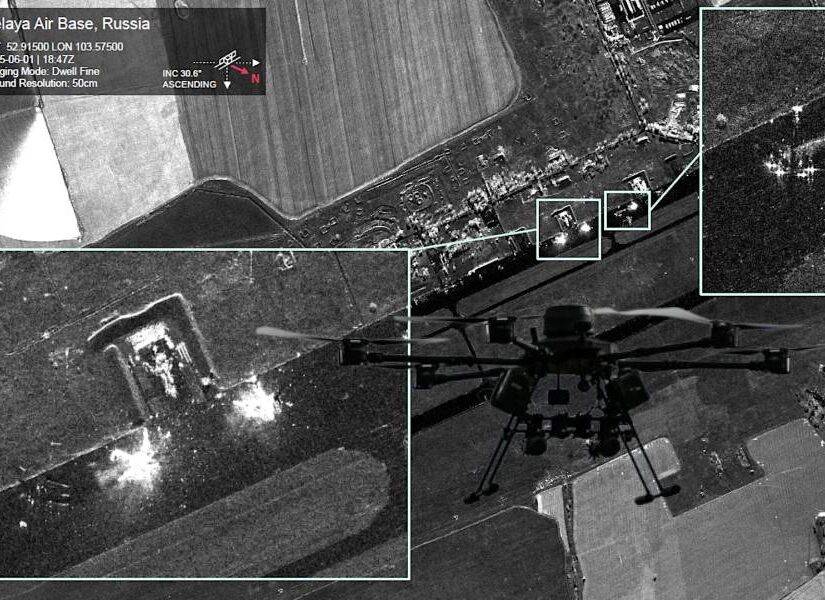
The Ukrainian attack with cheap drones transported in containers to Russian military-air bases (i.e. against very expensive aircraft in a highly guarded area), other operations in Ukraine in Gaza, and before that in Artsakh, as well as the asymmetric capabilities of the Houthis and the Iranian Revolutionary Guards in the Red Sea and the Persian Gulf, have shattered perceptions of “traditional” military power.
However, many Armed Forces persist in remaining stubbornly anchored to outdated military technologies and methodologies, in an era where the robotic revolution is looming. This is nothing new in human history. As the writer has argued in his study “The New Military Revolution and the Greek Defense Strategy” (Livanis Publications), the view that the new definitively and irrevocably replaces the old and eliminates it from the reality of war, is simply wrong.
Sometimes, in fact, there is not just stagnation, but a conscious reversal of the historical current, in order to maintain a given socio-political-military order of things, to avoid affecting the privileges of various elites, or, quite simply, because societal obsessions and fears prevent the entry and acceptance of the new. One such case is the ban on firearms that existed in Japan in the past.
By the end of the 16th century, the use of firearms had become fully established in Japan. However, the beginning of the 17th century saw a massive disarmament of the Japanese. From 1607, firearms could only be manufactured with a government permit. From that time on, firearms were used on a large scale in Japan only in the Shimbara Christian Rebellion of 1637, and then they practically disappeared for about two centuries.
This decline was due, on the one hand, to the fact that Japan did not have to face any external enemy, and on the other hand, because firearms undermined the dominance of the central government and the prominent role of the Samurai in the social structure of the country. This was because the Samurai based their role on their ability to fight with melee weapons. On the other hand, firearms, with a short training, offered a peasant the ability to kill a Samurai with ease. In other words, they were weapons that threatened the social and political status quo of the country.
The symbolism of the sword
However, there are some other factors worth mentioning. Among other things, the sword had an aesthetic and symbolic function in Japan, while in the 17th century there was a strong reaction in Japan against foreign influences and firearms were considered foreign. Guns were considered unsightly. They required clumsy and ugly movements to handle, in contrast to the elegant and harmonious movements of the sword and spear. In addition, the forms of warfare there depended on hereditary traditions.
The aesthetic dimension of weapons and combat methodologies may be a source of embarrassment today. However, it is an element that has also played a role in European warfare, as Professor John Lynn argues in the chapter “Aesthetics of War” of his study “Battle: A History of Combat and Culture”. And let's not think that these are a thing of the past. One of the main factors preventing "traditional" armies from adopting the massive use of low-cost robotic systems, in "mosaic" structures, is the fetishistic obsession with combat platforms of symbolic, semiotic and aesthetic importance. An example is the high-tech fighters F-35 and Su-57.
This coexistence of old and new applies not only to weapon systems and combat methodologies, but even to the forms of war themselves. The political philosopher Alexander Moseley, in his study “A philosophy of war”, distinguishes the evolutionary stages of War as follows: Animal Warfare, Primitive Warfare, Civilized or Political War, Modern Warfare, Nuclear Warfare, Post-Modern Warfare. However, he considers that these forms coexist.
The revolution from the "demonic" gunpowder
Returning to weapon systems, the introduction of cannons into service provoked reactions not only in Japan, but also in Europe. Writers such as Miguel de Cervantes and Shakespeare were completely opposed to their use, accusing them of increasing the brutality of war, as well as allowing foot soldiers of humble origin to easily kill knights, who were the flower of European nobility.
The discovery of gunpowder was blamed on the distant Chinese or Muslims, while many Protestant Northern European writers attributed this “diabolical” invention to the shadowy figure of Berthold Swartz, a German Franciscan monk and alchemist. According to one version of this story, in 1300 Swartz conducted an experiment in which he heated a sealed container containing sulfur and nitre. During the process, a violent explosion occurred that threw the lid to the ceiling of the room.
This piqued the monk's interest and he continued his experiments, discovering gunpowder and then building a primitive cannon that was later sold to the Venetians, who used it against the Genoese. Some woodcuts by Protestant artists depict demons guiding Swartz as he conducted his experiments to discover gunpowder.
Demonic properties!
Furthermore, for a long time, neither scientists nor soldiers could understand and accept mentally and psychologically the fact of the almost simultaneous firing of a cannon with the exercise of a destructive effect on a target located at a great distance, without there being any obvious visual relationship between these two. Thus, they treated firearms in a metaphysical way and attributed demonic properties to them. This was true even for those who used them!
The case of a cannon operator from the early gunpowder era is mentioned, who hit his target with three consecutive shots and was accused of being helped by the devil for his success! He was therefore sent on a pilgrimage to end his control by demonic forces! Many great figures of the time, such as Martin Luther, seriously argued that cannons and arquebuses were products of Satan!
These perceptions are dangerously similar to today's (religious in essence) concerns about the use of autonomous combat robotic systems. Such was the infamous declaration of a thousand scientists a few years ago (co-signed by the famous astrophysicist Stephen Hawking) according to which the use of autonomous combat robots was characterized "call of demons".
So, it is not a given that newer military technology will replace older technology simply because it is more effective, or that it will not face resistance. This is true even if it is not just more effective, but dramatically more effective. In fact, it is in these cases that the strongest resistance usually occurs. Also, in some cases, a new technology is simply rejected because it is so advanced that its capabilities cannot be perceived by the military and political bureaucracies of its time.
Robotic revolution and bureaucratic blindness
A typical example is the submarine Ictineo II, designed and built by the Spanish engineer Narcis Monturiol in 1864. In 1859, Monturiol built the Ictineo I, which took its name from the combination of the Greek words ιχθύς and ναύς. This vessel had many of the features that appeared in much later designs, such as a system for rejecting carbon dioxide. However, the submarine's propulsion system relied on the muscular power of the crew. To solve this problem, Monturiol designed the Ictineo II, which had an anaerobic propulsion system for its propulsion.
By combining various chemicals, steam was produced that drove the submarine's propeller, as well as oxygen that supplied the atmosphere. It is worth noting that anaerobic propulsion systems (air independent propulsion systems / AIP) began to be studied seriously just before World War II, while only in the 1990s were they mature enough to be installed in submarines. In addition to the propulsion system, the Ictineo II had a double hull and all the features that were subsequently incorporated into modern submarines. The Ictineo II had an inglorious end, since no state body was interested in it. Thus, its inventor was forced to hand it over to its creditors and it was subsequently destroyed to be sold as scrap. Copies of the two submarines are in the Naval Museum of Barcelona.
One is tempted to think what would have happened if the Spanish bureaucrats had understood the potential of this ship, whose designs seemed to have been brought from the future, and had invested in it, evolving it and “marrying” it with the torpedo that appeared a few years later. The naval battle in Manila Bay with the American Navy in the war of 1898 might have had a different outcome and the history of naval power and the role it played in shaping planetary balances might have been completely different.
Unfortunately, many armies today display similar blindness when it comes to the use of robotic systems and artificial intelligence applications. And they will pay dearly for this blindness in the not-so-distant future, especially if the adversary is not locked into similar anachronistic fetishes and invests in combat robots…