

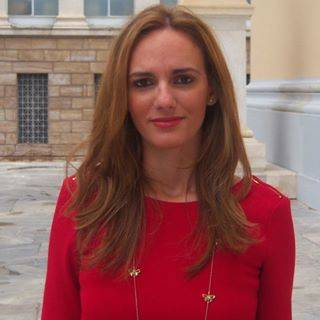
Katerina Vathrakoyanni*: “EU-Russia Relations in the Post-Cold War Era”
 The purpose of this article is to examine EU-Russia relations in the post-Cold War period, that is, as they were shaped during the period of the dissolution of the USSR (1989) and the re-emergence of Russia as the former's successor.
Euro-Russian relations have as their background a history of over a thousand years of competition, military conflict and mutual suspicion, but also of creative coexistence and cooperation.
Since the time of Peter the Great, Russia has played a decisive role in European development, sometimes as a "liberator" and sometimes as a "hegemon" and, during the Cold War, as an ideological-political and strategic adversary.
The European Union and Russia have been engaged in an effort to build closer ties since the dissolution of the USSR, with the obvious aim of strengthening mutual stability and security and economic and energy cooperation on the old continent. After all, it would be extremely difficult to maintain the Cold War tension for a long time, as both partners live on the same continent and deal with largely the same problems and challenges, whether in Europe or globally. This does not mean, of course, that they do not have different views on how to approach and solve these problems.
However, despite its impressive recovery (economic, energy and political-diplomatic) in the international system, Russia continues to suffer from an identity crisis since it has not yet been clarified (and clarified itself) whether it is part of the European world, a reborn Great Power that nevertheless refuses, due to its formerly glorious past, to join the European (small) world, or simply constitutes a vast and at the same time powerful land bridge between the (Far) East and the West.
The insecurity of the Russian side is exacerbated by European ambiguity and contradiction and ultimately the lack of a common European response to Russia. The political will to cooperate with Moscow is not always a given since it often depends on intra-European power relations and interests, as well as on the frequent, inelegant and not, interventions of the US in the EU's European partners.
Russia sees the EU and by extension much of the West as a potential aggressor-competitor against whom it must be prepared to defend itself, possibly militarily. This perception has deeper historical roots going back to the Napoleonic invasion of 1812 and the eventual conquest of Moscow, the German Empire and the Nazi attacks of 1941-44, and the Nazis' inhuman treatment of the Red Army and the Russian people, the "Iron Curtain" and the "proxy" battles of the Cold War.
The 90s brought a brief respite to the troubled relations between Russia and the West precisely because Russia emerged from the Cold War "wounded" geopolitically, geo-strategically and economically, but the general theme remains the same: Russia feels threatened and surrounded by the West and its political-military coalitions, namely the EU but primarily NATO. The ongoing Ukrainian crisis is the most recent manifestation of this fact. The EU's attempt to expand into the countries of the former USSR bordering Russia is perceived by Moscow as an attempt to entrap Moscow in anti-Russian movements, to penetrate the West into Russia's vital space, which until recently was part of the USSR and as the long arm of NATO and, by extension, the USA. Naturally, Russia feels suspicious.
In the conventional field, the EU and Russia cooperate in a wide range of areas within the framework of the Partnership and Cooperation Agreement, the four Common Spaces and the Partnership for Modernisation. In fact, in 1999 the two parties declared a “strategic partnership”, which they understood differently. As regards the economic sector, the two partners maintain very close relations. The EU is Russia’s most important trading partner and investor, while Russia is a vital supplier of energy (especially natural gas and, to a lesser extent, oil) to the EU.
However, EU-Russia relations on political issues are characterized by tensions and disagreements, the most important of which concern their competition in the Eastern Europe and South Caucasus region and the violation of rights and freedoms by Russia.
Russia has undoubtedly been one of the EU's most important partners since the pre-Cold War era for a variety of reasons.
First, the land-based geographical proximity of the two gives the relations between them significant importance. Russia is the EU's largest neighbouring country, which borders Russia through several of its member states, such as Finland, Latvia, Poland, Lithuania (Kaliningrad exclave) and Estonia. Beyond the immediate proximity, Eastern Europe and the South Caucasus constitute a common neighbourhood for the two partners and a field of confrontation, with the EU trying to bring these countries closer to the community.
Secondly, Russia is an extremely important partner for the EU due to its regional and global power. It plays a significant role in the Caucasus and Central Asia and exercises significant influence over its neighboring countries, while at the global level it is seen as an independent great power that uses its significant energy advantage to influence (economically and otherwise) the international order. Furthermore, Russia is one of the five permanent members of the United Nations Security Council, which does not apply to the EU collectively but only to two of its member states individually, which strengthens its position as a global power, with the ability to veto Security Council decisions.
Thirdly, in terms of purely economic and business, Russia continues to be a hugely dynamic market for EU products as well as a key supplier of energy products to all EU member states.
Fourth, even if it is, compared to the former USSR, in a more difficult position regarding the number of its former "satellites", allies and partners, it maintains a significant number of friendly states worldwide, even within the EU.
The prominent importance of Russia as a European partner justifies the EU's continuous efforts to build, maintain, deepen and broaden its already close relations with its neighbouring country. Their close cooperation has already spanned two decades since the signing of the Partnership and Cooperation Agreement and covers a wide range of areas, such as the promotion of democracy and the rule of law, trade and investment, stability and security both in their common neighbourhood and internationally, energy and nuclear safety, the protection of human rights, cooperation on cultural issues, tackling terrorism and transnational organised crime, the refugee crisis and illegal migration, global environmental degradation and others.
However, in contrast to the extensive and optimistic institutional framework governing bilateral relations, in reality it is observed that this partnership is shaken far from rarely. International events, such as the recent (and ongoing) crisis in Ukraine, the annexation of the entire Crimea and the subsequent European sanctions, the war in Georgia in 2008 and the subsequent annexation of North Abkhazia and Ossetia to Russia, Russian interference in Transnistria and Moldova, Russia's continued support for the Assad regime in Syria and Iran, etc., bring to the surface the different perceptions and practices of the two partners and remind them of their enormous gap regarding the values and principles that the European Union advocates and tries to transfer, possibly very pressingly, to Russia.
Armed with its (how common is it?) foreign policy, the EU promotes values worldwide, such as national sovereignty and non-interference in the internal affairs of states and respect for the rights of minorities, while Russia considers these values of secondary importance and shapes its policy based mainly on its narrow geo-economic and national (geopolitical/geostrategic) interests, taking into account that the countries of Eastern Europe and the Caucasus constitute the strategic "neighborhood" and neutral protection zone of the former USSR, and Russia demands that its opinion be taken into account when the EU tries to curry favor with these states.
So given that Russia is too big to ignore, what should the EU's stance be towards an unruly and reactionary partner?
Can the EU really design and implement a meaningful foreign policy towards the countries of Eastern Europe and the Caucasus, without taking into account Russia's fears, anxieties and concerns, justified or not?
Should the EU do so, or will Russia's ostentatious disregard potentially increase its level of concern and lead to further aggravation and suspicion between the two European roommates?
And if the EU should take into account (justified?) Russian concerns, to what extent should it do so that EU foreign policy does not become "hostage" to Russia?
Can there be a real Eastern European Neighborhood Policy, without Russia and given the frictions between Russia and the other parties participating in the European Neighborhood Policy?
What is (and will be) the fate of the various, parallel, multilateral European plans and designs (e.g. TACIS, European Neighborhood Policy) towards Eastern Europe and the Caucasus, when they collide and will collide with Russian suspicion and reticence?
Can there be a sincere (permanent and structured) EU-Russia dialogue?
What is the future role of the Black Sea Cooperation Organization, given the diversity in the positions and opinions of its members?
Is there a scope for substantive political cooperation and partnership between the EU and Russia beyond economic, investment, business and energy cooperation, or will the two partners simply continue to interact, albeit closely, only at the economic and energy levels as a giant EFTA that will, however, fall short of substantive political cooperation?
And finally, where does the geographical term "Eastern Europe" begin and end?
I think, ultimately, that EU-Russia relations will continue to be tested by serious and unpredictable fluctuations, due to historical roots, mutual suspicion, entrenched stereotypes and misconceptions, as well as mutual chronic prejudices.
This is also contributed to by the different approaches of the EU member states, some of which desire closer relations with Russia, due to their energy dependence on it, others are negatively affected by the years they were under its suffocating embrace for 50 years, during the Cold War, but are interested in strengthening their ties with Russia, thus trying to balance American pressure and influence on them, and others are negatively disposed towards Russia as they are influenced by their pro-Atlanticism. As long as the EU cannot "speak" with one voice, cacophony will prevail in its relations with other states, including Russia.
That said, the EU and Russia, despite their possible ideological initial position in history, different starting point, way of dealing with problems and perception of the world with conflicting geopolitical, geo-strategic and geo-economic interests, must cooperate and on many issues they have gained a common understanding and common pace. Undoubtedly, the problems and conflicts will continue and from time to time there will be exacerbations and intense confrontations, but the common historical and European heritage of both neighbors, I believe, will prevail, for the benefit of the entire European continent.
* M.Phil "Modern Greek Studies", University of Birmingham, United Kingdom MA "Mediterranean Studies", University of Peloponnese, Department of Political Science and International Relations