

Costas Zagalis: Border Abandoned Villages!
To the Board of Directors of ELISME
Distinguished gentlemen!
Yesterday at 8-9 pm I saw/heard the interview of the President of ELISME, Mr. V. Martzoukos, on the BLUE SKY channel. Among other things, Mr. President spoke about the abandoned border areas, an issue with which I have again addressed you. The seriousness of the issue justifies not only a second reminder, but its elevation to a matter of great national importance and priority.
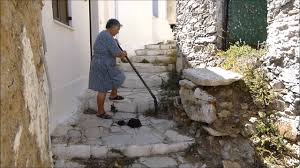 What is happening there? (I'm talking about my area: Pogoni, Ioannina, 15-20 villages). It happens that Greece is slowly leaving there! A National Void is being created, that is: a) agricultural activity has (COMPLETELY) ceased to exist since the end of the Civil War, b) the specialized cultivators of the stony land have left (and over the years have died), c) today's descendants do not know the grandfather's fields because they never "walked" them and because there are no inheritance and property papers, but also because they themselves became city dwellers with professions completely unrelated to that of the grandfather (small-scale farmer-small-scale livestock breeder), d) the situation is made difficult by the fact that we had many (20-30) small fields scattered throughout the "territory" of the village, e) the patriotism required for the resurrection of these areas is lacking today: the State has never approached the issue from a national perspective, taken care of the remaining (Kallikratis, Kappodistrias), created Mikro Pogoni, where all the remaining people settled down, so that today no one from the locals comes out with patriotic and national objections. No one sees (does not want to see) that Mikro Pogoni is Pogoni of Death, Pogoni that will be taken over by foreigners. They are indifferent, annoyed, hostile to any changes. If the Cafe in their village closed, they are a little worried. They take their car and go to the village further away that has a cafe. The whole of Pogoni became a village with all the shops and services that each village had separately in the past.
And here comes a new blow: they took our fields!. The National Cadastre took our fields. It took them "by law". As is normal, the modern heirs did not declare the fields (because they did not know about them, they did not have papers), they declared only the house. When I wanted to declare the fields, they asked me for a topographic map and coordinates for each piece. I resigned. Not even this blow sensitized the villagers. They accepted the removal of our fields without protest.
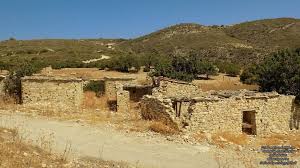 It is said that (after 10 years) the State will take our fields and then put them up for auction. That is when the national damage will occur: the bidders will be anything but from our village (they may not even be Greeks), and the workers they will bring will be foreigners (Albanians, Pakistanis). This is how I understand the National Void and its filling. Our culture will leave there, Greece will leave there. This process has already begun: in our villages the few workers that exist (mainly builders, gardeners) are Albanians, from Northern Epirus).
It is not only the Imia that are at risk, our generals should also look west. The best National Armor of our land is for this land to be held by Greeks in their hands, the heirs themselves. I address the Board of Directors to raise the above issue among its first priorities, to convince the State that our fields should NEVER escape our hands. Because that would be equivalent to the de-hellenization of the region. I write about what we could do with our fields in the second text that I am sending you. I do not ask for these texts to be published. However, if you find something right to publish, I give you the right.
Athens, 12/8/2019,
Kostas Zagkalis, 85 years old, physicist and mathematician, retired from the IGME
THE CADADES AND THE ABANDONED MOUNTAIN VILLAGES
There is a category of agricultural land that is unjustifiably abandoned. It is the land of the mountain villages that were abandoned by their inhabitants after the war (and especially after the Civil War). The wars were simply the pretext and not the main cause of the abandonment. In these stone villages, until the 50s, Byzantine agricultural techniques prevailed. Households had to produce all the necessary products (they did not buy or sell anything). Thus, the paradox of cultivating all the necessary cereals and vegetables on their own on this stone land occurred. Life was torture. In the past, many men emigrated, but returned to the village. After the 50s, they took their families with them and left forever. They went to the cities (inside and outside Greece). Agricultural production was completely abandoned, the villages were devastated. In the 60-70 years that have passed, there has been NO serious concern about these abandoned fields, neither at the level of the State, nor at the level of the owners themselves. An absurd silence has covered this problem all these years.
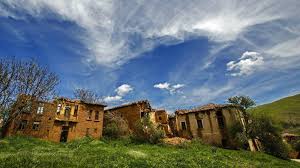
I come from such a village in the mountainous Epirus (Drymades, Pogoni, Ioannina). I know the reality "first hand". I am 85 years old, the only one still "standing" from the first generation of my villagers. I am very worried about the situation there. The village is dying before our eyes. The people of the first generation, after the Civil War, went to the village out of sentiment, they took care of their houses and the entire village, with the result that today there is a doll-like settlement there, but without people anymore: the elderly have died, the young do not go to the village. No economic activity. No money is made there anymore (not a single euro). The village cafe closed 3 years ago. The case is particularly complicated by the fact that we had many small fields and not one large field. Specifically, our family had 14 acres in 22 parts. In general, my villagers had 10-20 streams in 20-30 parts. This fragmented property is not valuable. No one knows these fields today. Those who knew them died. Today's descendants not only do not know the fields, but not even the locations. We have no valid documentary evidence. There are no inheritance papers, topographic maps with coordinates, modern contracts, titles. The only written evidence we have for our fields is a vague cadastral register from the 1920s, which only states how many sides the village plot has and how big this plot is (approximately!). Over time, the fields were forested, washed away, and became unrecognizable. But there are no longer any people to handle them. Few young people come to the village for a very short period of time (and only in the summer). Two or three pensioners stay there in the winter (without cultivating). The State has never dealt with our property. We have never worried about the usefulness and prospects of our fields. From our side, the situation is no better: there is no appropriate organization, collective commitments, there is no village. As far as I know, the picture is similar in all the surrounding villages. Lawlessness, crime, hashish trafficking, desertification, ... national shrinkage (mainly these areas are border areas) - these are our characteristics.
And while this is the situation, the State is only discovering us now that the National Land Registry has arrived. It puts us in a file with the active farmers (of Thessaly, Macedonia, Thrace) who have never left their place and know their fields well. Absurdity! We were poor and abandoned, now they will take our fields away from us. Because we cannot meet the requirements of the land registry. These days, the mapping of our area is being carried out. If people are in a hurry to submit something, it is the house. They do not submit the fields (because they do not even know them). I also went to Galatsi. They only accepted the house and two plots of land next to the house, for which I had coordinates. They didn't accept the fields because I didn't have coordinates. They asked for coordinates for each field. It turns out that they themselves don't have a clear picture of what they should do. While in the informational texts they circulate they promise "help" in the topographic location of the plot, there (in Galatsi) they only know one standard procedure: they ask for coordinates! They also have a naivety: they believe that such coordinates exist and that the citizen can easily find them on his own on the computer. They asked me if I had a computer. I told them "yes". They gave me an email address and told me to search for it myself and come back. Although I knew very well that our area was unmapped, I had a professional surveyor of our area do a search and he told me that in the area of my village there are only two points on the topographic map: the church and a chapel...
SUGGESTIONS:
1. The State should put villages like mine in another folder and help us specifically. Give us an extension for filing declarations until the fall of 19 so that the following can be done:
2. The State should instill optimism in our people about the future of the region. To find out what crops our fields and our people are suitable for. I propose three forms of economic activity there: arboriculture (walnut, walnut, dogwood, blackberry, chestnut), logging, livestock. These three activities do not conflict with each other, one needs the other. The proposed solution does not force the owner to leave the city and settle in the village. The village will bring a second income, the owner will come once a year to harvest the crop.
3. To eliminate the fragmentation of our agricultural property before we go to the National Cadastre. This work is a necessary and exclusive condition if we want to pass the National Cadastre. There are two ways to solve this problem: a) land consolidation, b) cooperative. In my village, as I said above, each villager had 20-30 small agricultural plots of a total area of 10-20 acres. There were 93 households. In total, the village had about 2000 plots. If we choose land consolidation, the 2000 plots will become 93 larger plots. If we choose cooperative, then the 2000 plots will become one large plot of about 2000 acres. The second solution is the best and very simple. We can easily put such a large estate into a European program and receive subsidies. According to current laws, however, the two above reforms cannot be made before we pass a National Cadastre. A vicious circle! The State should find a way to overcome the legal difficulties. The State should help us organize ourselves into a cooperative as we are now, with the papers we have today. We will not commit any offense, because all our fields will be included in the cooperative. No one will be left out. No one will take someone else's piece. We will have common justice as it has been formed in villages historically. Everyone will be fairly satisfied. After the state transfers the entire cooperative to the national cadastre in one act. This is the only way to make this transfer honest and accurate. Because, with the process that is taking place today in the unmapped villages, injustices will be committed (intentionally or unintentionally). If the concept of justice in land ownership is lost, there will be wild land plunder. The individual is completely unprotected when everyone takes care of only himself. This will be historically damaging. Greek (and local) culture will be lost. The most persistent offender will be successful. In our villages, no one can defend what is "his own". Any offender can encroach on other people's property with impunity. All he needs is unconsciousness.
4. To hold a conference on the above issues and to organize all interested and sympathetic people into a Salvation Movement for the abandoned villages.
The reward for our efforts in this reform will be the resurrection of the abandoned villages, the fields will be utilized, they will be taken forever by the Greek people: the legitimate heirs. National shrinkage will be prevented, law and security will come. If we also find oil in Epirus (I am in favor of drilling), then Epirus will overcome its backwardness.
Also, the State should exempt us from the expansionist actions of the Forest Service. The areas I am writing about were never forests, they were fields.