


SEMINAR ON DEFENSE AND STRATEGY: Wednesday Section: Leadership in peace, crisis and war. Relations between political and military leadership.
The scheduled lecture on the topic took place on Monday, 2/11/2015, as part of the Seminar on Defense and Strategy organized by the Institute in the Fall of 2015.
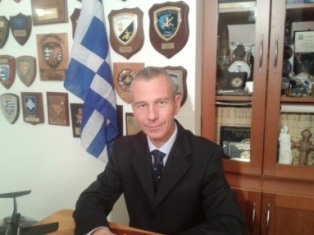

The Dialects: Hippocrates Daskalakis and Anastasios Bassaras
In a packed hall, lecturers Hippocrates Daskalakis (Vice-President) and Anastasios Basaras (Smchos) presented their topics with great success, a summary and general outline follow:
GENERAL
The basic principles of leadership (political and military) and the role it plays in the governance of states and their territorial entities were developed. Reference was also made to the role of leadership in shaping the national power of the state and national policy, with emphasis on achieving the necessary national-social mobilization towards the formulation and achievement of national objectives. The balances, problems and quality of political and military leadership relations in times of peace, crisis and war were correlated with national power. Relevant examples from the past were given (from selected states, including Greece) and the formation of these relations in the future is examined based on the evolution of certain parameters (e.g. international environment, technology, new forms of war, threats and challenges, etc.).
The subject of leadership in peace, crisis and war was presented by Major General (retd) Daskalakis Ippokrates, while the Relations between political and military leadership was presented by Major General (retd) Basharas Anastasios.
Leadership in peace, crisis and war – DASKALAKIS
The following were presented, analyzed and discussed:
1) Analysis of the concept of leadership and the elements involved and shaping its functions-characteristics.
2) Comparison of the concepts of leadership-command-management.
3) Role of the environment-system in shaping leadership and their interaction.
4) "Recipe" for creating leaders. Are you born or made a leader?
5) Intended functions of political leadership and inherent risks.
6) Differentiation of leadership and demagoguery.
7) Differences between political and military leadership.
8)Special characteristics of military leadership.
9) Intended functions of military leadership and inherent dangers.
10) Periods of crisis and the role of leadership.
11) Periods of war and the role of leadership.
12) Examples of leadership figures - reference to historical examples.
13) Greek reality and the lack of a reliable system-environment-method-will (?) for creating leaders.
14)Exploring the role of leadership in today's changing environment of new threats and the role of technology.
The relevant texts were presented and provided for study.
Political and Military Leadership Relations (PML-N) – BASARAS
A presentation, summary and discussion of topics such as:
-Political-military leadership relations in general (Definition of the SPSI. PSS in modern Greece, Comparison of the SPSI in Turkey and Greece, Influence of the Great Powers on the SPSI in Greece)
-Modern environment and requirements (Friction points, Presentation of main characteristics and criteria of harmonics of SPSI)
-Historical examples (A summary of sayings and conclusions of great men on the SPSI)
-Greek reality (List of institutional framework, findings, conclusions and proposals for improving the SES in Greece)
Indicatively, the issues and questions that were examined were the following:
1) How are SPSI relationships defined?
2)Review of the PSS in modern Greece
3) Comparison of the SPSI in Turkey and Greece
4) Influence of the Great Powers on the SPSI in Greece
5) What are the friction points between the PI and the SI?
6) The main characteristics of harmonics of the SPSS.
7) What are the criteria for good democratic control of the SPSS?
8) How did great contemporary personalities view the SPSI?
9) Why did Georges Clemenceau declare that war is too serious a matter to be entrusted to the Army?
10) Why did Plato, in his Republic 2400 years ago, ask, "Who will guard the guards?"
11) What is the institutional framework of SPSI relations in Greece?
12) Findings and conclusions on the SPSI in Greece!
13) Suggestions for improving the SPSI in Greece!
14) Is there sufficient literature in Greece on SPSI?
In the presentation, summary and list of topics, it was emphasized that in May 2014, the Hellenic Institute for Strategic Studies organized the conference “Political-Military Relations in a State Context. Lessons for Greece”. An important topic that has influenced our history and concerns both politics (PI) and military leadership (SI). The favorable comments, the pioneering nature of the topic for Greek conditions, the quality of the presentations in combination with the overall organization made the conference particularly successful.
The subject of relations between the Greek and the Greek-speaking world in times of peace, crisis and war concerns every well-governed state. However, in Greece, despite bitter national experiences, the subject is considered, rather, as a "taboo" issue, with timid steps towards improvement.
The body of the presentation followed, supported by a PPT presentation.
In the epilogue, it was emphasized that:
The subject of SSPs in times of peace, crisis and war, due to its importance, is of extensive concern to every well-governed state.
Despite the rich but unfortunate national experience, Greece considers this subject to be a "taboo" topic, with the result that steps towards improvement in this area are meager.
The intention of EL.I.S.M.E. is to keep the issue of the PSS open, to monitor it and to highlight it until those responsible for governing the country wake up.
The relevant texts were presented and provided for study.