

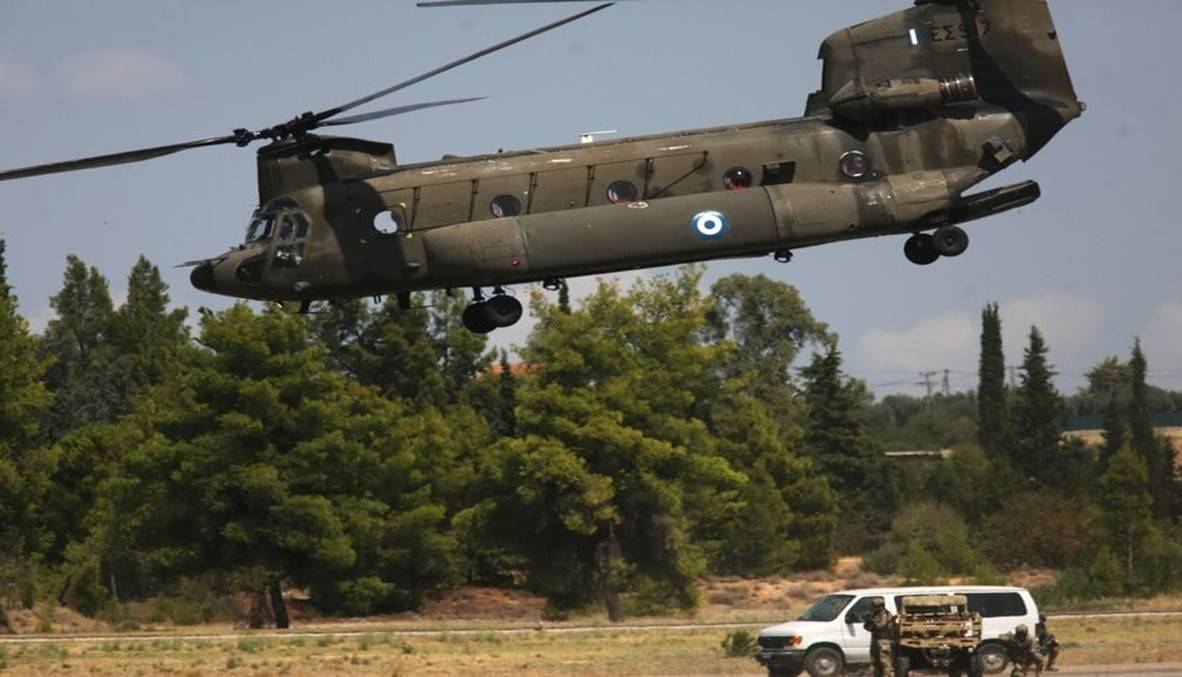
The lessons from today's wars – Are we learning in Greece?
The lessons from today's wars – Are we learning in Greece?
 GARTZONIKAS PANAGIOTIS
- 13/09/2026
 GARTZONIKAS PANAGIOTIS
Not all national armies follow the wars of other countries equally to learn from them and adapt what they learn to their own army. The Americans had already initiated the practice of “direct history” since World War II, with teams of historians following the troops and, immediately after the battles, interviewing the participants to learn and learn.
The US Army established the Center for Army Lessons Learned (CALL) in 1985, and the Joint Center for Lessons Learned (JCLL) the following year. For example, the study group formed by the Chief of Staff of the Army to directly study the lessons learned from Operation Iraqi Freedom in 2003 included 84 individuals, who worked on it for about a year.
Without exaggeration, the systematic extraction and utilization of lessons learned from current operations is a highly developed activity in the American armed forces. This practice has been transferred, in recent decades, to other Western armies.
NATO itself established the Joint Analysis and Lessons Learned Centre (JALLC) in Lisbon in 2002. JALLC, as part of the NATO Command Structure, provides support for the analysis of operations, training, exercises and experiments and maintains the NATO Lessons Learned Portal, a tool to facilitate the relevant process.
In NATO, the term “lessons learned” does not simply refer to isolated findings from an operation. It is an institutionalized process that involves the creation of structures and procedures to identify, manage, evaluate and implement lessons learned from operations. This process covers key areas of military activity, such as training, equipment, personnel, information, operational concepts and doctrine, organizational structure, infrastructure, logistics and operational planning.
In Israel, “lifelong learning”
The armed forces of all countries, and not just those of NATO, make significant efforts to learn lessons both from their own operations and from the wars of other countries. The example of Israel is typical. The Israelis have fought many wars and, as such, have a special tradition of learning lessons from their own war experience.
After the Second Lebanon War in 2006, they designated officers with the sole mission of observing, collecting, and disseminating lessons in real time. Initially, one or two reserve officers per division took on this role. In the recent Gaza war, the Israeli Army significantly increased the number of officers dedicated solely to learning lessons, reaching about 150, by expanding the institution – with one officer in each battalion. This system is facilitated by Israel’s large pool of trained reserve officers, from the rank of major to the rank of colonel.
Israel , however, does not limit itself to studying its own wars. It also seeks to learn from the experience of other armies. In the spring of 2022, the General Staff of the Israeli Armed Forces established a special group to draw lessons from the monitoring of the war in Ukraine. Its purpose was to study the war in depth, identify lessons and examine how these could be adapted to the needs of the Israeli Armed Forces. At the same time, each Branch established its own study group to focus on issues of particular interest.
The material produced by the study groups was distributed in writing among themselves, to commanders and to all levels of the armed forces. At the same time, one-day seminars on the war in Ukraine began to be organized, as well as individual lectures by specialists for senior and junior officers at military academies and brigade and division headquarters.
The pitfalls of lessons learned
The war in Ukraine, the first large-scale war in Europe since 1945, has attracted, due to its long duration, the interest of journalists, military personnel, academics and all kinds of experts, who are trying to draw lessons. With the widespread use of the Internet and social media, a simple search for “lessons from the war in Ukraine” on the Internet can lead to thousands of results. However, drawing real lessons from a war is not at all an easy task. On the contrary, it hides significant pitfalls.
First, lessons must be learned from analysis, not just observation. Observing an event does not automatically mean knowing its cause or being able to generalize. Often, in fact, initial observations turn out to be wrong. There are not always clear lessons that everyone can recognize and apply in the same way.
Second, they do not seek lessons from individuals, but rather from practices, processes, organizations, and systems. The institutional process of drawing lessons therefore tends to treat military leaders as interchangeable parts of a large and complex system. Military history, however, reminds us that outcomes in war are often determined by the abilities and weaknesses of specific commanders, as well as by the decisions they make.
Third, at a deeper level, the concept of “lesson” presupposes a degree of certainty: that the facts are sufficiently understood, that the relevant processes are known, and that clear actions can be determined to be taken. But the word “lesson” itself suggests a certainty that may in fact be precarious or even overstated.
Fourth, sometimes the key lessons are self-evident. However, refusing to acknowledge change or clinging to an already established set of beliefs can prevent even an organization from learning from its experience. As Steven Rosen argues, militaries are large bureaucratic organizations, and “almost everything we know theoretically about large bureaucracies suggests not only that they are difficult to change, but that they are designed not to change.”
Incorrect application of “lesson”
Let us add that it is not certain that a single lesson emerges from the same war or even from the same battle. Sometimes different — even conflicting — lessons can be drawn, which may all be correct, but apply under different circumstances.
A typical example is the development of the American concept of landing and assaulting islands during World War II. The American Marines learned important lessons from the Battle of Tarawa in 1943, where the Japanese had organized their defense mainly on the coast. As a result, the Marines took for granted that the enemy's doctrine envisaged the defense of islands on the coast.
At Iwo Jima, however, in 1945, the Japanese had already adapted. Taking advantage of their previous experience and mistakes, they essentially abandoned the idea of decisive defense on the coastline and created a system of defense in depth, with the main defensive positions quite deep inland. In other words, the enemy in war also adapts his doctrine and learns from his mistakes and the actions of the opponent.
As a result, a lesson that was correct at a particular time may become inadequate when circumstances change. The Battle of Iwo Jima lasted longer and was much bloodier than would have been expected.
Foreign standards – Changing mindsets
It is relatively easy for an army to adopt technical solutions or successful procedures that have been implemented by others. It is much more difficult to transfer command styles and military concepts that are associated with a different military and broader social culture.
A typical example is the decentralized command (Auftragstaktik or mission command), which attaches particular importance to the initiative of subordinates and was systematically developed in the German army as early as the 19th century. The Russian general Karl de Voide was the first foreign observer to highlight the importance of the initiative of subordinates for German military effectiveness in the Franco-Prussian War of 1870–1871.
De Voyde also wrote two books in which he analyzed German military superiority, attributing an important role to the initiative of leaders at all levels. Although his books were taught in Russian military schools, they failed to significantly influence the entrenched thinking of the Russian army leadership. His book, which specifically dealt with initiative, was translated into French, German and Greek by Ioannis Velissariou, but without leading to a corresponding change in the French or Greek armies.
It is also indicative that during the last quarter of the 19th century more than 120 American officers visited Europe in order to be informed about the latest developments in the military field. However, it seems that they did not understand either the importance or the scope of the European discussion around the initiative of subordinates. The Americans essentially “discovered” decentralized command several decades later, in the 1970s, and since then they have been trying to adopt it and integrate it into their army, probably without much success.
Ukraine and administration
Returning to modern operations, several Western, and especially American, analysts attributed Ukrainian success during the first phase of the Russo-Ukrainian War, when Russian forces attempted to capture Kiev, to the implementation of decentralized administration.
Decentralized command, however, is not simply a process of issuing orders. It is a broader philosophy of command, which presupposes a specific relationship between superiors and subordinates, trust, training, professional culture and acceptance of initiative. As such, it is difficult to transfer it as is from one army to another, without taking into account the historical and social context in which it has developed.
The Ukrainian army, as a descendant of the Soviet military tradition, has found it extremely difficult to transform such a deeply rooted concept of command in a few years or even a few months. The fact that an army formally implements certain procedures associated with mission command does not necessarily mean that it has adopted the mentality required for its effective implementation.
What we learn in Greece
War requires more than physical endurance. As Clausewitz reminded us, it poses intellectual problems worthy of a Newton or an Euler. It therefore requires constant and systematic study — not only by drawing lessons from wars past and present, but also by monitoring the diplomatic, social, and technological developments that shape its character.
In our country, the armed forces lack a specialized research center that systematically deals with the study of war and the utilization of relevant knowledge. The institutionalization of such an activity could contribute not only to a better understanding of modern conflicts, but also to the systematic utilization of Greek and international military experience.
Of course, no one can accurately predict the future, much less the character of a future war. Perhaps, therefore, the most important lesson from the study of past wars is the need for a flexible doctrine that allows armed forces to prepare for more than one possible future.
Adapt before it's too late
No army, not even the richest and most technologically advanced, can be fully prepared for every eventuality. An army, however, that is well trained in the basic principles of military art and has studied in depth the experience of previous wars and the works of military theorists, can — even when it has chosen a specific forecast to organize its preparation — adapt more quickly when theory meets the hard wall of reality.
The importance of flexibility was most succinctly expressed by Sir Michael Howard, the renowned British military historian who served as an infantry officer in Italy during World War II: “No matter how clearly one thinks, it is impossible to predict with any accuracy the character of the future conflict. The point is not to be too far from the point at which it is no longer possible to adapt, once that character is revealed.”