

What is happening in Evros?
What is happening in Evros?
ANGELOS SYRIGOS*
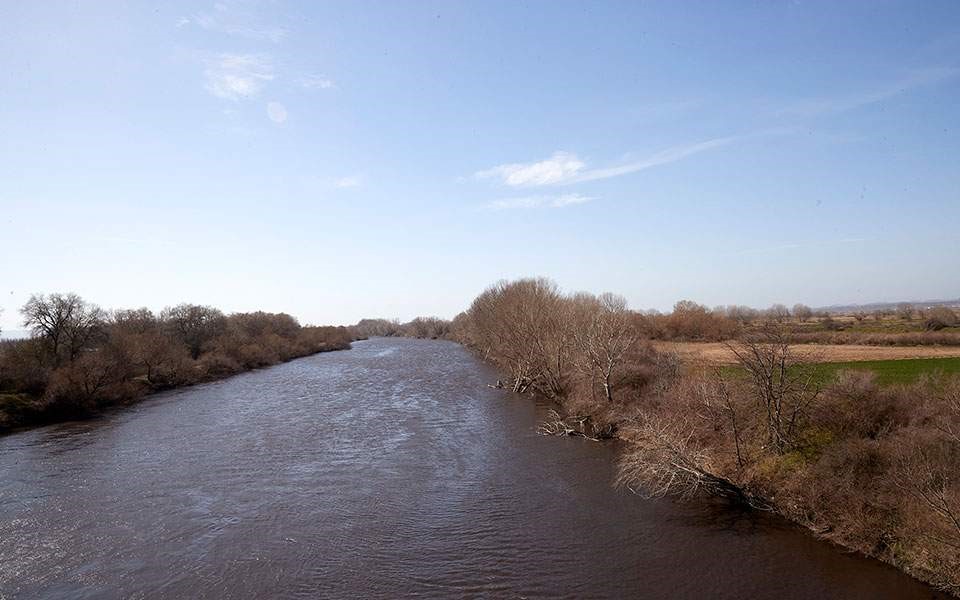
The border line between Greece and Turkey in Thrace extends for 203 kilometers. The Treaty of Lausanne defined that for most of its length the border coincides with the course of the Arda and Evros rivers, except for an eleven-kilometer stretch at the height of Adrianople where the border is shifted west of the river (Karagaç triangle). The initial understanding was that Greece would occupy the western and Turkey the eastern side of the Evros. The border was defined in Lausanne on a large-scale map (1:1.000.000). A tripartite commission consisting of representatives of Greece, Turkey and a representative of a third country, in this case the Netherlands, undertook to draw the Greek-Turkish border on the ground (Article 5 of the Treaty of Lausanne). The border followed the main arm of the river and was based on fixed points. The conclusions of the commission were included in a protocol signed in Athens on 3 November 1926. The most crucial article at the present juncture is Article 2 which states the following:
"The Commission decided that the boundary line will not follow the course of the river in its eventual movements, but that this line is definitively determined by the present position of the river, as determined in the maps prepared by the Commission."
Therefore, after its drawing, the border line was decided to remain fixed and not follow the shifts of the river bed. The frequent floods of the Evros resulted, over the years, in large areas belonging to Greece being attached to the eastern side of the Evros. Correspondingly, Turkish areas were attached to the western side. Also, the floods resulted in many of the landmarks of the 1926 demarcation being destroyed.
In the 1950s, the two countries commissioned the American company "Harza" to prepare a study for the flood protection of the riverbank areas and the regulation of the waters of the Evros. "Harza" proposed the alignment of the riverbed through the creation of cuts, embankments and dams in the river. The alignment resulted in Greek areas east of the river and Turkish areas west. The beginning of the struggle of the Greek Cypriots for self-determination-unification in April 1955 prevented the full implementation of the study.
In 1963, a protocol was signed in Ankara (ratified by Law 4334/1963) which decided on the exchange of Greek and Turkish territories in the areas of Ainos and Ferros. The areas to be exchanged would be based on equality of area and would be determined on the basis of the 1926 delimitation. The aggravation of relations after the bicommunal conflicts in Cyprus in 1963 and the expulsions of Greek nationals from Turkey in 1964 led to a new disruption of Greek-Turkish relations. The 1963 protocol was never implemented.
In the period between 1969-1971, four protocols and one agreement were signed between Greece and Turkey concerning the border zone of the Evros River. All were based on the protocol for the border settlement of 1926. The protocols and the agreement implicitly repealed the 1963 protocol. Greece ratified the protocols and the agreement (939/1979 (Government Gazette A' 149/1979). Turkey has ratified three of the four protocols with. None has entered into force because the instruments of ratification were never exchanged.
In 2011-12, a 10,3 km long fence was installed on the land part of the Karagaç triangle to prevent illegal entry of migrants into the country. The European Commission refused to fund the project, describing it as “ineffective” and “short-term in addressing the problem”. During the three-day Ash Monday of 2020, the fence was the main means of preventing the invasion of thousands of civilians that Turkey wanted to send to Greece.
Subsequently, the Greek government decided to place a fence at all points on the Greek-Turkish border where there is a strong possibility of illegal entry of migrants. These are the areas where, either due to floods or due to the alignment of the river, the Greek-Turkish border is not defined by the flow of the Evros but is land-based. Army teams have begun to survey the areas through which the new fences will pass. The Turks created problems in the "Apiary/Kotza Sovat" area. They are asking Greece
(a) give the exact coordinates of the fence (not the border) and
(b) not to begin any construction work on the fence before consultation with the Turkish side.
This is not a local disagreement about the course of the border. The statement from the Turkish Foreign Ministry leaves no doubt:
"The riverbed that demarcates the Turkish-Greek land border in 1926 has changed significantly due to natural and artificial factors and therefore there are no commonly agreed geographical coordinates in this specific area of the border that are compatible with the 1926 agreement [protocol]."
Essentially, Turkey does not recognize that there is a border in the area! However, the geographical coordinates are an objective element that does not change due to the change in the river bed. This is explicitly defined in the aforementioned article 2 of the 1926 Protocol. With this act, Turkey disputes the only, bilateral, delimitation agreement, namely the 1926 Protocol, and “grays out” the borders/boundaries between the two countries. The convening of the joint Greek-Turkish Border Committee is pretentious. What will be the basis for the committee’s discussions, when the 1926 coordinates are not accepted?
Behind this lies Turkey's intention to prevent the development of the fence. It is no coincidence that on Saturday, May 24, 2020, Turkish Foreign Minister Cavusoglu predicted that migration flows to Greece will resume as soon as the coronavirus pandemic subsides... Turkey views migration as the main tool in its relations with the EU. It cannot accept that its threat to flood Europe with refugees was deflated by the three-day Clean Monday in Kastanies, Evros. It will insist on piercing the Evros with new invasions of civilians. This is also shown by the next immediate steps. In parallel with the diplomatic handling of the issue, the construction of the fence must proceed rapidly on all land sections of the Greek-Turkish border without exception.
*Angelos Syrigos is an Associate Professor of International Law & Foreign Policy and a New Democracy MP in the 1st Athens District.
Kathimerini.gr