

Joseph Nye in "K". Let's think about what kind of Russia we want after the war. Sanctions and a distant end to the conflict
Joseph Nye in "K". Let's think about what kind of Russia we want after the war. Sanctions and a distant end to the conflict
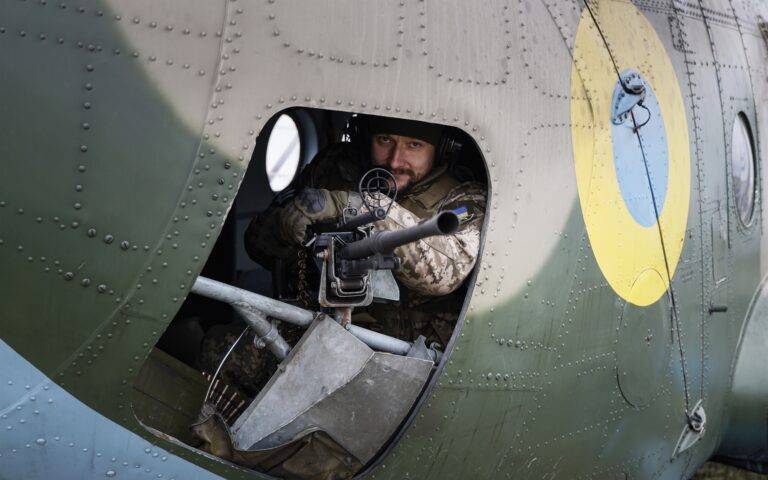
A Ukrainian machine gunner on a Mi-8 helicopter shortly before takeoff for another mission to Kharkiv. No one is backing down. “Putin has not accepted Ukraine as a legitimate state, while Ukraine wants to regain its territories, including those it lost in 2014.” Photo: AP/ Alex Babenko
10.04.2023 • 16:25
In international relations textbooks, the term power is classified into three forms: “hard”, “soft” and “smart”. The international term “smart power” refers mainly to the use of soft means of influence, such as diplomacy, in combination with the demonstration of “hard” military power. Today, and while the conflicts inside Ukraine continue, the strategic doctrine of “smart power” of former US Deputy Secretary of Defense Joseph Nye has once again found itself in the spotlight. “K” spoke with the veteran politician, the founder of the idea of “smart power”. The distinguished Harvard professor, with a long tenure in the American political scene as Deputy Secretary of Defense under Clinton (1994-1995), as well as head of the National Intelligence Committee (1993-1994), answers the possible outcome of the war with a weakened Russia, but also the central role that Greece can play.
– What is “power” and how can it be used to prevent conflicts?
– “Power” is the ability to influence others to get what you want. And it can be done in three ways. It can be done either through coercion, payments, or attraction. The first two of these means I call “hard power,” and the third way I call “soft power.” “Soft power” is the ability to get what you want by “attracting” (adversaries to your positions) rather than through coercion or payments. We often think of deterrence as increasing the costs to the adversary so that they are higher than the benefits. And we usually think of this in military terms, such as retaliation, or in economic terms, such as sanctions. But the use of “soft power” can also contribute to deterrence. If a country knows that it is going to seriously damage its reputation and lose its ability to attract others, that can, sometimes, contribute to deterrence. Now, we know that in the case of the Russian invasion of Ukraine, none of these three forms of deterrence worked. So deterrence is possible, but it doesn't work in all cases.
– “Soft” power versus “hard” power or the other way around?
– Well, I think both are needed. I use the term “smart power” to refer to the ability to combine “hard” and “soft” power so that they don’t cancel each other out, but instead reinforce each other. For example, in the Persian Gulf, the second President Bush used “hard” power without a legitimizing resolution from the United Nations, and that undermined American “soft” power. So this was a case where “hard” power and “soft” power were in conflict. On the other hand, his father, the first President Bush, made sure to get a UN resolution, an Arab League resolution, and to include Arab armies in his coalition, and that was essentially a way to combine “soft” power with “hard” power. And that’s what I call “smart power.”
– How effective were Western sanctions against Russia?
In the post-Putin era, we need to look at how to increase ties between Europe and Russia and ensure that Russia is not isolated once and for all.
– Sanctions are a tool of power, but they often take a long time and require cooperation with others. When they are multilateral, sanctions are more effective. In the case of the Russian invasion of Ukraine, sanctions were not so effective in the short term, and part of that problem is that Russia’s main export is oil, which is a highly tradable good. So as long as oil can still be sold, even at a discount, on world markets and it is, then that essentially limits the effectiveness of these sanctions. The key question is whether in the long term sanctions on technology products that are being transferred to Russia will make a difference. And there are many people who believe that they will actually weaken Russia over time. We have to remember the case of apartheid in South Africa, where in the short term sanctions did not change policies, but in the long term they contributed to changing them.
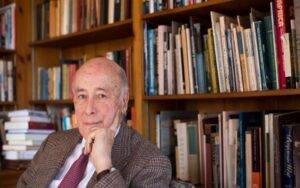
" The Moscow-Beijing relationship has limits, China did not want to send military equipment," points out Joseph Nye.
– How did the war in Ukraine affect the global balance of power?
– I think what we saw in Ukraine was a tightening of the relationship between Russia and China. But we also saw that this relationship has limits, in the sense that China did not want to send military equipment to Russia, which would essentially link it to Russia's problems, while, moreover, China abstained from various UN resolutions, instead of condemning or supporting Russia. So, I think the Russian-Chinese alignment will continue, but I do not think it will become any closer. On the other hand, if you look at the alliance between the US and the Europeans in NATO, I think it is significantly stronger as a result of the Russian invasion of Ukraine. The accession of Finland and Sweden to NATO is certainly not what Putin was counting on when he invaded Ukraine. Therefore, I think NATO is stronger, while the China-Russia relationship has not changed much, in this sense Russia is clearly at a loss in terms of the balance of power.
– One year after the invasion of Ukraine, how close are we to the end of the war?
– Unfortunately, I don’t think we are close to the end of the war. Basically, neither side is willing to change their goals. Putin has not accepted Ukraine as a legitimate state and, although he is engaged in a stalemate on the battlefield, weakening Ukraine helps him achieve his goals. On the other hand, Ukraine wants to regain its territories, including the territories it lost in 2014. So I don’t see the basis for a successful negotiation anytime soon. Now, negotiations and war are often determined by the situation on the battlefield and we don’t know if that can change. The Russian winter offensive doesn’t seem to have been very successful. We will have to see what happens with the expected spring offensive by Ukraine.
– What would be a possible future with a weakened Russia?
– At some point we have to think about how to reintegrate Russia into the international system and how to increase its ties with Europe. It is very difficult to imagine how we will do this with Putin in power, but someday there will be a post-Putin Russia. And then it will be important to think about how to increase the ties between Europe and Russia, and to ensure that Russia is not isolated once and for all.
The role of Greece
– How do regional countries, such as Greece, contribute to the formation of a defensive wall?
– Greece plays an important role as a partner in NATO. It also plays an important role as a member of the EU. So Greece can act above and beyond its weight as a regional power, because it is part of a broader European and Atlantic community, which reinforces or multiplies its power. In this sense, the extent to which Greece continues what it is doing now, namely playing an important role both in Europe and in NATO, seems to me to be the best path for Greece to follow.
– Can small countries like Greece become regional energy players?
– The discovery of large hydrocarbon deposits in the Eastern Mediterranean has certainly helped Greece in the sense that, although they are not in Greek waters per se, they are essentially located in the wider region, in an area where Greece can become a very important energy hub.