

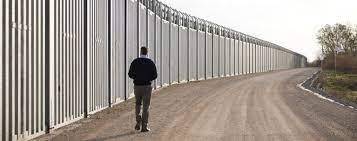
Does the fence on Evros violate international law?
Does the fence on Evros violate international law?

The controversy over the fence in Evros has brought back to the fore the debate on whether our country – and any other – has the right to use legitimate means to protect its borders, or whether it is prevented by international agreements it has signed or by “international legality”, as we hear. That is why we must remember the basics of International Law, so as not to succumb to misleading views, which – in the author’s opinion – are of the evil one.
First and foremost, we must remember that the basic subject of International Law, as well as its basic structural element, are states. States are the ones that give substance and meaning to International Law. Without states, it does not exist at all. We must also remember that the international system is made up of countries and there is no higher supranational authority above them.
The UN (United Nations Organization), as its name suggests, is simply a bureaucratic structure that allows countries to interact and come to an agreement. It does not operate above them, and the countries that participate in it give it whatever substance it has. And in order to give it substance, they themselves must have substance.
Border protection
Border control is necessary for the existence of countries, and the existence of countries is necessary for International Law. Consequently, for International Law to exist and for human rights to exist, there must be states. And for states to exist, they must be able to protect their existence. In fact, they must have existence.
The existence of a country means, among other things, control of its territory by the legitimate state authorities. And in order for there to be control of the territory, there must be borders. And a border, by definition, means a line through which no one can cross without the permission of the legitimate authorities. That is, if there is no control, there are no borders, and if there are no borders, there is no state. And if there are no states, there is no International Law and everything that follows from it, such as human rights. It's that simple!
Therefore, countries are not only entitled, but obliged to protect their borders in order to protect their existence and, based on this existence, to protect International Law and human rights. The right to self-defense of countries is the cornerstone of the UN Charter and the entire international system is based on it.
In than one
In other words, Greece has not only the right, but the obligation to exercise whatever legitimate means it deems necessary to protect its borders. Especially when it receives such large numbers of illegally entering immigrants, who threaten not only national security, but the very survival of the country in the long term.
Therefore, all the views according to which Greece is bound by “international conventions”, “international agreements”, "international legality" or anything else and cannot take the measures it deems necessary to protect its borders, are out of reality and are being promoted from the evil oneIn reality, they are part of the mechanism of the “escalated war” that has been waged for years against Greece and the Greek people.
However, there is no longer any room for oversights, audacity and distorted readings of reality. Greece as a geopolitical entity has suffered crushing blows in recent years to its national independence and existence and cannot withstand another one. Despite any “respite” due to the earthquakes, this struggle is ongoing and will intensify in the course of time, with the peak of the immigrant, which Turkey systematically and openly exploits. And in this struggle, the Greek people have International Law on their side, no matter how much some try to convince them otherwise.