

Hippocrates Daskalakis: Bitter truths about Greek-Turkish
Turkish policy is based on the goal of becoming a great power.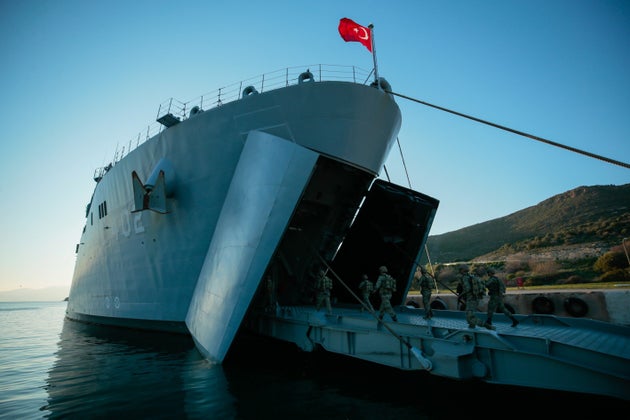
Our neighboring Turkey has engaged in an unprecedented escalation of claims against us and the corresponding challenges over the past 3 years. This behavior is not opportunistic and is due to the maturation of conditions and prerequisites that were created following systematic planning and long-term steps by Ankara. Therefore, any association of the challenges with public figures, parties, political balances and international relations of Ankara is wrong and dangerous. Undoubtedly, the timing of the manifestation of some of these challenges is influenced by internal and external circumstances, but their general planning and execution serve the stable and long-term goals of the neighbor.
 The escalation of claims against us is also reinforced by the feeling that Ankara has regarding the balance of power on both sides of the Aegean. Any thought of a voluntary Turkish retreat and return to good neighborly relations based on international law is a dangerous futility. Now, Turkish policy is based on the goal of becoming a great power, comparable to Britain-France and with a dominant regional role in the Eastern Mediterranean-Balkans-Caucasus and the Middle East. This goal - as well as the required sacrifices - is accepted by the Turkish people and is identified with the aspirations of the country's elites. A basic condition for achieving these strategic aspirations is the crushing of Greece (Hellenism in the broadest sense). Defeat not only in the sense of a crushing military defeat and loss of territory, but also as a result of the forced concession of sovereign rights - under the threat of the use of force - and a "Finlandization" of Greece.
The above reality should have been understood in Athens by the tragic events of 1955 and it should have chosen and, above all, consistently implemented an appropriate strategy to deal with Ankara. It is a fact that, with the exception of certain periods (mainly 1963-1974), Greek (Hellenic) policy met with broad consent from all governments and parties. Despite this, the results were not satisfactory and Greek deterrence was not reliable in several cases. The cautious Greek choices temporarily prevented the escalation, without definitively resolving the problems, transferring them to the distant future and under more unfavorable conditions of imbalance with the initiative of movements always on the opposite side. Moreover, and despite the relative unanimity on the Greek side, the actions taken to counter Turkish provocation were uncoordinated, sometimes opportunistic and spasmodic, often based on an unrealistic reading of the international reality and the claims of its neighbor. Under these circumstances, the sacrifices but even successful moves of Hellenism could not bring about the desired results since they were not part of a comprehensive plan to balance Turkey in the various and interconnected areas of competition. In addition, unfounded hopes were often cultivated for the salutary involvement of third powers in our favor, while the importance of international law was overemphasized. The above utopian and at the same time destructive choice essentially rejects the basic principle of realism, self-help, and at the same time creates a convenient excuse for not reacting and subsequently rejecting responsibility to third parties.
The decades-long effort to avoid a military conflict with Turkey is justified, an engagement that, regardless of the results, would lead to a significant setback for both countries. A choice that has become more obvious and inevitable in the last decade as Greece's substantial economic bankruptcy has made it a prisoner of credit institutions, state banks, partners, institutions, fiscal constraints and unpredictable markets. Even a single military incident is capable of reversing any movement to boost the economy and annihilating the valuable tourism revenues. Of course, the above is not a cause for inaction but only a basis for understanding reality, realistic planning and a persistent national effort to reverse the unfavorable situation.
Governments have rightly focused on creating multilateral contacts-cooperation in various sectors in the Eastern Mediterranean, hoping, however, that they are aware of their real possibilities and limits. Greece, having irretrievably lost the opportunities for dynamic reactions, is rightly choosing a policy of self-restraint that we could even call appeasement. However, it should not escape our attention that appeasement, like the submissive operations in military maneuvering, are acceptable actions - of a specific time horizon - only when they serve our basic objective goal and do not constitute an ongoing option in anticipation of the "God-given machine". In the latter case, appeasement moves are the guarantee of the worst outcome.
We are currently facing a short pre-election period. Issues related to defense and dealing with Turkish provocation will obviously not be put on the table for discussion. Any potential mention of defense issues will focus on scandal, inaction regarding the reorganization of the armed forces and pro-Russian choices. The essence of the problem will not be addressed. An optimistic response to the substantial avoidance of such political discussions has to do with the sensitivity of these issues and the effort to keep them off the agenda of political “cockfighting”.
Another position supports the lack of specific positions of the parties and mainly their will to make the people aware of the magnitude of the problem and to take into account the need to make radical decisions at a multifaceted cost. Of course, there is also the third view that argues that the long-term ruling elites of Athens have demonstrated the necessity of avoiding conflict, at any cost and our own significant concessions on a multitude of issues and have entrusted "friends and allies" to make the appropriate arrangements in place, time and method. There are two major problems with this -unwanted in my opinion- case, on the one hand, Turkey is no longer subject to the desired degree of control of the great powers and on the other hand, any concession to our detriment will simply intensify its "appetites", not ensuring the long-awaited peaceful coexistence. In such a development, the Prespa Agreement, which is very important for us, I fear will be a mere gimmick. Of course, in every multiple-choice question there is also the answer "all of the above" which probably confirms the confusion and audacity of the elites of this country.
The relentless question that arises is whether there are feasible proposals for a way out of this difficult situation. No one is able to guarantee the success of a long-term policy that depends on many uncontrollable factors. No one disputes that the economy is the driving force that will allow the implementation of the necessary armament programs in close balance with ensuring social welfare and therefore cohesion. Undoubtedly, the transnational cooperation movements in all sectors and in every direction must continue and intensify. However, it is an absolute priority to ensure the fastest possible upgrade of combat power and a partial balancing of power between Greece and Turkey. Despite the cost, selected supplies of materials and spare parts must proceed immediately for the renewal of basic combat units and the partial lifting of immobility that has reached unacceptable levels.
It has accepted that participation in large-scale and participatory transnational programs, with a sufficient number of weapons systems to be acquired and over a long period of time, ensures (usually) their smooth execution, the transfer of know-how, the support of the national defense industry and subsequent support. Similarly, it is vital to make significant changes in the force structure, service, training, reservist and the development of personnel. The adversary is trained in war conditions on the various war fronts and we have focused on the social work of the army and on the "demonstration of extroversion". All acceptable and necessary, but we often lose our sense of proportion and for various reasons we are unable to accept the inevitable costs of acquiring and maintaining war-ready and effective armed forces. There are certainly those professionals, in the broader defense field, who can proceed with the design and implementation of the necessary steps.
However, it is essential that the political leadership, with broader party consent, accepts the necessity of a defense upgrade and assumes the costs that this entails (always within the limits of our financial capabilities), ensures broad popular acceptance (taking into account the long-term fatigue of society), reallocates budget funds with a long-term determination of amounts for defense and strictly adopts and implements the proposals that will be indicated by experts, always within the framework of the principles and directions set by the elected government. The above principles should be specified and coordinated under a realistic national defense policy that will serve long-term national goals and will become the property of the parties in power, guiding their actions and with the necessary decisions being taken through a consensual process and with safety measures. Of course, we return to the issues of the existence of a political culture of understanding, the primacy of long-term targeting over short-term, and the primacy of national over party-individual interest, in other words, to issues of broader education!
Furthermore, the proud Greek people should understand that in order to secure Greek vital interests in the Eastern Mediterranean, the Aegean and elsewhere, significant and long-term investments in means and personnel will be required, which, despite the goodwill of any governing party, will burden the already reduced finances of households. However, indicative of the intentions of almost all parties, is the aversion to references to unpleasant subjects - such as defense - and a focus on flattery and meaningless mutual accusations. Although we have become - collectively and individually - beggars of "subsidies", we must understand the critical dilemmas and make the appropriate decisions. Unfortunately, there are no magic solutions and no foreigner is going to risk his children for our own interests.
So all the issues are interconnected and mutually influencing. Is it possible to change direction? The history of our people fortunately proves the inexhaustibility of its reflexes and survival capabilities, but unfortunately also their activation after a disaster. Having tasted several in the last hundred years, but at the same time with several successes, let us hope to avoid the painful ordeal of another disaster to activate our saving reflexes.