

Panagiotis Michos*: Was Libya “lost” to Greece? – An analysis of developments in the region
Greece's interest is linked to the non-implementation of the Turkish-Libyan memorandum. Something that does not seem likely at the moment

The similarity of the international system to a chessboard has to do with the fact that the action of one largely determines the reaction of the other. This seems to be true in the Eastern Mediterranean, and especially in Libya, a "theater" of direct interest for Greece.
Developments in the North African country are not going in the desired direction, directly affecting Athens.
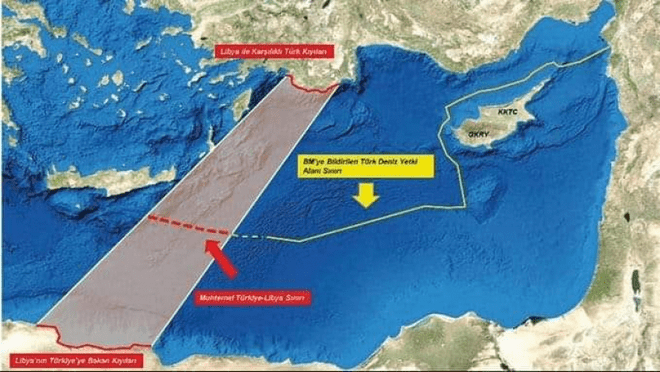
Turkey's partnership with the internationally recognized government of Tripoli and the conclusion of the Turkish-Libyan memorandum, which describes the definition of maritime zones, directly violates Greek sovereign rights, breaking the continental shelf of Crete in half.
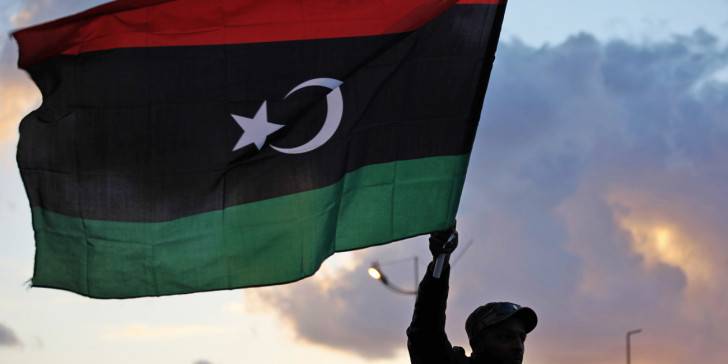
In return for the memorandum, Ankara "bloodied" the Sarraj regime with weapons and mercenaries, overturning - for the time being - the outcome of the Libyan civil war.
Thus, although they were found just 25 kilometers outside Tripoli, Haftar's forces, whom Athens supported, are currently retreating.
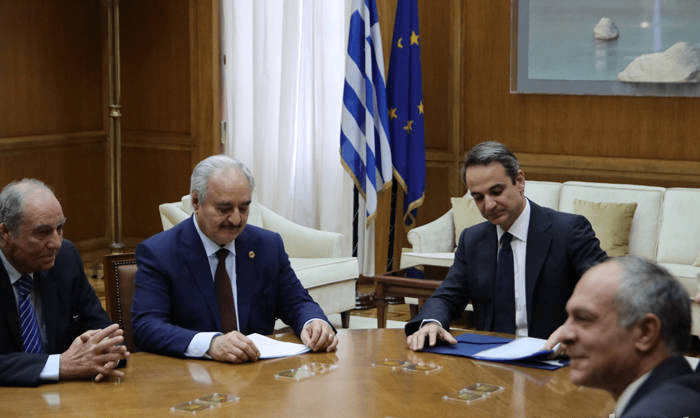
That's why the head of Eastern Libya rushed to Egypt, and after meeting with the president of the neighboring country, Al-Sisi, they announced a proposal for a ceasefire and a political solution in Libya.
A perspective that is not shared by the Sarraj regime and its supporters, knowing that the more battles they win on the field, the better position they will have at the negotiating table.
Greek interests
In this case, Greece's interest lies in the non-implementation of the Turkish-Libyan memorandum, which does not seem likely at the moment.
Therefore, questions arise as to whether, over time, the correct approach was followed in the issue of Libya, the country with 4% of the world's oil reserves.
Starting from recent events, the expulsion of the Libyan ambassador (Sarraj regime) from Athens does not seem to have yielded the expected results, while the political legitimization of Haftar, without practical support on the battlefield (something that could not possibly be done) - where Ankara turned its "back" on the side it supports - had no effect.
However, experts go back further.
What the expert says
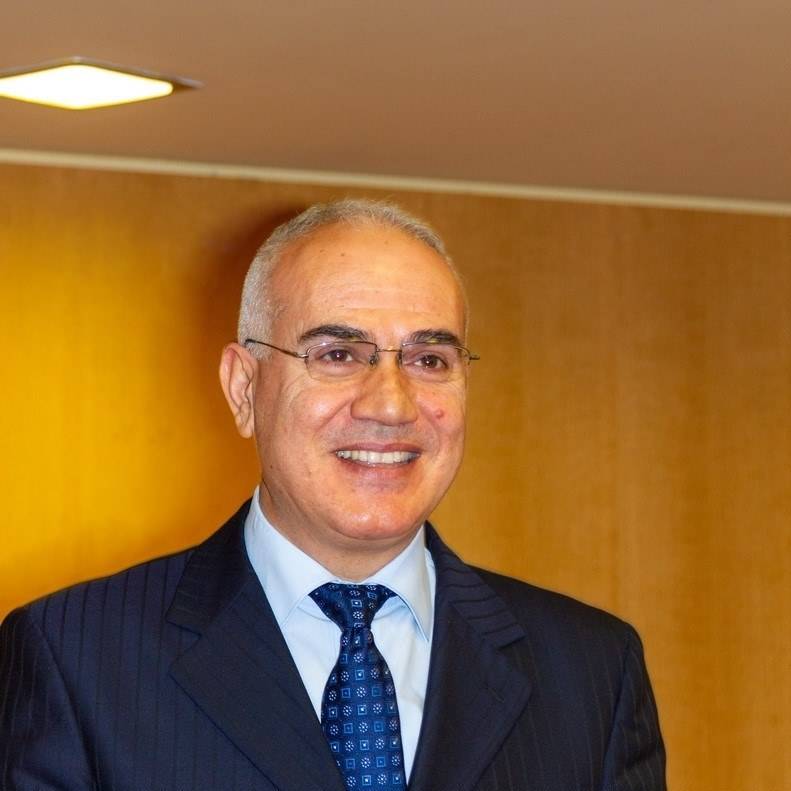 Aref Alobaid, a specialist in Middle East issues and a Ph.D. in Political Science and History, knows what is happening in the "powder keg" of the world.
Speaking to "in.gr", he describes two key dates, which, according to him, are decisive for the development of things in Libya.
Initially, it refers to the efforts made until 2009 by the Greek government to delimit the maritime zones with Libya.
He even refers to the then Deputy Minister of Foreign Affairs, G. Valinakis, who has mentioned the issue.
Greece and Libya came close to a final agreement in 2010, but it was not reached. Since then, the issue has been frozen.
The second event, he explains, is related to the withdrawal of the Greek diplomatic mission from Libya in 2014, due to the escalation of civil conflicts. A vacuum was created, which Turkey was quick to exploit.
"Greece should not have withdrawn from Libya. It should have supported this country. The Turks took advantage of this gap and concluded the Turkish-Libyan memorandum with the Sarraj regime," he says characteristically.
At the same time, he proposes that Athens take an important initiative for peace in Libya, while being critical of Khalifa Haftar.
"Greece must play a decisive role in peacemaking in Libya. It must immediately launch a diplomatic campaign in this direction. We must rely on ourselves. European countries have different interests with Turkey and others with Libya," he emphasizes, while regarding Haftar, he points out that "he rejected the proposals of Moscow, the president of Sudan, and the conference in Berlin, because he wanted power. Now that he is collapsing, he visited Egypt asking for a ceasefire."
He points out, in this regard, that the Sisi regime is in a disadvantageous position due to the Al Nahza dam and the political situation in his country and "that is why it is hesitant to intervene militarily in Libya."
Regarding the Turkish-Libyan memorandum, he proposes appealing to the International Court of Justice in The Hague, emphasizing that "Haftar had not committed in writing that he would abolish the memorandum if it prevailed."
"If we accept Article 121 of the international law of the sea, then we cannot deny the other part of international law (The Hague Court)," he adds, arguing that Libya's case is different from that of Turkey, as the latter does not even accept the law of the sea nor that the islands have a continental shelf.
A Greek at heart, of Syrian origin, he closes with a Middle Eastern proverb, which is characteristic of the so-called active foreign policy.
"If you don't throw the nine, you can't get the ten," he notes.
*THE Panagiotis I. Michos is a student of Political Science and International Relations at the University of Peloponnese and a graduate of the Professional Journalism Laboratory