

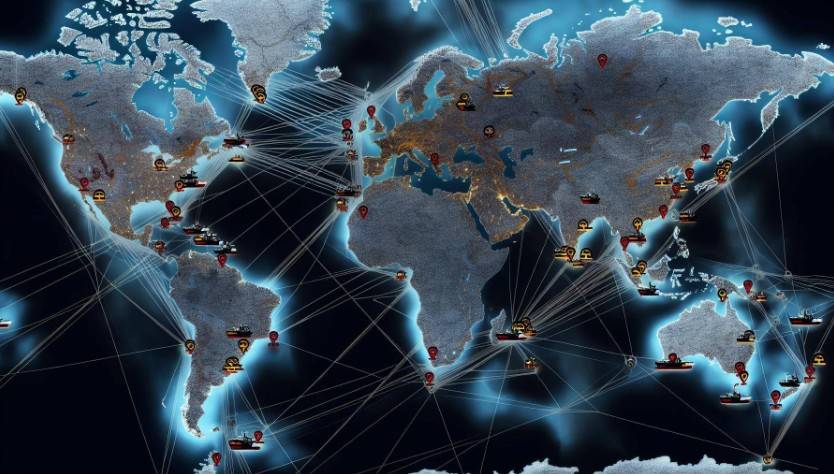
CESMAR Daily Global Maritime Geopolitical Forecast – September 7 2026 –
CESMAR Daily Global Maritime Geopolitical Forecast
– September 7 2026 –
Summary prepared by the Centre for Geopolitics and Maritime Strategy Studies, compiled on the basis of analyses from third-party sources. While the content does not reflect the Centre’s own positions but is instead drawn from the work of other authors and publications, as indicated in the references, the structuring and interpretation of the data are the result of the Centre’s own synthesis process, aimed at creating a coherent and organic analytical framework. The summary therefore represents a structured reorganisation of the collected and selected information, based on the expertise of our scholars, who have subsequently extrapolated its implications in the geopolitical, strategic, technological, and maritime fields, as well as those related to Mediterranean countries. Reproduction, in whole or in part, is authorised provided that the source is acknowledged.
Geopolitical Scenarios of September 7, 2026
Daily Summary of Global Maritime Geopolitics
Introduction
7 September 2026 establishes itself as a day of extraordinary geopolitical density, wherein the crisis in the Strait of Hormuz, hybrid pressure, and the Hellenic strategic reorientation in the Aegean converge to reshape power equilibria across the wider Mediterranean and the Indo-Pacific.
Key Events
- Geopolitics/International Relations – Iran caught between economic attrition and verbal deterrence. According to Reuters, the authorities in Tehran have declared their intention to concentrate resources on domestic economic recovery, whilst warning that future hostile military actions will be met with even more severe responses. However, Iran’s capacity to utilise Hormuz as a strategic lever is progressively eroding: United States sanctions, coupled with sustained naval pressure, are narrowing Tehran’s margin of manoeuvre along the planet’s principal energy chokepoint. As documented by the British news agency itself, crude oil prices have undergone further speculative increases, whilst OPEC has confirmed the invariance of its production policy, demonstrating the structural fragility of an energy market held hostage by regional tensions and devoid of effective diplomatic buffers.
- Strategy and Warfare – Witkoff and Kushner in Moscow: parallel diplomacy and the risk for Kyiv. The Trump administration’s special envoys, Witkoff and Kushner, have conducted a round of confidential talks in Moscow focused on the future of the Ukrainian conflict and the potential remodelling of sanctions against Russia, as reported by Inside Over and Responsible Statecraft. The mission highlights Washington’s attempt to bypass European multilateral channels to initiate direct negotiations with the Kremlin, based on territorial compromises that deeply concern Kyiv and NATO partners. On the ground, a kamikaze drone strike hit the SBU headquarters in the Ukrainian capital – as signalled by Notizie Geopolitiche – revealing Moscow’s intent to conditionally influence the negotiating framework through military means and test Ukrainian resilience on the eve of the American diplomatic mission.
- Seapower – Naval clashes in the Gulf: destruction of Iranian tankers and commercial shipping crisis. US naval and air forces have conducted a large-scale operation in the Strait of Hormuz, destroying an Iranian tanker and neutralising two other units involved in previous missile attacks against American destroyers, according to reports by gCaptain and USNI News. The confrontation simultaneously extends into cyberspace and social media, transforming Hormuz into a hybrid theatre. Concurrently, Reuters has documented the risk of a shortage of fuel used for the propulsion of commercial vessels, whilst marine insurers are registering significant increases. The USS Abraham Lincoln has departed Thailand to resume service, whilst the US Navy accelerates the production of Tomahawk missiles to reconstitute stockpiles eroded by the low-intensity conflict in the Gulf, as highlighted by Naval News.
Geopolitical Agorà
Over the weekend, the Greek institute ELISME published a series of analyses of exceptional strategic value, which merit thorough reading for anyone engaged in security within the Eastern Mediterranean.
The first contribution addresses the danger of appeasement in the face of assertive Turkish initiatives. The thesis is unambiguous: systematic tolerance of Ankara’s policy of “fait accompli” does not generate stability, but accelerates escalation. History demonstrates that progressive yielding encourages the aggressor to push ever further, interpreting Greek moderation as structural weakness rather than diplomatic openness. The appropriate response therefore lies in the visible reinforcement of deterrence and the resolute defence of sovereign rights guaranteed by international law.
The second contribution examines the doctrine of decentralized command management in greater depth. In contexts of high-intensity warfare and severe electronic interference, centralized control models prove overly sluggish and vulnerable. Entrusting greater decision-making autonomy to intermediate echelons enables armed forces to react swiftly to tactical contingencies, preserving the strategic initiative. The commander in the field becomes the fulcrum of operational resilience: their capacity to adapt higher orders to the actual contingencies of combat transforms the military organisation into a flexible and cohesive body even when communication channels are compromised.
There are then two contributions concerning the Achilles Shield – the Hellenic integrated defence system – which illustrate how the establishment of a multi-layered network founded upon advanced radars, anti-missile batteries, and electronic countermeasures redefines Ankara’s strategic calculations. The system significantly reduces the Turkish quantitative advantage in the Aegean airspace, imposing prohibitive costs on any offensive action and shifting the equilibrium from predominantly passive deterrence to active and credible deterrence.
The analysis of the reorganization of Turkish forces on the Anatolian coasts highlights the concentration of amphibious detachments and airborne units in an offensive posture, aimed at contesting the legal status quo established by international treaties. Athens must respond with constant surveillance, operational readiness of the islands, and the reinforcement of regional cooperation.
Finally, the essay on dialectics as a strategic weapon of Hellenic diplomacy recalls that military force alone does not suffice: argumentative coherence on international platforms, appeals to treaties, and the forging of multilateral alliances constitute a legal shield that renders any attempt at unilateral aggression politically unsustainable. The rhetorical and military dimensions complement one another within an integral deterrence system.
Consequences of the Events
Geopolitical Consequences
The events of the 4–7 September 2026 weekend accelerate three processes of global power equilibrium reconfiguration. Firstly, the Witkoff-Kushner mission to Moscow signals the Trump administration’s attempt to unilaterally redefine the European security architecture, de facto excluding Old Continent capitals from key negotiations. European allies, as highlighted by Responsible Statecraft and Inside Over, observe with growing apprehension the prospect of a superpower agreement imposed from above upon legitimate Ukrainian sovereignty claims. Secondly, the economic squeeze on Tehran, documented by Reuters, diminishes Iran’s leverage in the Strait of Hormuz, yet does not eliminate the risk of asymmetric escalation; conversely, domestic pressure fuels the regime’s tactical impulsivity. Thirdly, ELISME’s analyses of the Aegean theatre confirm that Turkey is pursuing a strategy of progressive erosion of the status quo in the Eastern Mediterranean, whilst an intensification of hybrid pressure along NATO’s eastern flank is evident – subsea sabotage, interference with Baltic navigation, information warfare – as reported by ISPI and Geopolitica.info. Armenia, caught between Moscow’s pressures and European attraction, represents yet another battleground of competition between alternative geopolitical orders, with Putin demanding a clear choice of alignment from Yerevan, according to Notizie Geopolitiche. According to notiziegeopolitiche.net, the Russian Federation is accelerating the development of the Far East and the Arctic to reduce its dependence on European markets following western sanctions. Moscow is enhancing the Northern Sea Route and overland logistics corridors toward China. Gianandrea Gaiani (analisidifesa.it) accuses the European Union of instrumentalising the Russian threat to legitimise an authoritarian turn. This alarmist narrative would justify censorship and the loss of national sovereignty, distracting public opinion from economic failures and shielding the ruling class from democratic dissent. According to Inside Over, the AfD’s advance in Saxony-Anhalt has caused a political earthquake, penalising Friedrich Merz’s CDU. The vote reflects East Germany’s acute discontent regarding inflation and immigration, accentuating political fragmentation and weakening consensus toward traditional parties.
Strategic Consequences
On the military and doctrinal front, the weekend has produced unequivocal signals of technological and operational acceleration across all primary fronts. CSIS has documented the continuous evolution of Shahed-Geran drones, which are increasingly autonomous, difficult to intercept, and manufactured in domestic assembly lines, rendering the development of economically sustainable countermeasures by western forces an urgent priority. RUSI has reiterated the inadequacy of small-scale professional force models in the face of prolonged high-intensity conflicts, recommending “break-glass” mobilisation plans (an emergency procedure that bypasses normal security controls to grant immediate access to critical data, systems, or privileges) that include rapid industrial conversion and accelerated reserve training programmes. According to notiziegeopolitiche.net, Washington’s intention to conclude global conflicts conflicts with the maintenance of its military presence in the Middle East and Europe. This discrepancy between Pentagon rhetoric and actions fuels internal friction, disorients allies, and undermines the credibility of US deterrence. Analisidifesa.it has announced the commencement of tests in Ukraine of Leonardo’s Michelangelo Dome system, a fundamental testing ground for the European defence industry. Turkish-Somali forces have liberated the merchant vessel MV Lutuf in a joint operation in the Horn of Africa, confirming how Turkey is consolidating its military projection toward the Red Sea. ELISME’s analyses concerning decentralized command doctrine and the reorganization of Turkish forces in the Aegean finally offer a coherent operational framework: the conventional threat in the Aegean requires readiness, flexibility, and next-generation integrated defence systems such as the Achilles Shield. Gen. Jean on formiche.net confirms how the conflict in Ukraine serves as a technological laboratory for the employment of artificial intelligence and hybrid warfare. The use of strategies based upon fear, linguistic manipulation, and newspeak to induce citizens to accept restrictions on freedoms and social control paralyses critical thought, annihilating any independent analysis. The employment of drones, predictive software, and cyberattacks is redefining global military strategy, compelling western governments to urgently update their defences.
Economic, Technological, Financial, and Energy Consequences
On the energy and financial front, clashes in the Persian Gulf have prolonged crude oil price rallies, stoking uncertainty across global energy commodity markets. Reuters has documented the risk of a fuel shortage for commercial vessels, with refiners prioritizing high-margin products to the detriment of marine bunker fuels. Norway’s sovereign fund has proposed massive cuts to US Treasury holdings, signalling growing institutional caution toward American public debt. Foxconn announced third-quarter results exceeding expectations, driven by demand for artificial intelligence servers, confirming the resilience of the Taiwanese technological supply chain despite tensions in the Strait. On the commercial front, Panama’s decision to suspend the draft cut scheduled for October offers temporary relief to global supply chains. Technologically, Nvidia processors have emerged as a diplomatic lever in Armenia-Azerbaijan negotiations, illustrating the rise of semiconductors as a primary strategic asset, whilst the American chip squeeze continues to drive up the costs of electronic consumer goods, as highlighted by The National Interest. The “financial trap” to revalue the yuan, analysed by Inside Over, could reshape global trade equilibria along the model of the 1980s Plaza Accords. According to notiziegeopolitiche.net, the Pentagon’s involvement in the management of Venezuelan petroleum infrastructure aims to guarantee energy supplies and calm international markets. This national security strategy, whilst avoiding the direct acquisition of PDVSA (Petróleos de Venezuela, S.A. – Venezuela’s state-owned oil company), fuels geopolitical tensions and neo-imperialist suspicions within the Latin American region. According to analisidifesa.it, the Trump administration has asked European allies to reimburse military aid delivered to Ukraine under the Biden presidency. This request, tied to a transactional policy, undermines the cohesion of the trans-Atlantic alliance and risks dividing the European Union, which is already experiencing economic stagnation. According to Inside Over, the “Carthage” investigation unveils a corruption system in Ukraine linked to the diversion of international funds and opaque defence contracts. This systemic malfeasance undermines Kyiv’s credibility, risking the compromise of vital economic and military support from western partners.
Maritime Consequences
The maritime domain occupied a central role during this timeframe. In the Strait of Hormuz, naval clashes between US and Iranian units – resulting in the destruction of one tanker and the neutralisation of two others – further diminished freedom of commercial navigation and drove up insurance premiums. Iranian leverage over the chokepoint is eroding yet not nullified, keeping pressure high on Gulf SLOCs (Sea Lines of Communication). In the Horn of Africa, the Turkish-Somali operation to recover the MV Lutuf confirms the trend toward targeted bilateral interventions to fill the void left by traditional international naval missions. IARI.site’s analysis of the action at Garacad (infamously known as one of the principal strongholds and operational bases of Somali pirates in the Indian Ocean) highlights how maritime security in the Horn of Africa does not depend solely upon operational counter-measures in the open sea, but rather requires solid internal political stability, cooperation among diverse territorial police forces, and the definitive resolution of power disputes that continue to obstruct the region’s full administrative sovereignty. In the Arctic, Russian-Chinese cooperation accelerates with Ice-class container ships, whilst Norway manages the seizure of the Russian vessel in Svalbard at Naftogaz’s request, setting a relevant legal precedent (a news item carried over from the previous issue). The seabed of the Taiwan Strait, the subject of Chinese dual-use geophysical surveys, confirms that geopolitical competition now extends to bathymetric data as a strategic resource. Finally, the USS Abraham Lincoln resumes service and the US Navy accelerates Tomahawk production, signalling protracted commitment in hot theatres.
Consequences for the Southern European Mediterranean countries
For Italy, Greece, and Spain, the framework emerging over the weekend presents direct and urgent implications. Italy is exposed on multiple fronts: instability in Hormuz threatens its energy supplies, whilst the potential normalization of Venezuela – with the Pentagon’s operational involvement documented by Notizie Geopolitiche and CSIS – could offer partial petroleum alternatives in the medium term. Tests of Leonardo’s Michelangelo Dome in Ukraine represent a strategic industrial opportunity for the Italian defence sector. Greece is the nation most directly addressed by the scenarios outlined by ELISME: the offensive reorganization of Turkish forces in the Aegean and the need to implement the Achilles Shield require immediate investment and close coordination with NATO partners. Athens must furthermore exploit diplomatic dialectics as a weapon complementary to military deterrence, building international coalitions that isolate Ankara’s revisionist claims. Spain finds itself obliged to manage Rabat’s growing pressure on Ceuta and Melilla through grey-zone tactics – migratory flows and economic levers – as documented by IARI.site. Madrid must develop a coordinated European response that transcends national logic, compelling Brussels to construct a cohesive neighbourhood policy in the Maghreb. Over the period 4–6 September 2026, the wider Mediterranean registered a concentration of security criticalities across multiple fronts starting from the Strait of Hormuz and the Horn of Africa, which once again highlighted Turkish military projection toward the Red Sea and the Suez Canal. In the central Mediterranean, UNHCR registered 2,995 sea arrivals in August, an increase of 37% compared to the previous month. The Tunisia-Libya agreement to facilitate cross-border transit and Rabat’s growing pressure on Ceuta and Melilla confirm the widespread militarization of Europe’s southern maritime borders. The Beijing-Cairo axis around Suez consolidates with Xi Jinping’s visit, reshaping trade routes toward the Mediterranean.
Conclusions
Signals of imminent evolution converge upon three scenarios to monitor over the coming days. First, Russian-American negotiations following the Witkoff-Kushner mission could produce concrete ceasefire proposals in Ukraine, carrying high risks of marginalizing European allies. Second, a potential Iranian retaliation following naval losses in the Gulf could trigger a new spiral of escalation along Middle Eastern SLOCs, with an immediate impact on global energy prices. Third, Turkey’s offensive posture in the Aegean – documented by ELISME – suggests an increased risk of calculated incidents in contested waters, demanding utmost vigilance on the part of Hellenic forces.
References
This summary has been prepared based on articles from various geopolitical and strategic analysis sources, including: Elisme, Center for Maritime Strategy, CIMSEC, Reuters, ShipMag, Navy Lookout, National Interest, Seapower Magazine, CSIS, RUSI, War on the Rocks, IISS, Responsible Statecraft, Foreign Affairs, Formiche.net, Il Sussidiario, Start Magazine, InsideOver, Notizie Geopolitiche, IARI, Dissipatio, Analisi Difesa, Jamestown Foundation, Atlantic Council, RAND Corporation.
For further insights, please visit the CESMAR websites or social media channels: