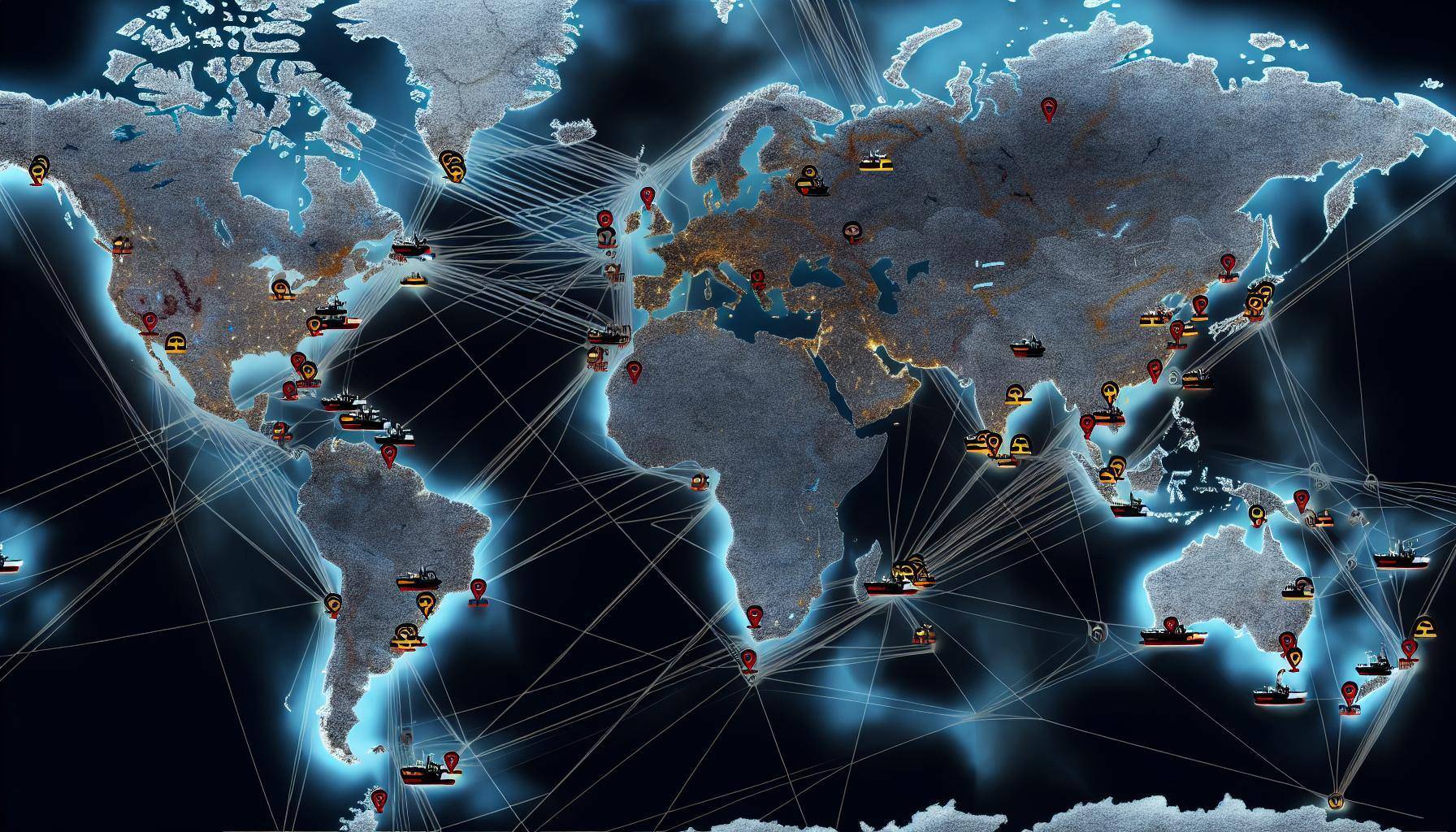
OHiMAG Daily Global Maritime Geopolitical Forecast
– June 25 2026 –
Summary prepared by the Centre for Geopolitics and Maritime Strategy Studies based on third-party analyses – the contents do not reflect the Centre’s own positions but are inspired by the work of other authors and publications, as indicated in the references. Geopolitical Scenarios of June 25, 2026 Daily Summary of Global Maritime Geopolitics
Introduction
The events of 25 June 2026 have confirmed the acceleration of geopolitical dynamics already underway across multiple simultaneous fronts: from the progressive attrition of the European security framework, with the war in Ukraine locked in a diplomatic stalemate, to the crisis in the Persian Gulf, where the Strait of Hormuz remains a flashpoint of tension. The multipolar world manifests itself in all its complexity, devoid of any single centre of gravity.
Key Events
The Strait of Hormuz as the Epicentre of the Global Energy Crisis
The day’s most significant development concerns the evolution of the crisis in the Strait of Hormuz. The IMO has issued an emergency directive suspending oil tanker movements in the area, whilst the first vessels have begun to retrocede towards safer waters. According to gCaptain and Naval News, Brent crude has entered a contango structure (where the forward or future price of a commodity is higher than its current spot price due to storage costs, insurance, and interest on tied-up capital) for the first time since the outbreak of the conflict with Iran—a signal that markets are beginning to price in a partial restoration of supply. Meanwhile, the United Arab Emirates has recovered 85% of its pre-war export levels by utilising the overland bypass via Fujairah (IEA/gCaptain).
Italy in the Eye of the Storm
The Minister of Defence, Guido Crosetto, has publicly intervened to deny rumours regarding 500 US military flights departing from Italian bases bound for Iran. The opposition has demanded an urgent briefing in Parliament, raising questions over transparency regarding the military commitments undertaken by Italy in the Middle Eastern theatre (ANSA, Il Sussidiario, Formiche). This situation reveals the structural tension between allied obligations, parliamentary sovereignty, and domestic public opinion pressure.
In connection with this, an editorial by AnalisiDifesa criticises Mark Rutte’s leadership at NATO, highlighting a progressive subordination of the Alliance to Donald Trump’s strategic vision. According to the author, this posture erodes European decision-making autonomy and strategic sovereignty, effectively reducing the Secretary General to a mere executor of US directives.
Europe Discovers the Invisible Mediterranean of Subsea Cables
The European Union has acknowledged the strategic centrality of subsea digital infrastructure in the Mediterranean for security and connectivity, confirming Italy’s role as a crucial technological and logistical hub. The analysis underscores the urgent need to protect these critical networks from sabotage, positioning Italy at the forefront of European underwater maritime security (Formiche.net).
From Bosnia to Syria: The Perpetual Rivalry Between Turkey and Israel
An analysis by Inside Over highlights the deeply rooted geopolitical rivalry between Erdoğan’s Turkey and Israel, stretching from the Balkans to the Middle East. Despite pragmatic economic exchanges, ideological and strategic divergences create a constant friction. Main points of contention include Turkish support for the Palestinian cause and Hamas, the Syrian dossier, and the contest for energetic and military hegemony in the Eastern Mediterranean. This conflict translates into a complex war of diplomatic influence and cross-alliances, rendering any structural pacification exceptionally difficult (InsideOver).
Challenges for a Ukrainian Strategy in Light of UK Political Shifts
The analysis explores the ongoing debate within the United Kingdom regarding military support for Ukraine, highlighting internal tensions within Keir Starmer’s Labour Party and the stances of prominent figures such as Andy Burnham. Despite a facade of unity, deep anxieties are surfacing over the long-term economic sustainability of this strategy. The cost-of-living crisis and the pressing need to fund local public services are driving regional administrators to challenge the massive allocation of resources towards foreign armaments. Consequently, London’s hardline stance risks prolonging a war of attrition, isolating the country from emerging European diplomatic positions (Responsible Statecraft).
Turkey’s Legal Rationalisations
An analysis by Charalambos Antgou examines Ankara’s attempts to establish an international legal framework to support “Mavi Vatan” (Blue Homeland), the maritime doctrine that claims vast areas of jurisdiction in the Eastern Mediterranean and the Aegean. The Turkish government contests UNCLOS, denying a continental shelf to Greek islands and legitimising bilateral agreements such as the pact with Libya. Born out of a desire to break a perceived “geopolitical siege”, this approach clashes with established international law. According to the study, Turkey’s persistence and the weaponisation of its energy diplomacy pose a severe threat to the stability of NATO’s south-eastern flank (Hellenic Institute for Strategic Studies – ELISME).
War Risk Pricing as an Instrument of Maritime Coercion
This strategic study analyses the maritime insurance market as a sophisticated weapon of asymmetric geopolitical coercion, defining it as an “invisible chokepoint”. The inflation of war risk premiums by Western underwriters can paralyse a state’s commercial flows far more swiftly than conventional sanctions or naval blockades. By manipulating risk assessments in volatile areas like the Red Sea or the Strait of Hormuz, financial markets heavily condition global logistical chains. The analysis urges naval planners to protect not only the physical sea lines of communication but also the financial structures that sustain merchant shipping. For further insights, see the Center for International Maritime Security (CIMSEC).
North Korea Commissions First-in-Class Destroyer
USNI News has reported the commissioning of the ‘Choe Hyon’, the lead ship of a new class of destroyers for the North Korean Navy. The vessel is reportedly equipped with vertical launch cells for long-range missiles with potential nuclear capability, marking a significant qualitative leap for Pyongyang. Set against the backdrop of a strengthening Moscow-Pyongyang axis, this event alters the balance of power in the Western Pacific and forces US allies—primarily Japan and South Korea—to recalibrate their regional deterrence strategies.
Consequences of the Events
Geopolitical Consequences
The global geopolitical landscape emerging on 25 June 2026 is that of a polycentric international system, where the fragmentation of alliances and the proliferation of bilateral agendas make building coordinated responses to ongoing crises increasingly elusive. The Rutte case is emblematic: according to Analisi Difesa, the NATO Secretary General is perceived by several observers as a faithful executor of Washington’s positions, resulting in the weakening of European strategic autonomy and undermining the Alliance’s credibility as an organisation of equals.
On the Ukrainian front, the Jamestown Foundation highlights that Russian elites are exerting conflicting pressures on Putin, split between those pushing for a stabilisation of the frontline and those advocating further escalation. Meanwhile, the hypothetical ‘Anchorage ghost agreement’ between Russia and the US, reported by Notizie Geopolitiche, has reignited fierce diplomatic controversies, with both sides trading accusations of disinformation—a sign that psychological warfare remains an integral part of the conflict.
In Latin America, post-Petro Colombia and a Venezuela saddled with a real debt far exceeding official estimates (Gzero) represent additional nodes of instability. Niger’s departure from the ICC (Notizie Geopolitiche) and the Sahel bloc consolidating its axis with Russia and China confirm that global geopolitical competition has expanded well beyond traditional European and Asian theatres.
Strategic Consequences
On the strategic-military level, the day has yielded significant developments across multiple theatres. In the naval sphere, Germany has cancelled the F126 frigate programme in favour of eight MEKO units on an accelerated delivery schedule (Naval News, gCaptain)—a clear indication that NATO’s operational pressures in the Baltic and the Atlantic have imposed a logic of urgency over technological innovation. This represents a major trend reversal for the European defence industry.
China’s shifting supremacy in submarine construction (Naval News) confirms what analysts have observed for years: the PLAN is no longer merely emulating Western capabilities but is challenging them quantitatively and qualitatively, with AIP (Air-Independent Propulsion) and nuclear-powered systems being manufactured concurrently in massively expanded shipyards. Taiwan has responded by allocating $6.6 billion for attack drones and USVs, adopting an asymmetric defensive strategy that faithfully mirrors the lessons of the Ukrainian conflict (USNI News).
In the realm of asymmetric warfare, the introduction of fibre-optic guided drones in southern Lebanon (Defense News) has disrupted Israeli jamming systems, proving how technological advancements developed in the Ukrainian theatre are rapidly transferring to other regional contexts. Iran, which according to The National Interest has deployed ‘Jellyfish’ drone swarms against US aircraft, continues to develop asymmetric denial capabilities that challenge conventional US air superiority. RUSI emphasises that ‘peace through strength’ requires coordinated European investments that go far beyond the simple 2% of GDP target.
Economic, Technological, Financial, and Energy Consequences
On the economic and financial side, Brent entering contango signals a partial stabilisation of energy markets, yet the Allianz report (gCaptain) is unequivocal: ‘the era of predictable shipping is over’. Geopolitical instability ranks as the global maritime sector’s top concern for the fourth consecutive year, directly impacting insurance costs and trade routes.
The CSIS has published two prominent analyses: the first on applying the ‘Greenspan lesson’ to the artificial intelligence race, warning against premature regulations that could benefit China; the second on the export control dilemma applied to Anthropic, highlighting the tension between national security and industrial competitiveness. Meanwhile, the EU observes with growing apprehension the internationalisation of the yuan (InsideOver), which threatens to erode the global role of the euro in international trade settlements.
Russia and Iran continue to build an integrated Eurasian market as a countermeasure to sanctions (IARI), whilst Responsible Statecraft warns that the aggressive weaponisation of the US dollar is accelerating global de-dollarisation processes, with long-term consequences for American monetary hegemony.
Maritime Consequences
The Strait of Hormuz remains the world’s most critical maritime chokepoint: the IMO directive suspending movements, the coordinated evacuation of stranded tankers (gCaptain), and the deployment of the British minehunting task force (Navy Lookout, gCaptain) shape a naval emergency scenario unprecedented since 1987-88. The diplomatic agreement between Iran and Oman for maritime security in the Strait (Notizie Geopolitiche) offers a slender window for de-escalation, but Iran barring IAEA inspectors (InsideOver) dims any prospect of short-term normalisation.
CIMSEC has published a foundational analysis on ‘War Risk Pricing’ as an instrument of maritime coercion: insurance premiums from Lloyd’s of London are capable of paralysing a state’s trade routes before navies even intervene kinetically. This ‘invisible chokepoint’ must be integrated into the naval strategic planning of all allied navies.
Regarding fleet modernisation, three converging trends merit attention: India has simultaneously commissioned a Nilgiri frigate, an ASW unit, and a hydrographic vessel (Naval News), consolidating its vocation as a Blue Water Navy and Net Security Provider in the Indian Ocean; Greece has commenced sea trials for its third FDI frigate, the ‘HS Formion’ (Naval News), reinforcing its position in the Eastern Mediterranean in the face of Turkish naval activism; and China has consolidated its absolute global leadership in submarine construction, with yards capable of parallel production of conventional and nuclear units.
The Italian Navy participated in RIMPAC 2026 in Hawaii with the PPA ‘Giovanni delle Bande Nere’ (Italian Navy), testifying to the expanding global projection of the Italian fleet. In parallel, Formiche has highlighted Italy’s strategic role as a hub for Mediterranean subsea cables—critical infrastructures requiring coordinated naval and cyber protection.
Consequences for the Southern European Mediterranean countries
The events of 25 June have presented Southern European Mediterranean nations with an agenda fraught with direct implications. For Italy, the controversy surrounding the 500 US flights and Minister Crosetto’s intervention have sparked an urgent parliamentary debate on the transparency of national military commitments, prompted by the opposition (ANSA). The affair fits into a structural tension between the necessity of honouring Atlantic obligations and safeguarding parliamentary sovereignty as provided by the Constitution—an issue that will become increasingly pressing in the coming months as theatres of crisis multiply.
On the strategic-industrial front, Leonardo has presented its Transition Plan 2026 (Analisi Difesa), an ambitious programme centred on generative AI, predictive cybersecurity, and autonomous systems. The plan represents a tangible response to the demand for technological modernisation in European defence, with potentially significant spillover effects on exports and international partnerships, including the collaboration with Turkey on the K-SWARM programme (Baykar-Leonardo). Admiral De Giorgi has been appointed President of the Lega Navale Italiana (Difesa.it), with a mandate geared towards spreading maritime culture and enhancing the maritime economy—a theme of growing strategic relevance for a peninsular country at the heart of the Mediterranean.
For Greece, ELISME has published two significant analyses: the first on the legal framework of the Turkish ‘Mavi Vatan’ doctrine, which continues to challenge international maritime law and represents a structural risk factor for NATO’s south-eastern flank; the second on the 14 points of the US-Iran memorandum, with direct implications for the stability of the Eastern Mediterranean and regional energy policies. The ‘HS Formion’ FDI frigate undergoing sea trials consolidates Hellenic deterrence against Ankara’s naval ambitions. Furthermore, the Salvini-Kikilias meeting regarding the revision of the European ETS system (Il Sussidiario) evidences a growing Italo-Greek convergence in defending Mediterranean maritime and port interests against the competitive asymmetries imposed by Brussels. This bilateral synergy could become the core of a broader Mediterranean front within the European defence architecture.
As for Spain, although not directly cited in the day’s sources, the governance of subsea cables (Formiche.net) and the ETS revision carry direct implications for Madrid as well, as the third-largest European naval power with strategic interests in the Atlantic and the Western Mediterranean. Moreover, the energy instability emanating from Hormuz directly affects the Spanish economy, which is heavily dependent on Middle Eastern hydrocarbon imports.
Conclusions
25 June 2026 presents a geopolitical landscape of extraordinary complexity, where the Hormuz crisis, the accelerated naval modernisation of China, India, and North Korea, the internal NATO rift over the transparency of military commitments, and the debate on the future of European strategic autonomy intertwine systemically. The Mediterranean, the Indo-Pacific, and the Persian Gulf are no longer separate theatres: they are facets of a single global struggle to redraw the international order.
For CESMAR, the priority dossiers to monitor in the coming days include: the evolution of the Hormuz crisis and the success or failure of British mine clearance operations; the progress of the US-Iran memorandum and the IAEA’s response to the closure of Iranian sites; the political resilience of the Italian Government in the face of parliamentary demands for transparency regarding NATO bases; and the progression of the internal debate among Russian elites, which could decisively influence the trajectory of the Ukrainian conflict. On the maritime plane, the analysis of War Risk Pricing as a tool of strategic coercion and the UAE’s logistical bypass model via Fujairah merit specific, in-depth study for their implications on Mediterranean maritime security doctrine.
References
This summary has been prepared based on articles from various geopolitical and strategic analysis sources, including: Center for Maritime Strategy, CIMSEC, Reuters, ShipMag, Navy Lookout, National Interest, Seapower Magazine, CSIS, RUSI, War on the Rocks, IISS, Responsible Statecraft, Foreign Affairs, Formiche.net, Il Sussidiario, Start Magazine, InsideOver, Notizie Geopolitiche, IARI, Dissipatio, Analisi Difesa, Jamestown Foundation, Atlantic Council, RAND Corporation.
For further insights, please visit the CESMAR websites or social media channels:
The contributions are the direct responsibility of the editorial staff and reflect their views. Total or partial reproduction is authorized provided that the source is cited.
The structuring and interpretation of the data are the result of a synthesis process aimed at creating a coherent and organic analytical framework. The summary does not represent an original analysis, but rather a structured reorganization of the information collected and selected based on the expertise of our scholars, who then extrapolated the consequences in the geopolitical, strategic, maritime, and Italy-related fields