

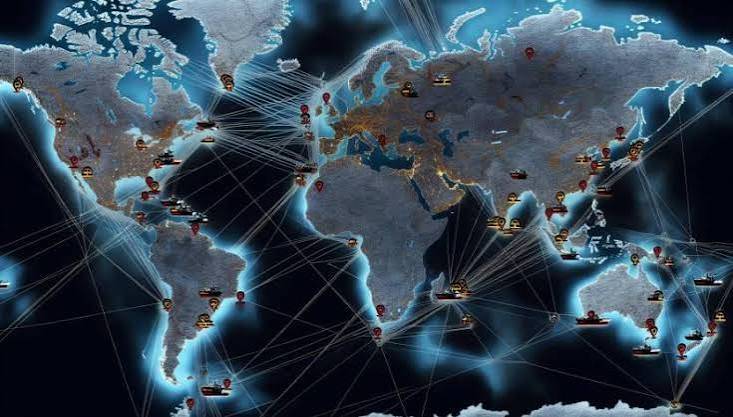
DAILY GLOBAL MARITIME GEOPOLITICAL FORECAST – JULY 6 2026
OHiMAG Daily Global Maritime Geopolitical Forecast
– July 6 2026 –
Summary prepared by the Centre for Geopolitics and Maritime Strategy Studies based on third-party analyses – the contents do not reflect the Centre’s own positions but are inspired by the work of other authors and publications, as indicated in the references.
Daily Summary of Global Maritime Geopolitics
Introduction
The global geopolitical landscape between 3 and 5 July 2026 confirms an acceleration of interconnected crises across multiple theatres. On the Ukrainian front, the fall of Kostyantynivka opens up new scenarios in the Donbas, whilst the Strait of Hormuz remains paralysed by mines and missile attacks. The NATO Ankara Summit exposes deep fractures within the Alliance, coinciding with the 250th anniversary of American independence. This briefing, compiled by CESMAR using specialised open-source intelligence, reconstructs the salient events and their respective strategic implications.
Key Events
Ukraine: The fall of Kostyantynivka reopens the Donbas front
Russian forces have captured Kostyantynivka, one of the three Ukrainian defensive strongholds in the Donbas, clearing the path towards Kramatorsk and Sloviansk (Analisi Difesa; Notizie Geopolitiche). The announcement, which coincided with the US Independence Day holiday and the eve of the NATO Ankara Summit, risks amplifying internal divisions within the Alliance regarding support for Kyiv. Ukraine initially denied the loss, repeating the communication pattern previously seen in Bakhmut and Pokrovsk. In parallel, a telephone conversation between Donald Trump and Vladimir Putin has reignited speculation about a potential negotiated freeze of hostilities.
Iran–Strait of Hormuz: An unresolved maritime and diplomatic crisis
The crisis in the Strait of Hormuz remains unresolved: approximately 8,000 civilian seafarers remain stranded aboard merchant ships and tankers, hindered by the presence of around 80 mines along the shipping lanes (gCaptain, IMO). Despite faint diplomatic signals between Washington and Tehran, the safe resumption of transit remains compromised. Japan is considering a return to Iranian oil imports to mitigate logistical risks, whilst the United Arab Emirates have reopened maritime links with Bandar Abbas, signaling a degree of regional pragmatism (ShipMag).
NATO Ankara Summit: The Eastern Mediterranean and Alliance fractures
The NATO Summit in Ankara is shaping up to be a true stress test for Atlantic cohesion (ISPI; Notizie Geopolitiche). Washington and Kyiv are pressing for an increase in European spending, whilst a sharp divergence of priorities emerges between the Eastern and Southern Flanks: Italy and other Mediterranean countries are demanding greater attention to the Wider Mediterranean. In this context, the diplomatic axis between Rome and Ankara, strengthened by the Meloni–Erdoğan dialogue, assumes growing strategic value in balancing the Alliance’s internal sensitivities (Formiche.net). The United States and Ukraine stand accused of exerting heavy financial and political pressure on European partners to bear the lion’s share of war funding and future reconstruction contracts. This asymmetrical approach risks severely penalising European budgets, reducing their strategic autonomy in favour of the industrial interests of Washington and Kyiv (Analisi Difesa).
Nord Stream: German prosecutors accuse Ukraine, but Merz stands by Zelensky
Investigations by the German Federal Prosecutor’s Office into the sabotage of the Nord Stream pipeline are bringing to light heavy evidence of Ukrainian responsibility. Despite the severe political impact of these allegations in Berlin, CDU leader Friedrich Merz has confirmed Germany’s full support for Kyiv and President Zelensky. Merz stressed that the strategic priority remains the defence of Ukraine against Russian aggression, separating military and political support from the ongoing judicial proceedings regarding the energy sabotage (Analisi Difesa).
Iran: The succession uncertainty and the power vacuum in Tehran
The regime in Tehran faces a phase of institutional uncertainty linked to the unusual public absence of Mojtaba Khamenei, the Ayatollah’s son and the leading candidate to succeed him as Supreme Leader (Notizie Geopolitiche). The massive funeral of Ali Khamenei, attended by around 20 million pilgrims and over 70 foreign delegations, projected an image of institutional unity, but failed to dispel tensions between the IRGC (Pasdaran) factions and the conservative clergy, with direct repercussions for the nuclear dossier and the Islamic Republic’s future foreign policy.
GCAP: Second contract awarded for the sixth-generation fighter
The tri-national Global Combat Air Programme (GCAP), involving Italy, the United Kingdom, and Japan, has seen the award of its second industrial contract, entrusted to the company Edgewing (Analisi Difesa). The objective remains the delivery of the sixth-generation stealth fighter by 2035, featuring advanced multi-domain capabilities. This step consolidates the technological partnership between the three nations and guarantees significant employment returns for the Italian aerospace supply chain, amidst a period of intense transformation in global air defence systems.
The strategic diversification of Kazakh routes
Kazakhstan is reshaping the Eurasian energy map to reduce its infrastructural dependence on Russia. Custodian of immense reserves, including 43% of global uranium, the country has developed alternative routes under Tokayev’s leadership. It supplies Europe via the Caspian Sea and the Caucasus, whilst expanding its pipelines towards China. This pragmatic and balanced posture transforms Astana into the ideal geopolitical pivot for the energy security of both Beijing and the European Union, without triggering a rupture with精 Moscow (IARI).
The Naval Strike Missile debuts in Ukrainian service
For the first time since the outbreak of the conflict, evidence has emerged of the operational deployment of the Naval Strike Missile by Ukrainian forces, integrated onto mobile coastal platforms (Naval News). The NSM is a fifth-generation long-range anti-ship and land-attack cruise missile, characterised by stealth properties and high precision, developed by the Norwegian company Kongsberg Defence & Aerospace (KDA). The missile, capable of sea-skimming flight and evading Russian electronic warfare systems, enhances Kyiv’s deterrence in the Black Sea, threatening remaining units of the Russian Fleet and complicating supply logistics to occupied Crimea.
US naval mines as an asymmetrical deterrent against Iran
An analysis by CIMSEC proposes a reassessment of the potential of US naval mines as a tool for asymmetrical deterrence against Iran in the Strait of Hormuz (CIMSEC). Advanced systems such as the Quickstrike-ER, equipped with JDAM satellite guidance kits, would allow for the selective interdiction of Iranian fleet and IRGC movements without exposing US surface units to missile attacks, offering Washington a flexible coercion option with low operational risk.
Chinese Naval Aviation
Chinese naval aviation is achieving unprecedented technological progress aboard the aircraft carriers Liaoning, Shandong, and Fujian, the latter equipped with electromagnetic catapults. The integration of advanced fighters, such as the stealth J-35 and the J-15, enhances Beijing’s power projection beyond the “first island chain”. This development alters the balance of power in the Western Pacific, directly challenging US naval supremacy and prompting regional allies like Japan and Taiwan to bolster their defences. The PLAN is thus establishing itself as a modern blue-water maritime force (IISS – International Institute for Strategic Studies).
Consequences of the Events
Geopolitical Consequences
The convergence of the fall of Kostyantynivka, the uncertainty surrounding the transfer of power in Tehran, and the preparatory tensions for the Ankara Summit outline an increasingly fragmented international order lacking unified Western stewardship. The loss of the Ukrainian defensive stronghold increases the pressure on Kyiv just as NATO struggles to settle its internal divisions over burden-sharing—a factor that Washington uses as a negotiating lever against the Europeans.
In the Middle East, the perceived power vacuum surrounding Mojtaba Khamenei compounds the Hormuz crisis, fueling an atmosphere of instability that may encourage sudden realignments by regional powers, from the UAE to Turkey. Furthermore, the strengthening of Turkish–Saudi ties and the resumption of maritime links between Abu Dhabi and Tehran signal an ability for pragmatic adaptation among regional diplomats, independent of the pace of Western diplomacy. In the background remains the systemic US–China competition, which continues to influence both NATO’s posture and Eurasian energy choices, as demonstrated by the diversification of Kazakh routes. The result is a geopolitical mosaic in which the fragmentation of the multilateral order risks translating into a reduced collective capacity to manage simultaneous crises.
Strategic Consequences
On the strategic-military plane, the fall of Kostyantynivka forces an urgent defensive reorganisation by Kyiv around Kramatorsk and Sloviansk, whilst the introduction of the Naval Strike Missile demonstrates Ukraine’s persistent ability to innovate tactically even when outnumbered on the ground. For NATO, the Ankara Summit represents a test of its ability to reconcile deterrence on the Eastern Flank with demands from the Southern Flank, in a context where the newly established, Italian-led Task Force X-Central and trials of anti-drone rockets testify to a rapid doctrinal adaptation to hybrid threats.
In the Middle Eastern theatre, the hypothetical offensive deployment of US naval mines signals a potential shift in the American posture towards Tehran, moving from defensive to potentially coercive, with the goal of paralysing the Iranian navy without exposing surface units. Parallelly, the expansion of Chinese carrier-based aviation and Beijing’s coast guard patrols east of Taiwan confirm that the Indo-Pacific competition continues unabated, forcing Washington to distribute strategic attention across three simultaneous theatres: Eastern Europe, the Persian Gulf, and the Western Pacific, causing obvious strain on available resources.
Economic, Technological, Financial, and Energy Consequences
The partial closure of the Strait of Hormuz continues to generate uncertainty in global energy markets, prompting Japan to consider sanctions waivers for Iranian oil and fueling record profits for US oil companies, which are headed for a potential political clash with the White House over fuel pump prices (gCaptain). Kazakhstan is consolidating its role as a Eurasian energy pivot by diversifying export routes across the Caspian, the Caucasus, and Xinjiang, thereby reducing political dependence on Moscow (IARI).
In Europe, the competitive crisis of the German industrial model in the face of Chinese advances in electric vehicles and robotics is accompanied by a debate on the need to reform continental financial markets and establish a genuine Capital Markets Union (Geopolitica.info). On the technological front, the rise of “Physical AI” as the new frontier of power, combined with Chinese attempts to influence the US regulatory debate on artificial intelligence, is reshaping Sino-American competition on regulatory ground as well. Finally, Sweden’s nuclear turn, with an agreement for three Rolls-Royce SMR reactors, confirms the reorganisation of the European energy mix in pursuit of security and strategic autonomy.
Maritime Consequences
The global maritime picture remains marked by multiple friction points. In the Red Sea, a new attack on a cargo ship off Al Hudaydah confirms the persistent instability of Yemeni routes (gCaptain, UKMTO). In the Strait of Hormuz, the missile damage to a CMA CGM container ship, likely bound for scrapping, and the entrapment of around 8,000 seafarers bear witness to the human and economic cost of the chokepoint’s militarisation. In the Black Sea, the introduction of the Ukrainian Naval Strike Missile and the drone attack on the St Petersburg oil terminal expand Kyiv’s operational depth against Russian energy and naval assets.
In the Indo-Pacific, China is intensifying its thalassocratic projection by sending coast guard patrol vessels east of Taiwan and four polar research vessels into the Arctic, whilst its carrier-based aviation achieves full operational maturity on the Liaoning, Shandong, and Fujian (IISS). On the naval-industrial side, the Royal Navy is trialling the launch of strike drones from the ship Patrick Blackett and faces nine crucial decisions for the transition towards a hybrid fleet (Navy Lookout), whilst the US Navy begins the retirement of the Ticonderoga-class cruisers and evaluates the containerised deployment of CPS hypersonic missiles. The picture is completed by the UAE’s thalassocratic strategy in the Red Sea, in open competition with Riyadh, and the consolidation of Ushuaia as a logistical hub for Antarctica.
Consequences for the Southern European Mediterranean countries
For Italy, Greece, and Spain, the events between 3 and 5 July reinforce the centrality of the Wider Mediterranean on the NATO agenda, even though Eastern Flank priorities continue to monopolise the Alliance’s attention. For Italy, the award of the second GCAP contract and the leadership of Task Force X-Central confirm a growing role in European technological and doctrinal defence, whilst the operational readiness of the IRIDE satellite constellation strengthens national geospatial sovereignty for the benefit of maritime security and environmental monitoring. Italy and Latin America are relaunching a strategic partnership based on space cooperation, technology, sustainable transition, and commercial opportunities for the “Made in Italy” brand (Formiche.net). The Meloni–Erdoğan diplomatic axis carries increasing specific weight ahead of the Ankara Summit, offering Rome a privileged channel to mediate between the Mediterranean and eastern sensibilities of the Alliance.
For Greece, the theoretical aerial confrontation with Turkey highlighted by the analysis of the qualitative balance between Rafale, F-16 Viper, and future F-35s confirms the need to consolidate deterrence in the Aegean amidst a Turkish–Saudi and Turkish–European diplomatic rapprochement. Spain, through Navantia, strengthens its naval industrial projection with the eighth corvette for Saudi Arabia, confirming the Iberian shipbuilding role in the Gulf. For all three countries, the Hormuz crisis and Red Sea tensions increase the exposure of Mediterranean trade routes, whilst the expansion of the EU presence in the South Caucasus and the strengthening of Turkish–Saudi corridors reshape the Euro-Mediterranean logistical axes of which these three countries are natural terminals.
Conclusions
The framework emerging from the 3–5 July 2026 reporting period confirms a phase of systemic transition in which the attrition of the Ukrainian front, the instability of the Iranian succession, and internal fractures within NATO interweave with long-term economic and energy dynamics. Among the themes likely to see further developments in the coming days, first and foremost is the outcome of the Ankara Summit, which could redefine burden-sharing and the Alliance’s geographical priorities. Secondly, the evolution of the succession in Tehran, the outcome of which will condition the nuclear dossier and regional stability. Thirdly, the sustainability of the Hormuz crisis, where the de-mining of shipping lanes remains the precondition for the resumption of traffic and the release of the 8,000 stranded seafarers. On the Ukrainian front, the endurance of Kramatorsk and Sloviansk will be the key indicator in the coming weeks, whilst the German investigation into Nord Stream could impact the cohesion of Western support for Kyiv. For Italy and the Mediterranean, careful monitoring of GCAP developments and Task Force X-Central is recommended as levers of national strategic projection within an Alliance increasingly called upon to balance its Eastern and Southern Flanks.
References
This summary has been prepared based on articles from various geopolitical and strategic analysis sources, including: Center for Maritime Strategy, CIMSEC, Reuters, ShipMag, Navy Lookout, National Interest, Seapower Magazine, CSIS, RUSI, War on the Rocks, IISS, Responsible Statecraft, Foreign Affairs, Formiche.net, Il Sussidiario, Start Magazine, InsideOver, Notizie Geopolitiche, IARI, Dissipatio, Analisi Difesa, Jamestown Foundation, Atlantic Council, RAND Corporation.
For further insights, please visit the CESMAR websites or social media channels:
- cesmar.it
- ohimag.com
- https://www.linkedin.com/company/cesmar-geopolitica/
- https://www.instagram.com/cesmar.it/?hl
- https://www.facebook.com/share/19y15mJ5Z3/?mibextid=wwXIfr
The contributions are the direct responsibility of the editorial staff and reflect their views. Total or partial reproduction is authorized provided that the source is cited.
The structuring and interpretation of the data are the result of a synthesis process aimed at creating a coherent and organic analytical framework. The summary does not represent an original analysis, but rather a structured reorganization of the information collected and selected based on the expertise of our scholars, who then extrapolated the consequences in the geopolitical, strategic, maritime, and Italy-related fields