

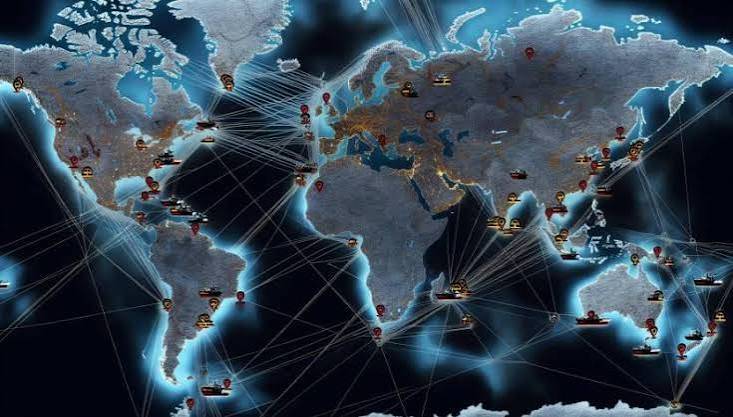
CESMAR Daily Global Maritime Geopolitical Forecast – July 17 2026 –
CESMAR Daily Global Maritime Geopolitical Forecast
– July 17 2026 –
Summary prepared by the Centre for Geopolitics and Maritime Strategy Studies, compiled on the basis of analyses from third-party sources. While the content does not reflect the Centre’s own positions but is instead drawn from the work of other authors and publications, as indicated in the references, the structuring and interpretation of the data are the result of the Centre’s own synthesis process, aimed at creating a coherent and organic analytical framework. The summary therefore represents a structured reorganisation of the collected and selected information, based on the expertise of our scholars, who have subsequently extrapolated its implications in the geopolitical, strategic, technological, and maritime fields, as well as those related to Mediterranean countries. Reproduction, in whole or in part, is authorised provided that the source is acknowledged.
Geopolitical Scenarios of July 17, 2026
Daily Summary of Global Maritime Geopolitics
Introduction
The day of 16 July 2026 confirms an international outlook marked by three overlapping epicentres of instability: the Ukrainian attrition, the military-economic stalemate around the Strait of Hormuz, and the reshaping of power structures in Kyiv. The core thesis is that multipolar fragmentation is accelerating, while maritime infrastructure and logistical corridors are becoming primary negotiating leverage.
Key Events
Geopolitics: The Kyiv Cabinet Reshuffle
President Volodymyr Zelensky has removed Mykhailo Fedorov from his ministerial post dedicated to wartime digitisation, as reported by Formiche.net and Ispionline.it. The decision, interpreted by some analysts as an attempt to centralise decision-making around the presidency, has sparked domestic protests documented by GZeroMedia. Il Sussidiario.net links the reshuffle—which also involves Andriy Yermak and Yulia Sviridenko—to Kyiv’s need to prepare for potential pressure from Donald Trump, reconfiguring Ukraine’s diplomatic narrative.
Strategy: The Battle of Kostiantynivka
According to InsideOver.com, the fighting around Kostiantynivka, a key logistical hub in the Donbas, serves as a test bed for the sustainability of Western supplies to Kyiv, which are frequently deemed overdue or insufficient. The National Interest frames the clash within the broader “race to exhaustion” that characterises the Russian-Ukrainian war of attrition, where the industrial and demographic resilience of both combatants matters as much as tactical progress on the ground.
Maritime Domain: The Hormuz Stalemate
NotizieGeopolitiche.net describes an exhausting US-Iran tug-of-war in the Strait of Hormuz, consisting of sanctions, seizures, and targeted operations with no resolution in sight. GCaptain.com reports a drastic contraction in merchant shipping traffic and India’s advisory to its seafarers to avoid the route, while CFR.org stresses that the strait, through which a fifth of the world’s oil flows, remains the barometer of global energy stability.
Geopolitical Forum
15 July 2026 marks a historic turning point in naval warfare: the US Navy has deployed maritime surface drones in combat for the first time. Three Saronic Corsair autonomous units, mass-produced under the Pentagon’s Replicator programme, successfully struck the Iranian base at Bandar Abbas. This event revolutionises global maritime doctrine. The transition from bespoke, artisanal systems to open-architecture industrial platforms allows drones to be rapidly transformed from surveillance tools into cheap attack vectors. The mass adoption of artificial intelligence redraws geopolitical balances, lowering the human and material costs of naval forces.
In this rapidly evolving scenario, Great Britain has also already formally positioned itself towards a new maritime defence structure. London is progressively integrating marine drones at the core of its naval strategy, recognising that these autonomous systems play a crucial role in maintaining tactical superiority. The recent Defence Investment Plan 2026 formalised this strategy by allocating £5 billion for the development of autonomous systems and artificial intelligence. The primary objective is not to increase the number of traditional vessels, but to transform the fleet into an integrated network where crewed assets coordinate swarms of aerial, surface, and underwater drones.
Consequences of the Events
Geopolitical Consequences
On the general geopolitical level, 16 July consolidates two parallel trends. On one hand, Ukraine’s industrial integration into the European defence sector—sanctioned by Brussels according to NotizieGeopolitiche.net and reinforced by Fincantieri joining the EU-Ukraine industrial partnership reported by Analisidifesa.it—accelerates Kyiv’s anchoring to Western standards. However, Il Sussidiario.net warns that an enlargement driven predominantly by anti-Russian rhetoric risks destabilising the Union’s internal cohesion in the absence of adequate structural reforms.
On the other hand, Sino-US competition is expanding into new arenas: Formiche.net documents both the contest for control over undersea cables—the true nervous system of global information flows—and the Med-Or Foundation project for Mediterranean infrastructure surveillance, while a Pew poll cited by the same website confirms a cautious pro-Atlantic orientation among the Italian public. In the Horn of Africa, Ispionline.it describes the varied competition between Italy, Turkey, and Ethiopia for regional influence against a backdrop of the Red Sea’s growing significance. On a multilateral level, CFR.org warns against the dismantling of the International Criminal Court without credible alternatives, while Foreign Affairs analyses the structural decline in the effectiveness of diplomatic coercion and the progressive fading of US military dominance—a phenomenon prompting Washington’s historic allies to consider paths toward greater strategic autonomy, with direct repercussions on the perception of Taiwan and NATO’s defensive priorities.
Strategic Consequences
On the military and doctrinal front, the battle of Kostiantynivka, according to InsideOver.com, lays bare the limitations of the Western model of supporting Kyiv “in instalments”, feeding into discussions, as addressed by RUSI, on NATO’s need to raise defence spending to 5% of GDP, since the asymmetry between the cost of cheap drone and missile attacks and the cost of interceptors risks structurally eroding allied defensive capability. The British announcement, also reported by RUSI, of over five billion pounds earmarked for drones and autonomous systems by 2035 fits into this framework, signalling a doctrinal transition towards hybrid human-machine forces.
Jamestown.org offers two complementary pieces: the military cooperation agreement between Russia and Afghanistan, which consolidates an alternative Eurasian security axis, and the cyber lessons drawn from the Ukrainian conflict, which show how digital attacks now operate as an integrated component of hybrid warfare rather than an isolated weapon. The National Interest delves into the value of Ukrainian combat data for the development of Western predictive algorithms, reiterating that informational superiority matters more than conventional mass, while also noting growing scepticism, reported by ResponsibleStatecraft.org, towards the establishment of the US RASCOM command dedicated to autonomous systems, feared as a source of bureaucratic duplication rather than real operational effectiveness on the ground. The resulting doctrinal picture is one of a gradual but non-linear adaptation of Western command structures, where the push for automation coexists with institutional resistance and the need to preserve the decision-making flexibility of commanders in the field.
Economic, Technological, Financial, and Energy Consequences
The daily economic-financial landscape is dominated by the growth of European military spending, which according to Analisidifesa.it reached €418 billion in 2025 with a projection of €454 billion for 2026, indicating a progressive reallocation of public resources towards the defence sector. In parallel, Moody’s, according to InsideOver.com, warns that the prolonged Israeli conflict and the weakening of democratic institutions are compressing Israel’s growth prospects, with possible further sovereign rating downgrades. In Latin America, Javier Milei’s reform to liberalise the Argentine land market, described by InsideOver.com, aims to attract foreign capital but raises criticism over the loss of sovereignty over natural resources.
On the technological front, CSIS.org flags a potential breakthrough in US-India trade negotiations centred on the “TRUST” initiative for strategic technology transfer, while GCaptain.com reports the US administration’s acceleration of the first concession sales for offshore critical mineral mining, aimed to reduce dependence on Beijing. The National Interest dedicates two analyses to the artificial intelligence competition: the Chinese alarm over the near-Western monopoly on generative models and, conversely, the argument that US dominance in open-source AI constitutes a multiplier of geopolitical influence rather than a vulnerability. Against this backdrop, the dispute over undersea cables described by Formiche.net confirms that technological sovereignty increasingly hinges on the physical control of oceanic digital infrastructure. Overall, the day’s data outlines a global economic system where rearmament, technological competition, and energy instability mutually reinforce each other, making the line between security policy and industrial policy increasingly blurred.
Maritime Consequences
The maritime domain remains the area most immediately exposed to the day’s tensions. The Hormuz stalemate, described by NotizieGeopolitiche.net and CFR.org, translates into a tangible contraction of traffic: GCaptain.com reports both the worsening of US-Iran clashes in the strait and India’s recommendation to its seafarers to avoid the route, while the Iranian threat to prompt the Houthis to shut down the Red Sea in the event of attacks on the Iranian power grid adds an additional systematic risk factor for global maritime lines of communication.
In the Black Sea, Iari.site describes the logistical war along the Danube and the port of Izmail, which indirectly involves Romania’s NATO territory, while GCaptain.com documents the Ukrainian attack on two Russia-linked oil tankers—a further escalation in the campaign against Kremlin energy funding. The Greek veto on the new EU sanctions package, motivated by the protection of shipping interests linked to Arctic LNG according to GCaptain.com, shows the persistent friction between political rigour towards Moscow and national maritime interests. The Center for Maritime Strategy flags the structural return of Somali piracy, facilitated by the surveillance gap left by Western repositioning against the Houthis, while Navy Lookout records both the diplomatic tension over the Falklands triggered by the patrol vessel HMS Medway and the rapid delivery of Saronic’s Marauder drone—both signals of the rising centrality of autonomous platforms and the contest for maritime sovereignty even in peripheral theatres. Taken together, these developments confirm that the security of global maritime lines of communication increasingly depends on the ability to simultaneously secure energy chokepoints, river corridors, and distant theatres, without the luxury of concentrating naval assets on a single priority front.
Consequences for the Southern European Mediterranean countries
For Italy, the day reinforces the country’s industrial and diplomatic positioning: Fincantieri’s entry into the EU-Ukraine partnership, reported by Analisidifesa.it, consolidates the national shipbuilding sector’s role in future Ukrainian naval reconstruction, while the project linked to the Med-Or Foundation, described by Formiche.net, places Rome at the centre of Mediterranean undersea infrastructure surveillance. NotizieGeopolitiche.net also recalls Italy’s historical role as a signatory to the Rome Statute on International Justice Day—a commitment interwoven with the challenges posed by the US attempt to weaken the International Criminal Court discussed by CFR.org—in addition to the Rome Accord on Lebanon, which, despite defining pilot security zones, leaves the issues of Israeli withdrawal and Hezbollah’s disarmament unresolved.
For Greece, the veto of the EU sanctions package against Russia, motivated by protecting shipping interests in Arctic LNG transport according to GCaptain.com, highlights Athens’ vulnerability to the combined pressures of Atlantic solidarity and national maritime interests, with potential repercussions for Mediterranean cohesion within the EU. For Spain, Il Sussidiario.net reports warnings regarding the public system’s capacity to handle the regularisation of approximately three million migrants—a measure putting pressure on healthcare, education, and welfare, which fits into the broader European debate on asylum and immigration policies, with potential impacts on the social stability of the Union’s southern flank.
Conclusions
The overall picture on 16 July suggests that three dossiers deserve priority attention in the coming days:
- The evolution of the Hormuz stalemate, where the contraction of traffic and Iranian warnings regarding the Red Sea foreshadow potential new skirmishes.
- The internal consequences of the Ukrainian reshuffle, with protests documented by GZeroMedia that could affect the cohesion of the Kyiv front.
- The negotiation of the EU sanctions package blocked by the Greek veto, the outcome of which will redefine the balance between Atlantic solidarity and national maritime interests.
For CESMAR, the convergence of the war over corridors, competition for submarine cables, and European rearmament confirms the analytical centrality of maritime affairs as a key to interpreting transforming global power structures.
References
This summary has been prepared based on articles from various geopolitical and strategic analysis sources, including: Elisme, Center for Maritime Strategy, CIMSEC, Reuters, ShipMag, Navy Lookout, National Interest, Seapower Magazine, CSIS, RUSI, War on the Rocks, IISS, Responsible Statecraft, Foreign Affairs, Formiche.net, Il Sussidiario, Start Magazine, InsideOver, Notizie Geopolitiche, IARI, Dissipatio, Analisi Difesa, Jamestown Foundation, Atlantic Council, RAND Corporation.